
Advanced Camping Skills: The Complete Guide 2027

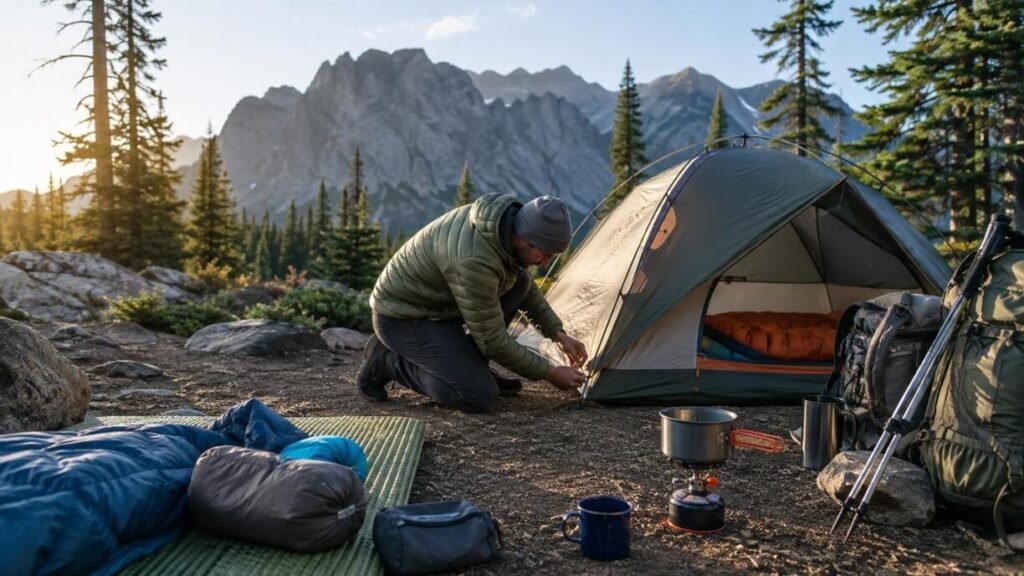
Camping becomes much more enjoyable when you stop treating camp as simply a place to sleep and start thinking of it as a carefully organized outdoor system.
Beginners often focus on buying better tents, sleeping bags, stoves, and other equipment. Experienced campers know that equipment is only part of the equation. The real difference comes from knowing how to choose the right campsite, configure a shelter for changing conditions, organize equipment efficiently, manage moisture, prepare meals with minimal waste, and establish routines that make camp easier to operate.
Advanced camping skills are not about making camping unnecessarily complicated. They are about doing more with less effort, staying comfortable when conditions deteriorate, and solving ordinary camping problems before they become frustrating ones.
This guide focuses specifically on camping expertise. It does not attempt to duplicate broader wilderness skills such as navigation, wilderness leadership, or general backcountry risk management. For those subjects, see our Complete Wilderness Skills Guide.
Whether you’re an experienced weekend camper, family camper, car camper, or backpacker who wants to improve your campcraft, the following techniques can help you build a more efficient and comfortable camping system.
What Are Advanced Camping Skills?
Advanced camping skills are the practical techniques that allow you to establish, operate, maintain, and break down a campsite efficiently in a variety of conditions.
They include:
- Selecting a campsite based on more than appearance.
- Positioning and tensioning a shelter correctly.
- Managing rain, wind, condensation, and moisture.
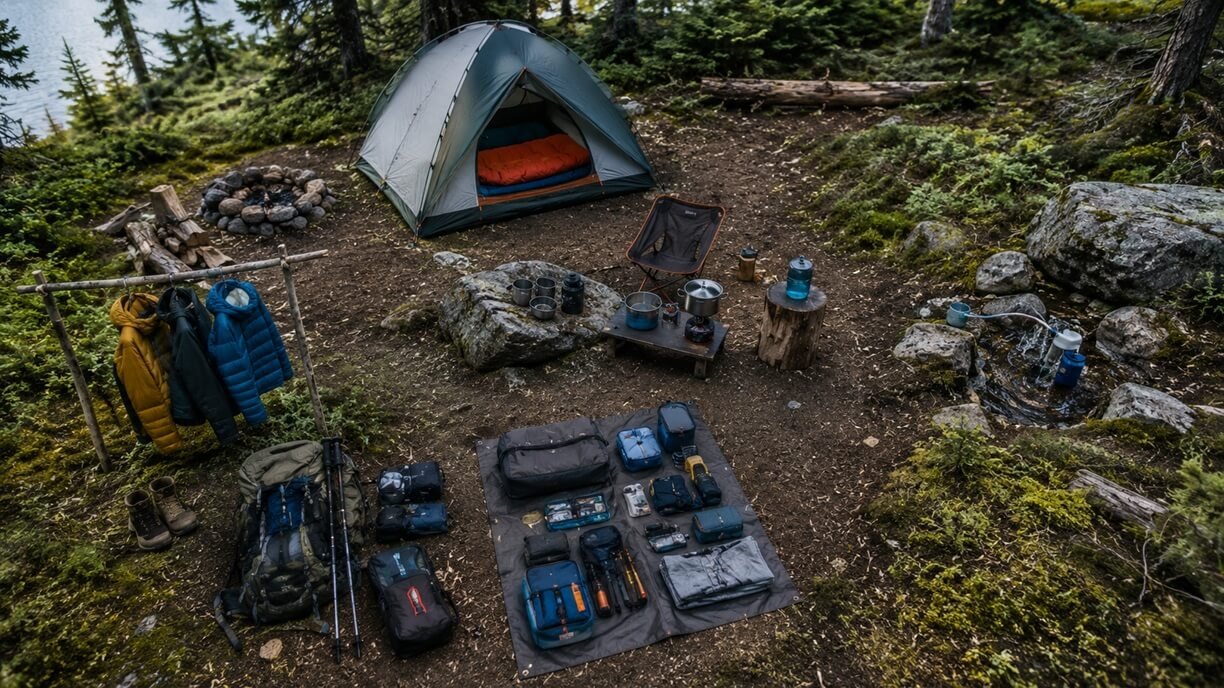
- Organizing camp into functional zones.
- Cooking efficiently with limited fuel and equipment.
- Managing fire responsibly where fires are permitted.
- Keeping sleeping equipment dry and comfortable.
- Creating efficient evening and morning routines.
- Troubleshooting common camping equipment problems.
- Reducing environmental impact.
- Adapting your campsite to changing weather and terrain.
- Teaching camping skills to less experienced campers.
The thing isn’t to create a complicated camp. The goal is to create a camp that works.
Advanced Camping Skills at a Glance
| Camping Skill | What Advanced Campers Do Differently |
| Campsite selection | Evaluate drainage, wind, terrain, shade, and practical layout |
| Shelter setup | Configure the shelter for weather rather than simply pitching it |
| Camp organization | Create functional zones and consistent gear locations |
| Moisture management | Prevent condensation and dampness before they become problems |
| Camp cooking | Reduce fuel use, preparation time, and cleanup |
| Fire management | Build appropriate fires while minimizing environmental impact |
| Sleep system | Optimize insulation, ventilation, and dryness |
| Weather preparation | Modify camp before conditions deteriorate |
| Camp routines | Prepare tomorrow’s camp before going to sleep |
| Troubleshooting | Fix small problems before they disrupt the trip |
| Leave No Trace | Minimize disturbance while maintaining an efficient camp |
1. Master Advanced Campsite Selection
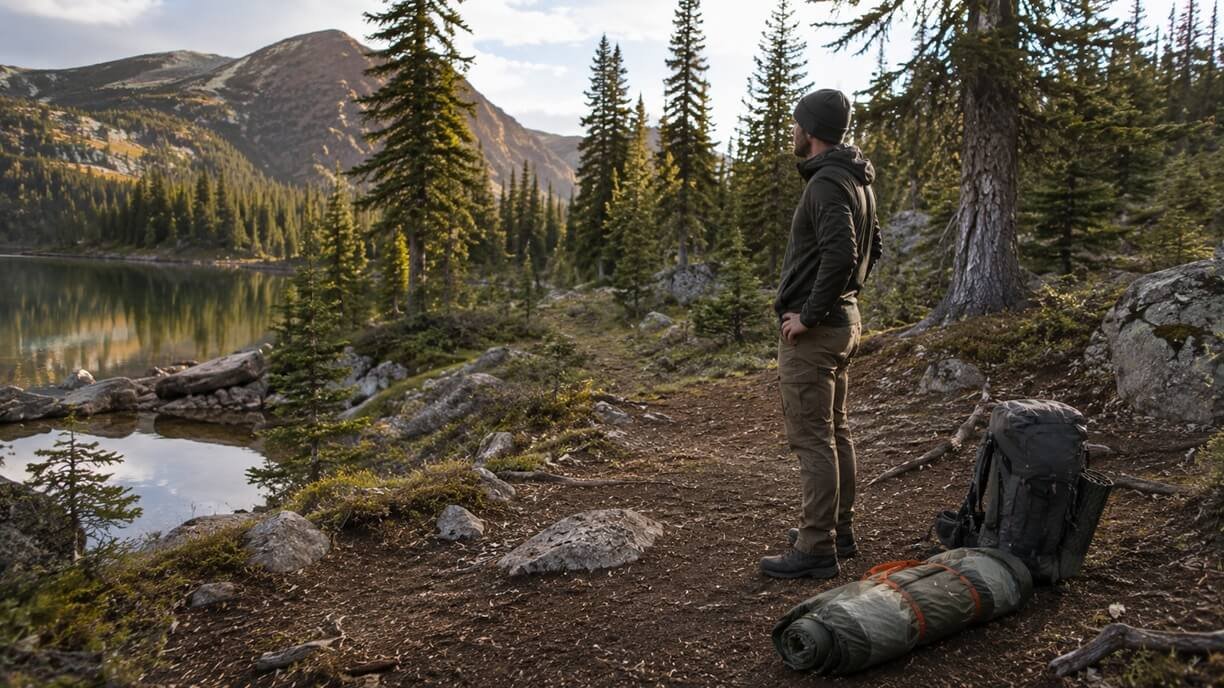
Choosing a campsite is one of the most important camping skills you can develop. A beautiful campsite isn’t necessarily a good campsite. Flat ground collect water. An open location exposes your tent to strong wind. A site beneath trees provide shade but also create hazards from falling branches.
Experienced campers consider the campsite as a living system rather than simply asking whether there is enough room for a tent.
Look Beyond Flat Ground
Flat ground is desirable, but it shouldn’t be your only consideration. Before setting up, examine:
- Ground firmness
- Drainage
- Nearby slopes
- Natural depressions
- Wind exposure
- Shade
- Overhead hazards
- Nearby water
- Space for cooking
- Space for gear
- Existing campsite impact
A slightly uneven site with excellent drainage can be better than perfectly flat ground that turns into a puddle during rain.
Check How Water Will Move
Before pitching your tent, imagine what happens if several hours of rain arrive.
Ask:
- Where will water flow?
- Is the tent sitting in a depression?
- Is runoff likely to pass through camp?
- Is the ground already saturated?
- Is water collecting nearby?
Never assume a dry campsite will remain dry during heavy rain. A few minutes spent studying drainage can prevent hours of dealing with a flooded shelter.
Consider Wind Direction
Wind can dramatically affect camping comfort. A campsite that feels calm when you arrive may become unpleasant later as wind direction changes. Look for natural wind protection such as:
- Dense vegetation
- Terrain contours
- Natural landforms
- Existing windbreaks
However, avoid placing your shelter beneath hazardous dead branches simply to gain protection from wind.
Think About Morning and Evening Conditions
Sun exposure can be helpful or uncomfortable depending on the environment. In cold weather, morning sunlight can help warm camp and dry moisture. In hot weather, afternoon shade may be much more valuable. Think about how the sun will move across the campsite rather than judging conditions only when you arrive.
Evaluate the Whole Camp Layout
Before unpacking, visualize where everything will go.
You may want:
Shelter → Sleeping Area → Gear Storage → Cooking Area → Water Area
The exact arrangement depends on the campsite, regulations, weather, and equipment, but planning the layout before setup prevents unnecessary movement later.
2. Learn Advanced Tent Setup
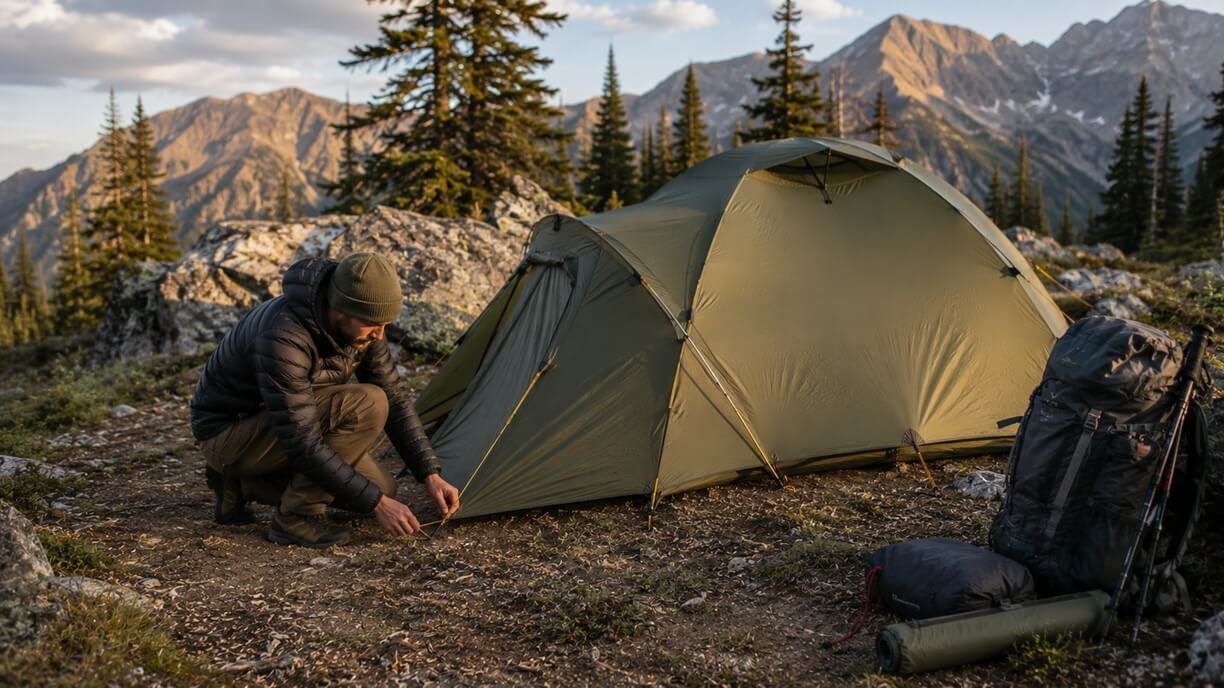
Putting up a tent isn’t the same as setting it up correctly. An advanced camper understands that the shelter should be configured according to the conditions.
Stake the Tent Correctly
Drive stakes into stable ground at an appropriate angle and ensure the tent’s structure is properly tensioned. Avoid simply pulling every guyline as tightly as possible. Over-tensioning can place unnecessary stress on fabric, seams, and attachment points. The goal is stable, balanced tension.
Use Guylines Strategically
Guylines become particularly useful in:
- Strong winds
- Heavy rain
- Snow
- Larger tents
- Exposed campsites
Instead of automatically deploying every guyline, use the attachment points that provide meaningful structural support.
Orient the Tent for the Conditions
Tent orientation can influence:
- Wind resistance
- Ventilation
- Entry convenience
- Rain exposure
- Views
- Morning sunlight
If strong winds are expected, consider how the tent’s strongest structural surfaces can face the prevailing airflow.
Create Proper Ventilation
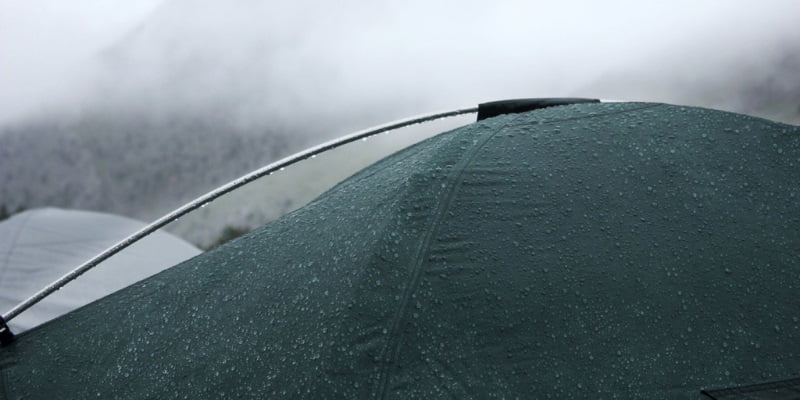
Condensation is one of the most common camping frustrations. It occurs when warm, moist air contacts a colder surface. Sources include:
- Breathing
- Wet clothing
- Cooking
- Damp ground
- Humid weather
Improve ventilation by:
- Opening vents when conditions permit.
- Keeping airflow paths available.
- Avoiding unnecessary moisture inside the tent.
- Drying wet clothing outside when practical.
- Keeping the rainfly properly positioned.
Don’t assume a waterproof tent should be completely sealed. A good shelter protects you from precipitation while still allowing moisture to escape.
3. Master Camp Organization
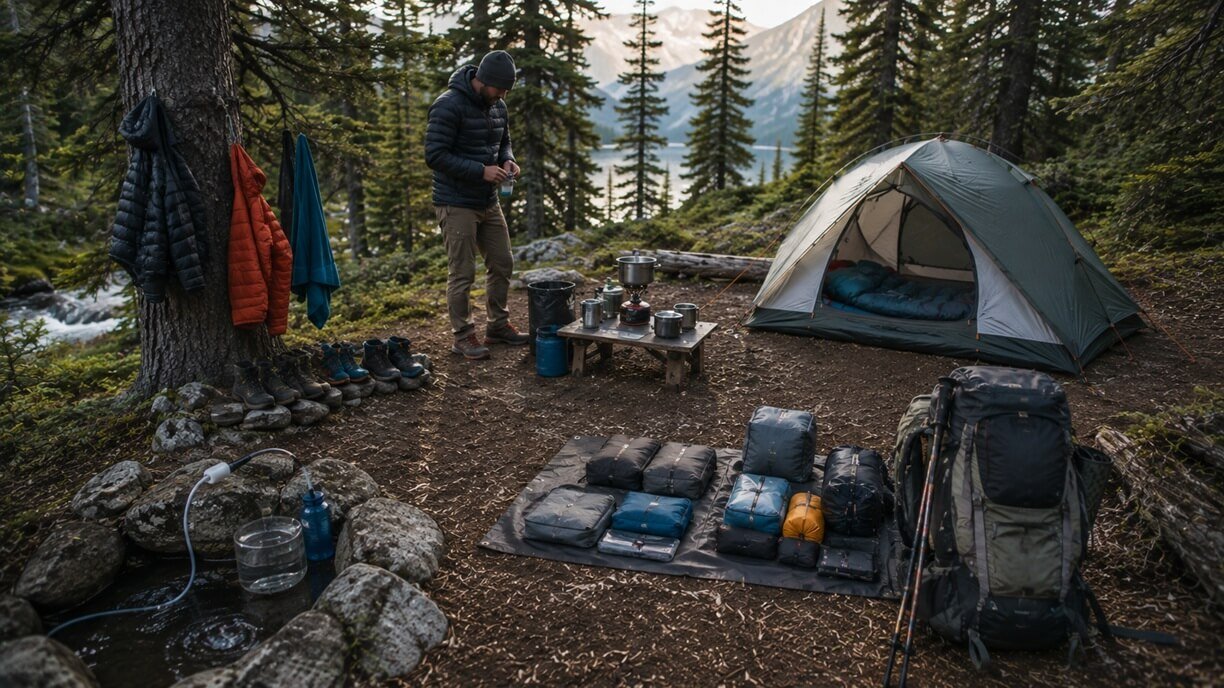
A well-organized campsite saves time, reduces frustration, and makes essential equipment easier to locate. Instead of spreading equipment across the ground, create functional zones.
Shelter Zone
Keep your sleeping area focused on sleeping and personal gear. Frequently needed items should remain accessible:
- Headlamp
- Water
- Phone
- Navigation equipment
- Warm layer
- Personal medication
- Eyeglasses
Cooking Zone
Keep cooking equipment together. A practical cooking system might include:
The exact arrangement should depend on local regulations, wildlife considerations, fire restrictions, and weather.
Gear Zone
Create a consistent location for equipment that doesn’t belong inside the shelter.
For example:
- Backpack
- Trekking poles
- Boots
- Rain gear
- Camp chairs
- Drying equipment
Consistent placement means you spend less time searching for things.
Wet Gear Zone
Wet equipment should have its own temporary location whenever possible.
Separate:
- Wet clothing
- Dry clothing
- Sleeping equipment
- Cooking equipment
- Electronics
This prevents moisture from spreading throughout camp.
4. Develop an Advanced Camp Arrival Routine
One of the biggest differences between inexperienced and experienced campers is what happens immediately after arriving. Beginners often sit down first. Experienced campers establish camp systematically. A useful sequence is:
- Inspect the campsite.
- Decide where the shelter will go.
- Identify cooking and equipment areas.
- Set up the shelter.
- Organize sleeping equipment.
- Collect or treat water where appropriate.
- Prepare cooking equipment.
- Store food appropriately.
- Prepare clothing for the evening.
- Review the next day’s plans.
The order can change depending on weather. If rain is approaching, shelter setup should take priority. If you’re already wet and cold, warming and drying yourself may become more important. Advanced camping is about prioritizing the next useful action.
5. Become Better at Camp Cooking
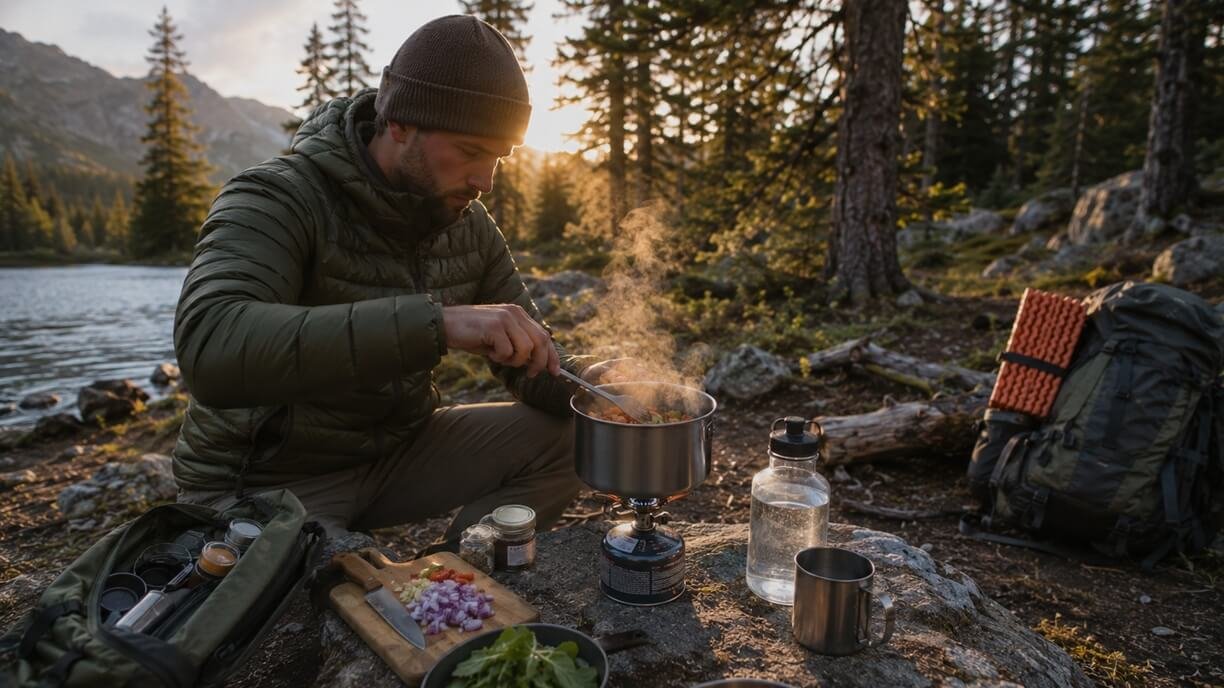
Advanced camp cooking isn’t necessarily about preparing complicated meals. It’s about producing good food with:
- Minimal fuel
- Minimal cookware
- Minimal cleanup
- Predictable cooking times
- Efficient ingredient management
Choose Meals That Match Your Equipment
A complicated meal can become frustrating when you have only one small pot and limited fuel. Instead, match meals to your cooking system.
For example:
One-pot meals
- Pasta dishes
- Rice meals
- Soups
- Stews
- Dehydrated meals
Low-cook meals
- Wraps
- Nut butter sandwiches
- Trail mixes
- Ready-to-eat foods
Minimal-cook breakfasts
- Oatmeal
- Instant grains
- Granola
- Dehydrated breakfast meals
The best camping meal is often the one you can prepare reliably when you’re tired.
Sequence Your Cooking
Think about the order of operations.
For example:
- Boil water.
- Use the hot water for the main meal.
- Reuse cookware when appropriate.
- Prepare drinks afterward.
- Clean immediately.
This reduces fuel use and cleanup.
Manage Fuel Carefully
Running out of fuel at the end of a trip can turn a simple meal into a problem.
Track:
- Number of meals
- Boiling requirements
- Ambient temperature
- Wind
- Stove efficiency
- Group size
Use wind protection where appropriate and permitted but never create an unsafe enclosure around a stove.
6. Improve Camp Cleanup
Cleanup should be part of cooking rather than something you postpone. Immediately after eating:
- Secure leftover food.
- Clean cookware.
- Manage wastewater appropriately.
- Pack trash.
- Store food correctly.
- Check the cooking area.
Leaving cleanup until morning often creates unnecessary work. A clean evening camp makes the next morning considerably easier.
7. Develop Responsible Fire Skills
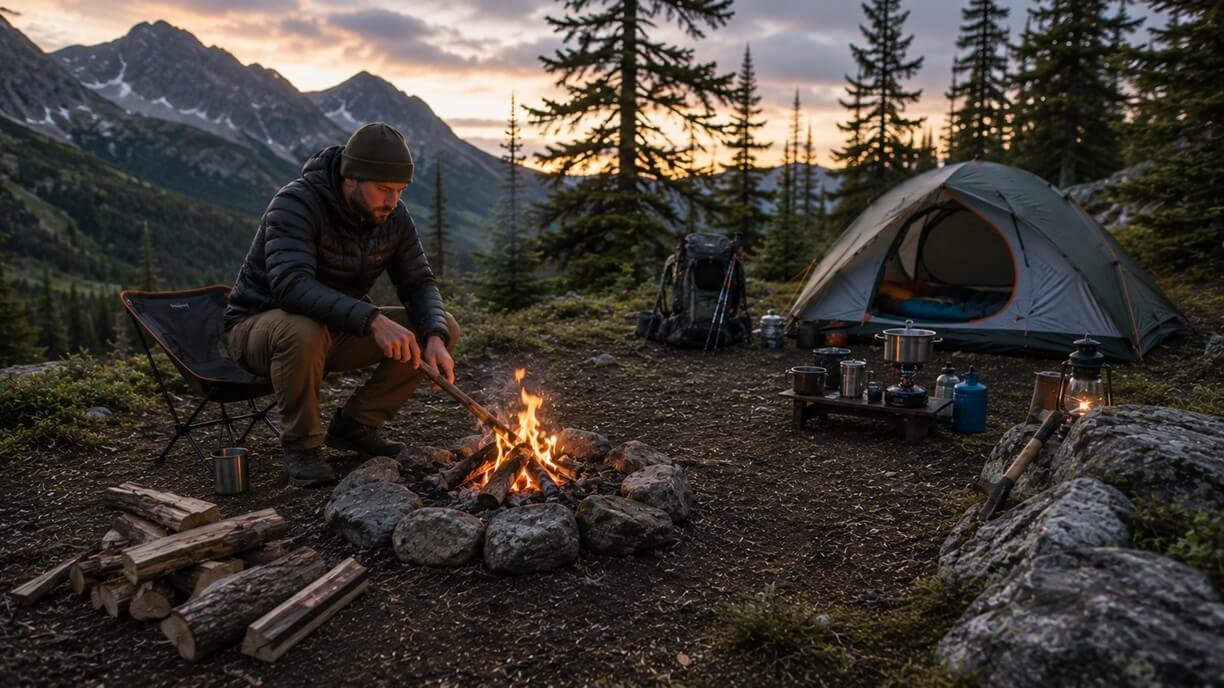
Fire can be useful for warmth, cooking, light, and enjoyment, but it should never be treated as automatically appropriate. Before building a fire, check:
- Local regulations
- Fire restrictions
- Current conditions
- Campsite rules
- Availability of suitable fuel
If fires aren’t permitted, use your stove or another approved cooking system.
Choose the Right Fire Setup
Different situations require different fire configurations. A small cooking fire is very different from a fire intended primarily for warmth. The principle is simple: Build only the fire you actually need. Larger fires consume more fuel, create more impact, and require more attention.
Manage Firewood Responsibly
Where collecting wood is permitted, avoid unnecessary damage to living vegetation. Use appropriate dead and downed material where local regulations allow it. Never assume wood collection is permitted simply because you’re in a remote location.
Put the Fire Completely Out
Before leaving:
- Stop adding fuel.
- Allow the fire to burn down where appropriate.
- Douse it thoroughly.
- Stir the remains.
- Check for remaining heat.
- Repeat until completely cold.
A fire isn’t finished when the flames disappear. It is finished when the remaining material is cold.
8. Master Moisture Management
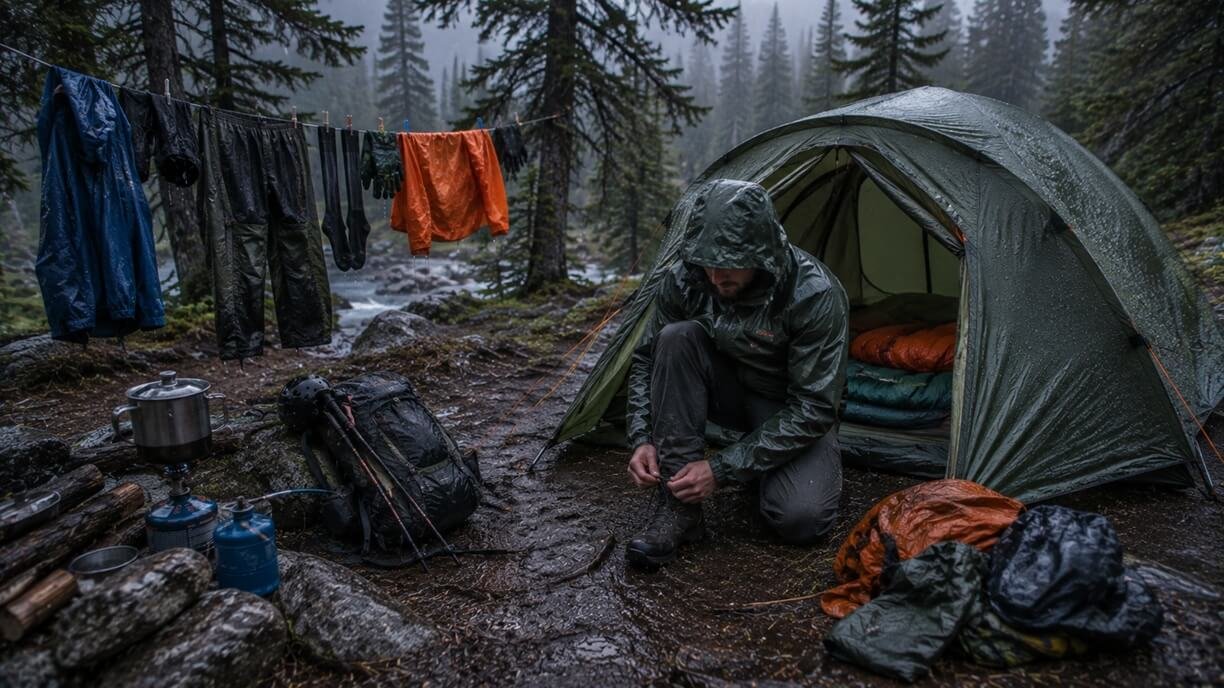
Moisture is one of the biggest enemies of camping comfort. Rain isn’t the only source.
Moisture comes from:
- Condensation
- Sweat
- Wet vegetation
- Damp ground
- Wet clothing
- Cooking
- Humidity
Advanced campers manage moisture continuously.
Protect Your Sleeping Bag
Your sleeping bag or quilt should remain as dry as possible.
Avoid:
- Wearing wet clothing inside your sleeping system.
- Placing wet equipment next to insulation.
- Allowing tent condensation to drip onto sleeping gear.
Separate Wet and Dry Clothing
Create a simple system:
- Dry clothing = sleeping and insulation
- Wet clothing = drying/temporary storage
This prevents moisture from spreading through your camp.
Dry Equipment During the Day
Whenever weather permits, use opportunities to dry:
- Socks
- Clothing
- Towels
- Tent components
- Rain gear
Drying gear early is easier than trying to dry everything at night.
9. Optimize Your Sleeping System
A comfortable night’s sleep depends on more than the sleeping bag. Your sleeping system usually includes:
- Sleeping pad
- Sleeping bag or quilt
- Shelter
- Clothing
- Ground insulation
- Pillow or substitute
Optimize Your Sleeping Pad
A sleeping pad provides both cushioning and insulation. If you’re cold despite having a warm sleeping bag, the sleeping pad may be part of the problem.
Choose insulation appropriate for:
- Temperature
- Ground conditions
- Sleeping style
- Trip duration
Don’t Overdress Inside Your Sleeping Bag
Wearing every piece of clothing can sometimes reduce sleeping-bag performance if it compresses insulation or creates uncomfortable moisture buildup. Instead, use a dry sleeping layer and adjust insulation strategically.
Protect the Sleep Environment
Before going to bed:
- Remove damp clothing.
- Organize essential items.
- Check ventilation.
- Secure the shelter.
- Keep water accessible.
- Store food according to local wildlife regulations.
A few minutes of preparation can make the night much easier.
10. Learn Advanced Cold-Weather Camp Techniques
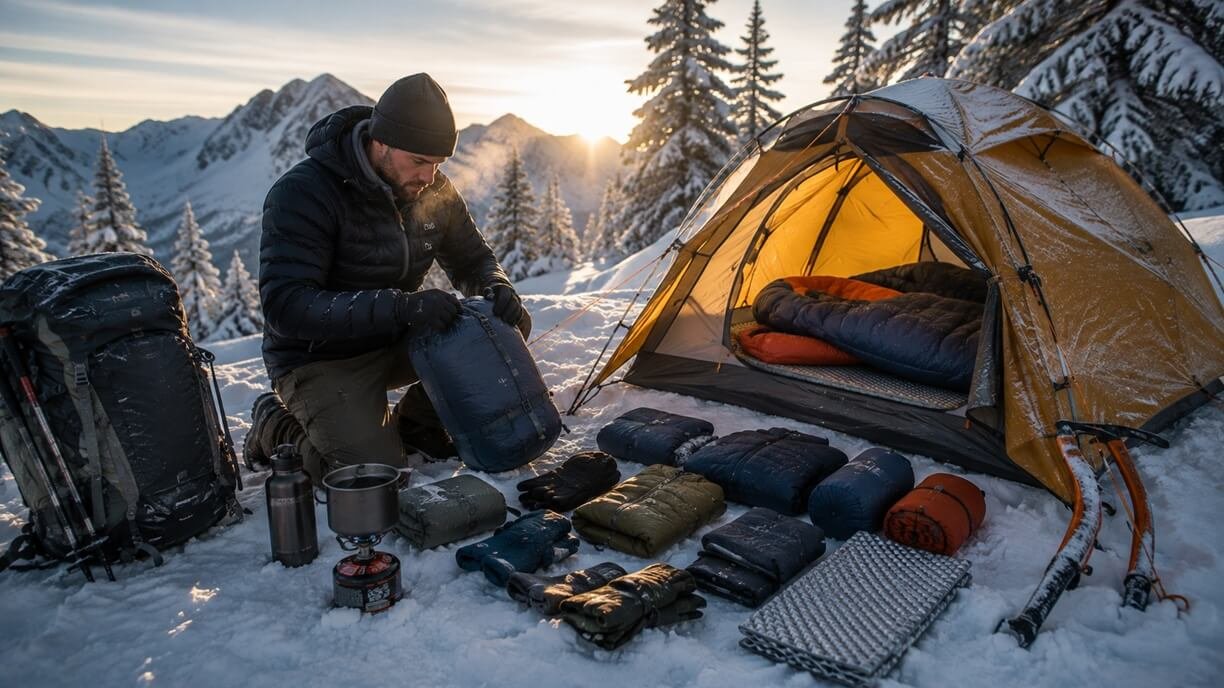
Cold-weather camping requires careful management of moisture and heat loss. The goal isn’t simply to add more clothing. It’s to maintain a balanced system.
Keep Insulation Dry
Wet insulation loses effectiveness.
Protect:
- Sleeping bag
- Down jacket
- Spare clothing
- Gloves
- Socks
Use waterproof storage where appropriate.
Manage Sweat
Sweating heavily during activity can leave clothing damp. Adjust layers before you become overheated. A useful principle is:
Vent early rather than trying to cool down after you’re already sweating heavily.
Prepare Camp Before Darkness
Cold-weather camp setup becomes much harder after sunset. Whenever practical, establish shelter and organize critical equipment while you still have good visibility.
11. Master Rainy-Weather Camping
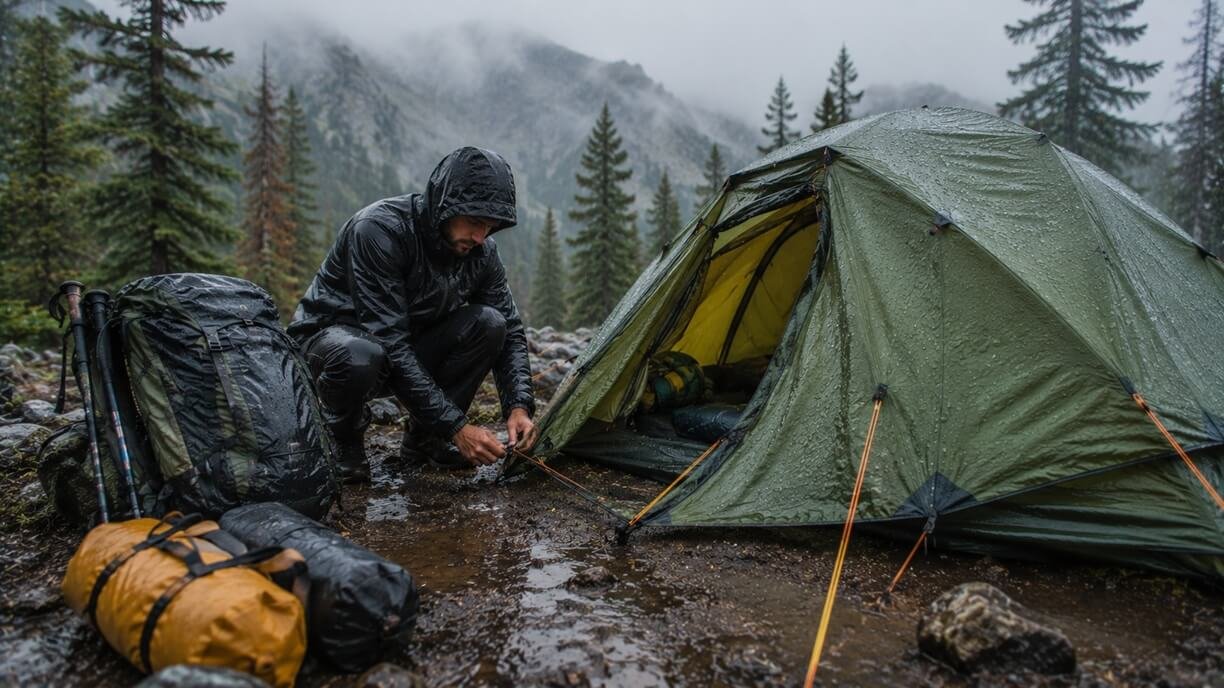
Rain doesn’t have to ruin a camping trip. The key is preventing water from becoming a camp-wide problem.
Set Up Shelter Before Everything Gets Wet
If rain is approaching, prioritize your shelter. Once the shelter is functioning, you have a dry place to organize everything else.
Protect the Sleeping Area
Avoid bringing unnecessary wet equipment into your sleeping space.
Keep:
- Sleeping bag
- Dry clothing
- Electronics
- Important personal items
protected from unnecessary moisture.
Create a Wet-Dry Transition Area
A small area near the shelter entrance can function as a transition point for wet boots and rain gear. This keeps water and mud from spreading through the sleeping area.
Keep Rain Gear Accessible
Don’t bury your rain jacket at the bottom of your backpack. Rain protection should be immediately available when weather changes.
12. Improve Windy-Weather Camping
Strong wind tests every part of your campsite. Before conditions worsen:
- Check stakes.
- Inspect guylines.
- Tighten appropriate tension points.
- Remove unnecessary loose items.
- Secure cookware.
- Position equipment to reduce wind exposure.
- Reassess the shelter if conditions change.
Don’t wait until the tent is shaking violently before inspecting it. Preventative adjustments are easier than emergency repairs.
13. Master Hot-Weather Camping
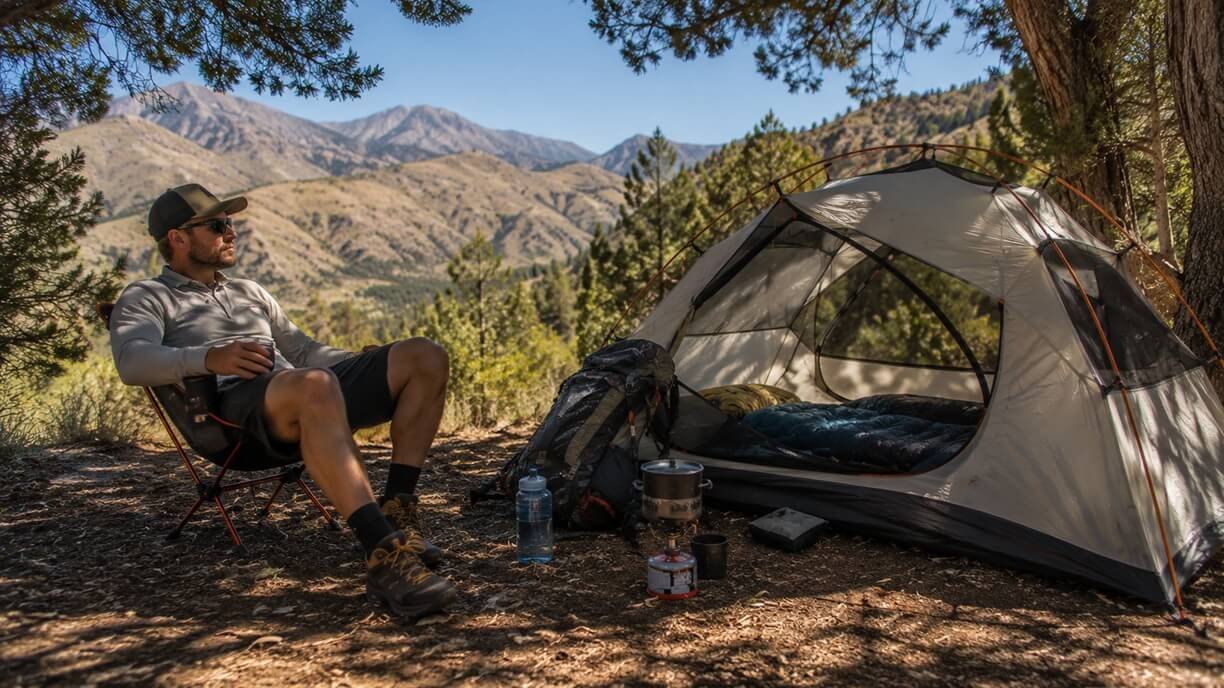
Hot-weather camping presents a different set of challenges. Your priorities shift toward:
- Shade
- Ventilation
- Hydration
- Sun protection
- Reduced exertion
- Food management
Maximize Shade
Position the camp to take advantage of natural shade when appropriate. Remember that the sun moves. A location that is shaded at midday may become exposed later.
Maximize Airflow
Keep shelter ventilation open whenever conditions allow. A tent with good airflow can feel dramatically more comfortable than a sealed shelter.
Change Your Daily Schedule
In very hot conditions, consider completing demanding activities during cooler parts of the day and using the hottest period for rest.
14. Build an Efficient Evening Routine
A strong evening routine reduces morning stress.
Before sleeping:
- Refill water.
- Clean cookware.
- Store food properly.
- Dry wet clothing where practical.
- Check weather.
- Prepare tomorrow’s clothes.
- Organize essential equipment.
- Review the next day’s itinerary.
- Secure the campsite.
The objective is simple:
Make tomorrow morning easier before you go to sleep tonight.
15. Master the Advanced Morning Routine
A slow morning isn’t necessarily relaxing. An efficient morning gives you more time to enjoy the outdoors. A useful sequence is:
- Wake and assess conditions.
- Prepare a drink.
- Eat breakfast.
- Pack sleeping equipment.
- Break down shelter.
- Check the campsite.
- Pack remaining equipment.
- Perform a final gear check.
- Inspect the area for forgotten items.
- Leave the campsite clean.
If rain is falling, reverse the order where necessary so critical equipment stays dry.
16. Learn Efficient Camp Breakdown
Breaking camp is a skill in itself. Instead of randomly stuffing everything into your backpack or vehicle, develop a repeatable system.
Pack in the Order You Need Equipment
Equipment required later should be packed accordingly.
For example:
Frequently needed → easily accessible
Rarely needed → deeper storage
For backpacking, rain gear, water, navigation tools, and emergency essentials should remain accessible rather than buried. For car camping, the same principle applies to vehicle organization.
Inspect the Campsite Twice
Do one inspection after packing. Then perform another inspection immediately before leaving.
Look for:
- Small gear
- Food scraps
- Trash
- Tent stakes
- Cordage
- Packaging
- Clothing
- Electronics
Experienced campers don’t rely entirely on memory. They develop a routine.
17. Troubleshoot Common Tent Problems
Tent Condensation
Problem: Water droplets form inside the shelter.
Potential causes:
- Poor ventilation
- High humidity
- Wet clothing
- Breathing
- Damp ground
Solutions:
- Improve ventilation.
- Dry wet equipment outside when practical.
- Keep airflow paths open.
- Avoid unnecessary moisture inside the shelter.
Tent Leaking
First determine whether the water is actually coming through the fabric. Possible causes include:
- Poor seam sealing
- Improper rainfly configuration
- Water entering through an open door
- Splashback
- Condensation
Identify the source before attempting a repair.
Tent Flapping in Wind
Check:
- Stakes
- Guylines
- Pole structure
- Fabric tension
Correct the source rather than simply tightening everything.
18. Troubleshoot Stove Problems
A stove failure can make meal preparation difficult. Common problems include:
- Fuel issues
- Blocked burner
- Incorrect setup
- Cold conditions
- Wind
- Damaged components
Always follow the manufacturer’s instructions and use fuel systems compatible with your stove. Never improvise with incompatible fuels.
Carry a Backup Cooking Plan
For longer or more remote trips, consider having an alternative way to prepare food appropriate to the trip. A backup doesn’t have to mean carrying a second complete stove. It could simply mean carrying foods that don’t require extensive cooking.
19. Troubleshoot Wet Sleeping Gear
If your sleeping gear becomes damp:
- Identify the moisture source.
- Separate it from additional wet equipment.
- Ventilate when conditions allow.
- Dry it during suitable weather.
- Avoid compressing wet insulation unnecessarily.
- Protect it from additional precipitation.
The best solution is usually prevention.
20. Create a Camping Repair Kit
A compact repair kit can solve many ordinary camping problems. Depending on your equipment, consider:
- Repair tape
- Cordage
- Small patches
- Needle and thread
- Multi-purpose repair tools
- Spare tent stakes
- Buckle replacements
- Gear-specific repair items
Don’t carry every possible replacement part. Carry the items most likely to solve realistic problems with your equipment.
21. Master Camping Comfort Without Overpacking
Advanced camping doesn’t mean bringing your entire home into the forest. The goal is high comfort per item carried. Ask of every comfort item:
Does this significantly improve the experience relative to its weight, size, cost, and complexity?
A lightweight pillow provides excellent value. A large unnecessary piece of furniture may not. The best camping systems are selective.
22. Improve Camp Lighting
Good lighting makes camp easier to operate after dark. Use a combination of:
- Headlamp
- Lantern
- Small backup light
A headlamp is particularly useful because it leaves your hands free. Keep your primary light in a consistent location so you can find it immediately.
23. Improve Food and Gear Storage
Organization is especially important when camping with food, cooking equipment, or wildlife concerns. Follow local regulations and campground requirements for food storage. Keep food separate from sleeping equipment when appropriate. Don’t leave food or scented items scattered around camp.
A consistent storage system reduces both mess and forgotten items.
24. Advanced Camping with Children
Camping with children requires a different approach. Instead of trying to make everything perfect, create simple systems. Give children appropriate responsibilities such as:
- Helping organize personal gear.
- Carrying suitable lightweight items.
- Collecting approved camp materials where permitted.
- Helping prepare simple meals.
- Checking that personal items are packed.
The objective is to teach camping skills while maintaining safety and age-appropriate expectations.
25. Advanced Group Camping
Large groups can quickly become disorganized without a system. Assign responsibilities for:
- Shelter
- Food
- Water
- Cleanup
- Gear
- Camp organization
Avoid having everyone perform the same task while other important jobs are forgotten. A clear division of responsibilities makes camp faster and more enjoyable.
26. Solo Camping Requires Stronger Camp Systems
Solo camping removes the convenience of shared responsibilities.
You must handle:
- Shelter
- Cooking
- Water
- Gear organization
- Camp maintenance
- Communication
- Emergency planning
This makes simplicity particularly valuable. Choose equipment and routines that you can operate efficiently without assistance.
27. Advanced Leave No Trace Camping
Camping skill includes knowing how to minimize your impact. Follow local regulations and established Leave No Trace principles.
Focus on:
- Using durable surfaces.
- Avoiding unnecessary vegetation damage.
- Managing waste properly.
- Keeping food secure.
- Minimizing fire impact.
- Respecting wildlife.
- Leaving campsites clean.
An experienced camper should be able to enjoy a campsite without leaving obvious evidence of their stay.
28. Build a Personal Camping System
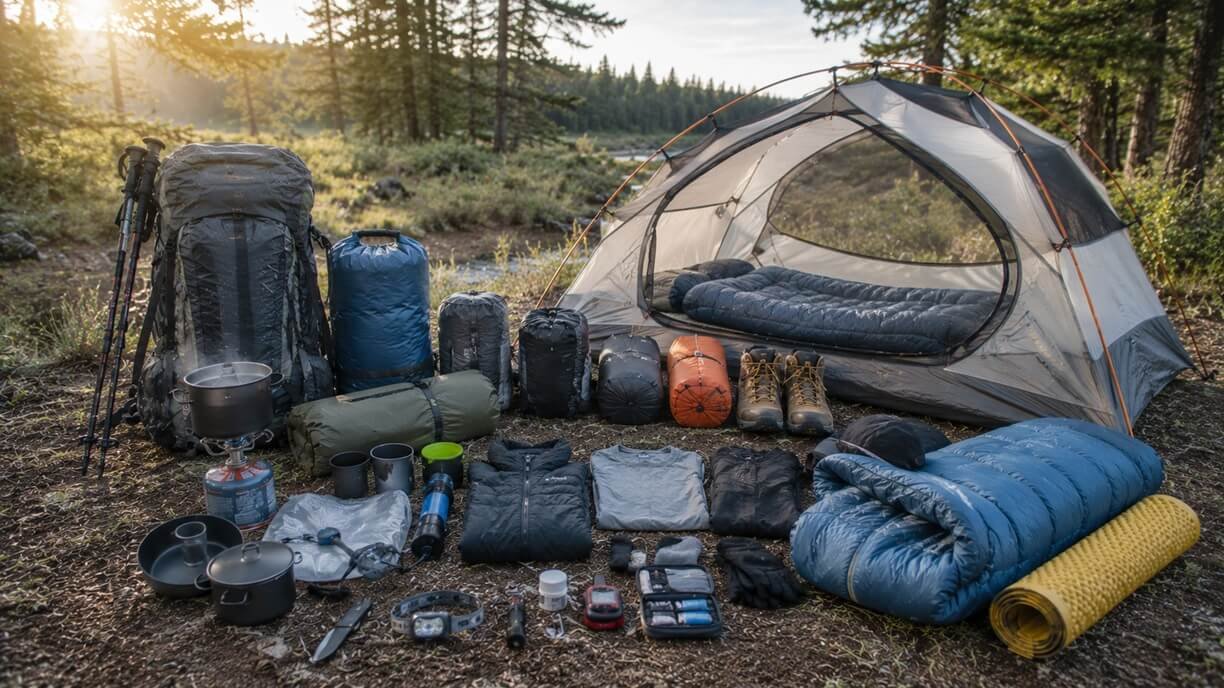
The biggest step toward becoming an advanced camper is developing a system that works specifically for you. Your system should include:
Before the Trip
- Check weather.
- Review campsite rules.
- Prepare equipment.
- Organize food.
- Check fuel.
- Inspect shelter.
- Prepare clothing.
Arrival
- Inspect campsite.
- Establish shelter.
- Organize zones.
- Manage water.
- Prepare food.
- Secure equipment.
Evening
- Clean camp.
- Dry gear.
- Store food.
- Check weather.
- Prepare tomorrow’s equipment.
Morning
- Eat.
- Pack systematically.
- Inspect campsite.
- Check equipment.
- Leave no unnecessary trace.
After the Trip
- Dry equipment.
- Clean cookware.
- Inspect tent.
- Recharge electronics.
- Replace used supplies.
- Record lessons learned.
This turns camping from a collection of random tasks into a repeatable process.
29. Keep a Camping Journal
One of the fastest ways to improve is to document what happened. After each trip, record:
- Weather
- Campsite
- Shelter performance
- Cooking system
- Food quantities
- Gear problems
- Sleep quality
- Moisture problems
- What worked
- What failed
- What you would change
After several trips, patterns begin to appear.
You may discover:
- You’re carrying too much fuel.
- Your tent collects condensation in certain conditions.
- A particular meal is inefficient.
- You need better rain organization.
- A particular campsite configuration works better.
Experience becomes more valuable when you deliberately learn from it.
30. Advanced Camping Skill Progression
You don’t need to master everything immediately.
Beginner Camper
Focus on:
- Tent setup
- Basic cooking
- Sleeping system
- Packing
- Campsite cleanup
- Basic weather preparation
Intermediate Camper
Add:
- Better campsite selection
- Efficient camp organization
- Fuel management
- Moisture control
- Weather-specific shelter setup
- Advanced meal planning
Advanced Camper
Develop:
- Rapid camp setup
- Highly efficient cooking systems
- Complex weather adaptation
- Advanced moisture management
- Equipment troubleshooting
- Group camp organization
- Low-impact campsite management
- Personal camping systems
Expert-Level Camper
The goal isn’t to carry more equipment or perform complicated tricks.
Expert campers tend to:
- Make fewer unnecessary movements.
- Carry only useful equipment.
- Set up quickly without rushing.
- Anticipate problems.
- Maintain comfortable systems.
- Adapt equipment to conditions.
- Leave minimal impact.
- Teach others effectively.
Expertise often looks surprisingly simple.
Advanced Camping Skills Checklist
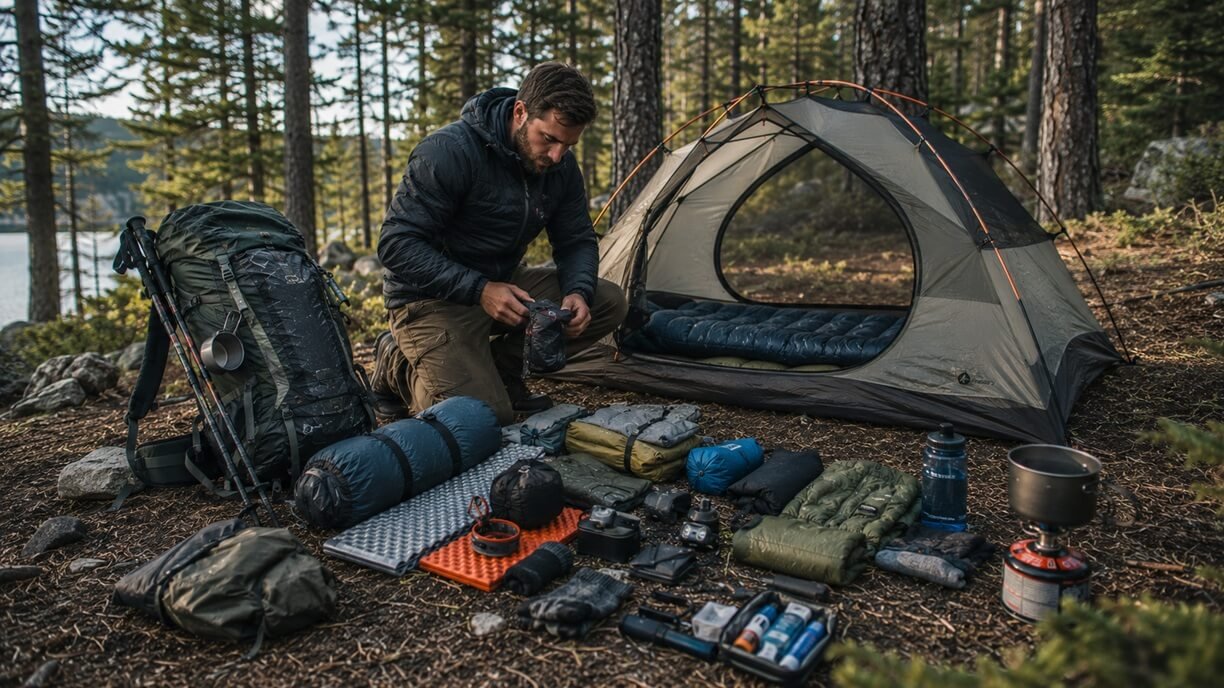
Use this checklist to identify areas where you can improve.
Campsite Selection
- Evaluate drainage before pitching
- Consider wind exposure
- Check overhead hazards
- Consider sun and shade
- Plan the overall camp layout
- Identify appropriate cooking areas
Shelter Skills
- Pitch the tent efficiently
- Adjust tension correctly
- Use guylines appropriately
- Improve ventilation
- Reduce condensation
- Configure shelter for changing weather
Camp Organization
- Create functional camp zones
- Maintain consistent gear locations
- Separate wet and dry equipment
- Keep essential items accessible
- Establish an efficient arrival routine
Cooking
- Plan meals around available equipment
- Reduce fuel consumption
- Sequence cooking efficiently
- Minimize cookware
- Clean immediately after meals
- Maintain an appropriate backup food option
Fire
- Understand local fire regulations
- Build only necessary fires
- Use appropriate fuel
- Minimize fire impact
- Extinguish fires completely
Weather
- Prepare shelter before rain
- Adjust camp for wind
- Manage condensation
- Protect insulation from moisture
- Adapt camp routines to heat or cold
Comfort
- Optimize sleeping insulation
- Maintain dry sleeping gear
- Manage clothing layers
- Use efficient camp lighting
- Reduce unnecessary weight
Camp Breakdown
- Pack systematically
- Inspect the campsite
- Check for forgotten gear
- Remove trash
- Leave the site clean
Common Advanced Camping Mistakes
Even experienced campers can develop inefficient habits.
1. Choosing a Campsite Too Quickly
- Better approach: Spend a few minutes evaluating the entire site.
2. Setting Up Camp Too Late
- Better approach: Establish camp while you still have useful daylight.
3. Sealing the Tent Completely
- Better approach: Balance weather protection with ventilation.
4. Carrying Too Much
- Better approach: Evaluate each item by usefulness.
5. Ignoring Small Gear Problems
- Better approach: Repair minor problems immediately.
6. Treating Cooking as an Afterthought
- Better approach: Design your cooking system before the trip.
7. Leaving Everything for Morning
- Better approach: Complete as many small tasks as possible before sleeping.
How to Know When You’ve Become an Advanced Camper
Advanced camping isn’t measured by how many gadgets you own.
You are progressing when you can:
- Choose a suitable campsite quickly.
- Set up shelter efficiently.
- Keep important equipment dry.
- Prepare meals without unnecessary effort.
- Adapt camp to weather changes.
- Solve small equipment problems.
- Maintain an organized campsite.
- Break camp without forgetting anything.
- Stay comfortable without excessive equipment.
- Teach newer campers’ useful techniques.
The strongest sign of improvement is that camping starts to feel simple. You don’t need to think about every individual task because your routines become automatic.
Advanced Camping Skills vs. Wilderness Skills
These subjects overlap, but they shouldn’t be treated as identical.
| Advanced Camping Skills | Wilderness Skills |
| Campsite selection | Broader environmental awareness |
| Tent setup | Navigation |
| Camp organization | Wilderness risk management |
| Camp cooking | Wilderness emergency skills |
| Fire management | Leadership |
| Moisture management | Backcountry decision-making |
| Sleeping systems | Terrain awareness |
| Camp routines | Wilderness travel |
| Gear troubleshooting | Broader self-reliance |
| Low-impact camping | Wilderness competence |
Your camping skills help you operate an effective campsite. Your broader wilderness skills help you operate safely and confidently in remote environments. For the broader subject, see our Complete Wilderness Skills Guide.
Frequently Asked Questions About Advanced Camping Skills
What are the most important advanced camping skills?
The most important, advanced camping skills include campsite selection, efficient shelter setup, moisture management, camp organization, cooking efficiency, weather adaptation, equipment troubleshooting, and consistent camp routines.
How can I become a better camper?
Practice the same fundamental systems repeatedly and gradually introduce more challenging conditions. Focus on improving campsite selection, shelter setup, cooking, organization, moisture management, and camp breakdown rather than simply buying more equipment.
Is advanced camping the same as wilderness survival?
No. Advanced camping focuses primarily on operating a campsite effectively and comfortably. Wilderness survival is concerned with responding to emergency situations when normal resources and plans may fail.
Do advanced campers need expensive gear?
No. High-quality equipment can improve performance and durability, but advanced camping skills come primarily from knowledge, practice, organization, and good decision-making.
How do I prevent condensation inside my tent?
Improve ventilation, keep wet clothing outside when practical, avoid unnecessary moisture inside the shelter, and choose a campsite with appropriate airflow. Condensation is often easier to prevent than remove.
What should I do if my campsite becomes wet?
Protect your shelter and sleeping system first. Improve drainage where appropriate without damaging the site, move wet equipment to a controlled drying area, and keep essential insulation protected from further moisture.
How can I cook more efficiently while camping?
Choose meals that match your equipment, minimize cookware, plan ingredient preparation in advance, use fuel efficiently, and clean cookware immediately after eating.
How do I improve my camping skills without taking difficult trips?
Practice individual skills on familiar, low-risk camping trips. Test shelter setups, cooking systems, moisture-management techniques, gear organization, and camp routines before relying on them in more challenging environments.
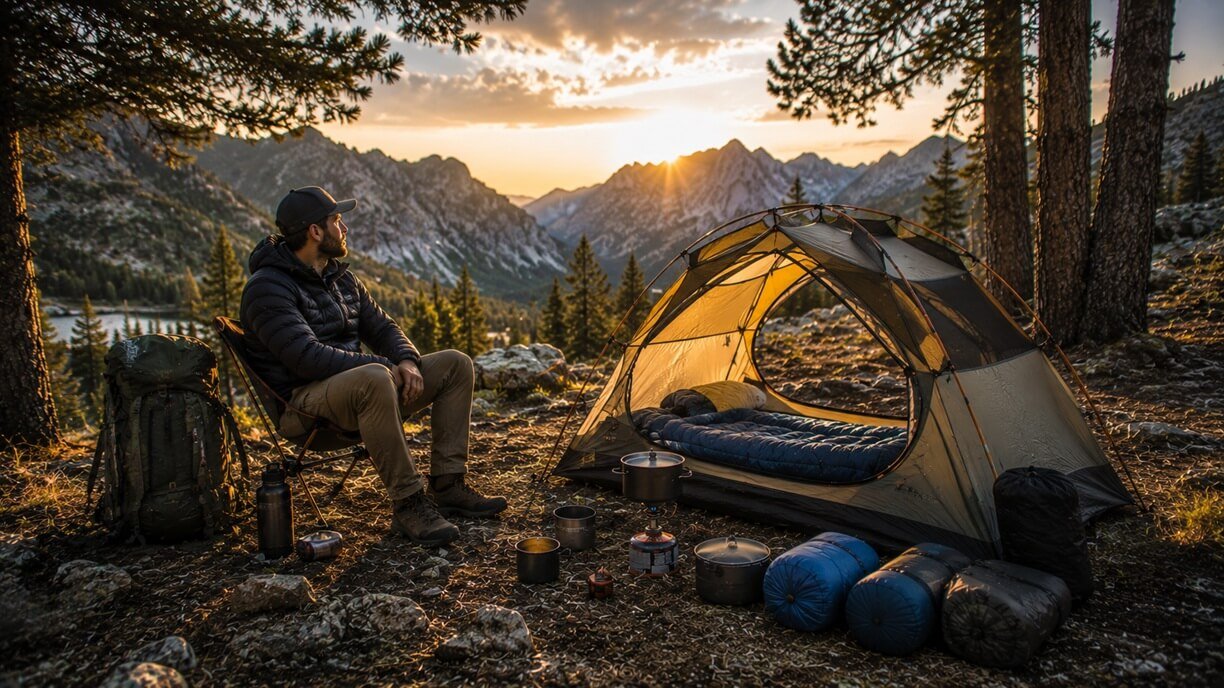
Final Thoughts: Mastering Advanced Camping Skills
Advanced camping isn’t about making outdoor adventures more complicated. It’s about making them more efficient, comfortable, adaptable, and enjoyable. The biggest improvements usually come from small habits:
- Choosing a better campsite.
- Pitching your shelter correctly.
- Keeping sleeping gear dry.
- Organizing equipment consistently.
- Cooking with less fuel.
- Preparing for weather before it arrives.
Fixing small problems early. Preparing tomorrow’s camp before going to sleep. Leaving the campsite clean. Over time, these small decisions become automatic. You stop thinking about camping as a collection of individual chores and begin operating a simple system that works in different environments and conditions.
That’s the real progression from beginner to advanced camper. You don’t necessarily carry more and spend more. You simply know what to do, when to do it, and why it matters. And that knowledge makes almost every camping trip better.
Recommended Next Steps
If you’re building a complete outdoor skill set, continue developing your camping expertise alongside broader wilderness abilities. Start with the Complete Wilderness Skills Guide for navigation, environmental awareness, wilderness decision-making, leadership, and broader backcountry skills.
Then continue building specialized camping knowledge through topics such as campsite selection, tent setup, camp cooking, staying warm, keeping bedding dry, and other camping-specific techniques.


2 Comments