
The Complete Wilderness Skills Guide (2027)

Whether you’re planning a weekend hike, a multi-day backpacking trip, or a remote wilderness expedition, your success depends on far more than the gear you carry. Modern outdoor equipment has become lighter, stronger, and more reliable than ever, but even the best gear cannot replace sound judgment, practical knowledge, and well-developed wilderness skills.
Many outdoor enthusiasts spend thousands of dollars on quality backpacks, outdoor tents, GPS devices, and clothing but overlooking the skills that allow experienced hikers and campers to adapt when conditions change. Batteries die, trails disappear under snow, storms arrive earlier than expected, and simple mistakes can quickly become serious problems if you lack the knowledge to respond effectively.
Wilderness skills are not about surviving dramatic emergencies portrayed in television shows. Instead, they are the everyday abilities that help you travel efficiently, make wise decisions, reduce unnecessary risks, and enjoy the outdoors with greater confidence. Knowing how to interpret changing weather, recognize hazardous terrain, choose a safe campsite, manage limited water, or navigate when technology fails are all examples of practical skills that improve every outdoor adventure.
The most experienced hikers, backpackers, and wilderness travelers rarely rely on a single ability. Rather, they combine dozens of complementary skills into a complete decision-making system that helps them anticipate problems before they occur. This systems-based approach is what separates experienced outdoorspeople from beginners who rely primarily on equipment.
This guide is designed to be the central resource for developing those capabilities. Instead of teaching isolated techniques, it introduces the complete framework of wilderness competence—from planning and navigation to campcraft, environmental awareness, and risk management—while linking to more detailed resources throughout Outdoor-Shell where you can explore individual topics in depth.
Whether your goal is to hike with greater confidence, prepare for longer backpacking trips, improve your bushcraft knowledge, or simply become more self-reliant outdoors, this guide is a roadmap for building skills that will benefit every adventure for years to come.
What You’ll Learn in This Guide
This guide takes a broader approach by explaining how experienced outdoor fans think, prepare, and adapt in changing environments. By the end of this guide, you’ll understand:
- What wilderness skills are and why they matter beyond survival situations.
- How different outdoor disciplines—such as hiking, backpacking, camping, bushcraft, and wilderness travel—overlap and complement one another.
- A structured framework for learning outdoor skills in the right order.
- How experienced hikers assess and manage risk before problems develop.
- Why observation, planning, and sound judgment are often more valuable than expensive gear.
- Which skills deserve the highest priority as you gain outdoor experience.
- How to create your own long-term wilderness skills development plan.
What Are Wilderness Skills?
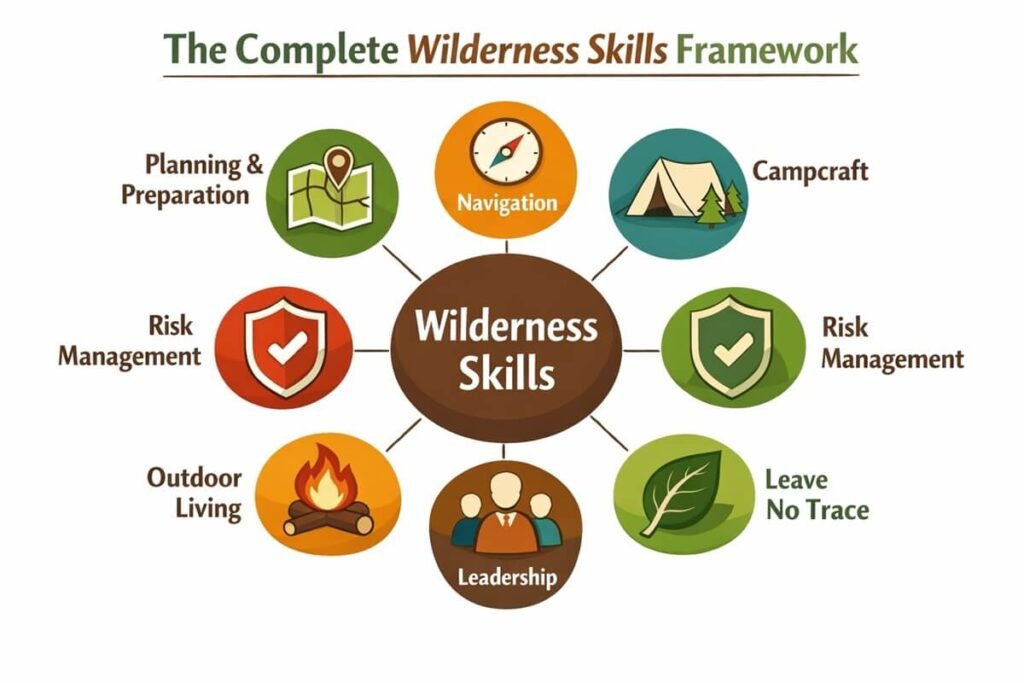
Wilderness skills are practical abilities that help people travel, camp, navigate, solve problems, and respond safely in natural environments. Unlike survival skills, which are primarily used during emergencies, wilderness skills focus on preventing emergencies through preparation, observation, and sound decision-making.
These skills include navigation, shelter building and tent setup, fire building, water management, first aid, weather awareness, and risk management. Together, these abilities create a complete outdoor skill set for hiking, backpacking, canoeing, hunting, climbing, and other wilderness activities. Once you understand what wilderness skills are, the next step is understanding how they build upon one another.
The Wilderness Skills Pyramid
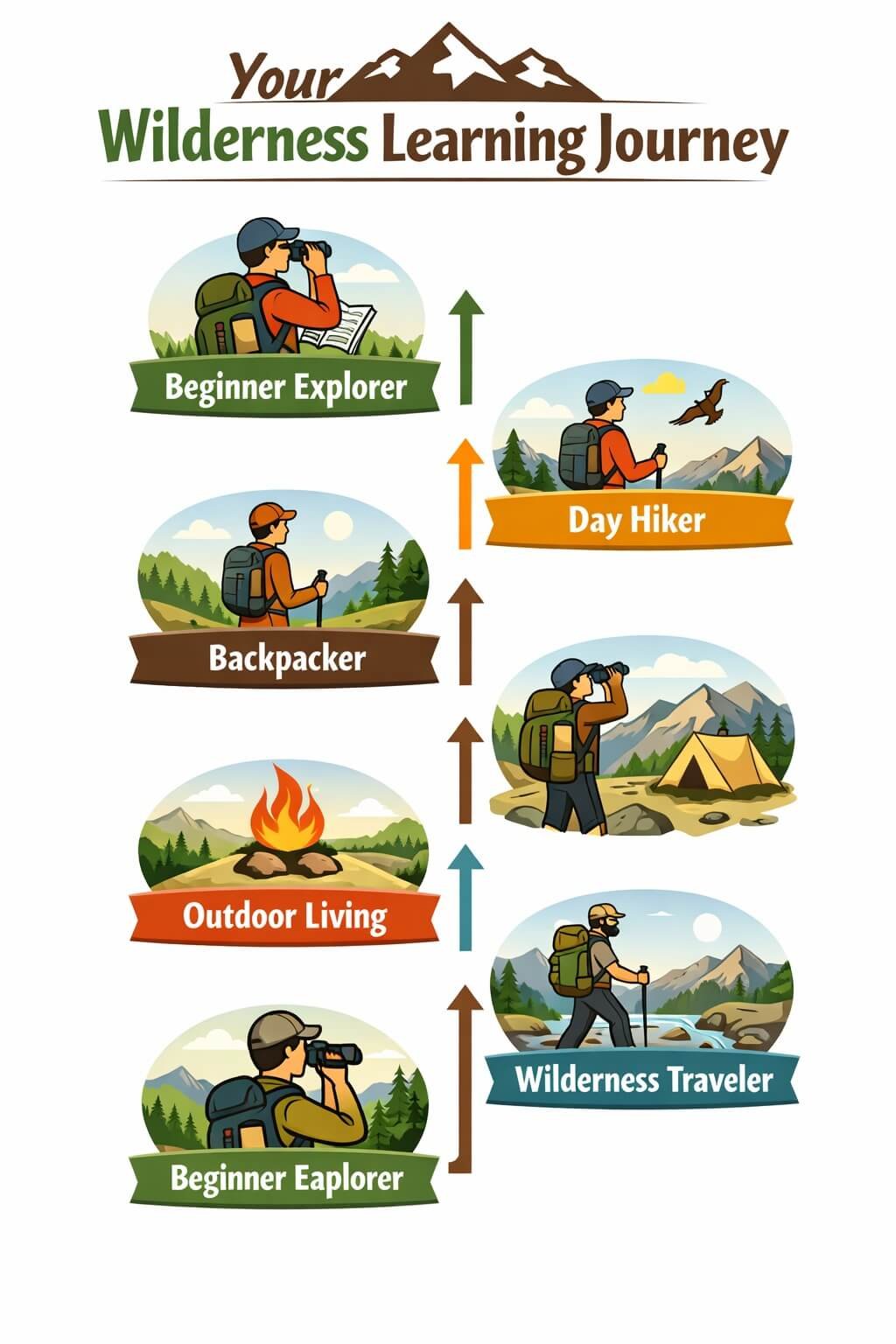
Wilderness skills are best learned as a progression rather than a checklist. Each level builds upon the previous one, creating a solid foundation for safe and confident backcountry travel. Mastering the basics first makes advanced skills more effective and helps you make better decisions in changing outdoor conditions.
- Level 1: Planning & Preparation: The foundation for every successful wilderness trip.
- Level 2: Navigation & Campcraft: The essential skills for traveling and living comfortably outdoors.
- Level 3: Environmental Awareness: Understanding natural conditions and adapting to the surrounding environment.
- Level 4: Risk Management: Recognizing hazards and making informed decisions to reduce potential dangers.
- Level 5: Leadership & Decision-Making: Applying experience, judgment, and communication to handle complex situations and guide others effectively.
Together, these five levels create a practical framework for developing wilderness competence. The following sections explore each core wilderness skill in greater detail.
The 7 Core Wilderness Skills Every Outdoor Enthusiast Should Develop
The following seven wilderness skills form the foundation of safe and confident backcountry travel. Each skill serves a unique purpose, but together they create a complete outdoor skill set.
1. Environmental Awareness: Learning to Read the Landscape
Environmental awareness is the ability to observe and interpret your surroundings before small changes become significant problems. Instead of simply following a trail, experienced outdoorspeople continuously gather information from the landscape to understand how weather, terrain, water, vegetation, wildlife, and daylight influence travel conditions.
Developing this habit helps you anticipate challenges, adapt to changing environments, and make more informed decisions throughout your journey.
Reading the Sky
The sky often provides the earliest indication that conditions are changing. Although weather forecasts are an important part of trip planning, local weather can evolve quickly, particularly in mountainous, coastal, or high-altitude environments.
Pay attention to signs such as:
- Clouds building vertically during the afternoon.
- Rapid changes in cloud movement or wind direction.
- Decreasing visibility caused by mist or fog.
- Darkening horizons or approaching storm systems.
- Sudden temperature changes.
No single sign guarantees severe weather, but observing multiple changes together helps you recognize when conditions may be becoming less stable.
Reading the Terrain
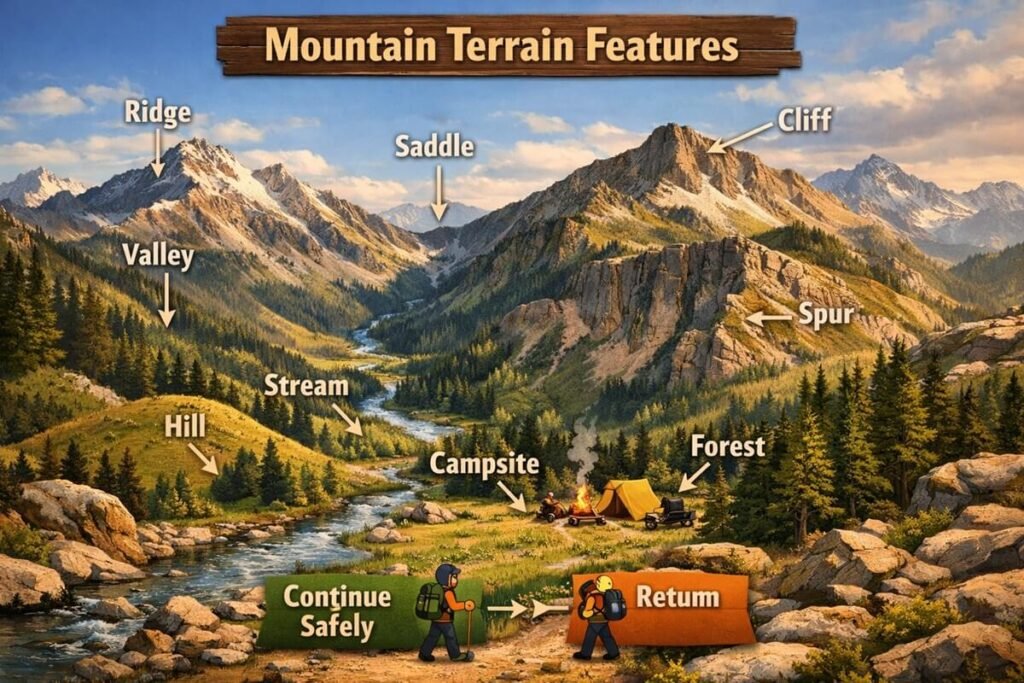
Terrain affects nearly every aspect of wilderness travel, from navigation and campsite selection to drainage, wind exposure, and footing. Learning to interpret the landscape helps you anticipate challenges before reaching them. As you travel, consider questions such as:
- Does this valley collect cold air overnight?
- Is this slope vulnerable to loose rocks?
- Could heavy rain create runoff through this campsite?
- Is this ridgeline likely to experience stronger winds?
- Where would water naturally flow after a storm?
Understanding terrain improves both safety and route planning.
Reading Water
Water provides valuable clues about changing environmental conditions. Streams, rivers, lakes, and wetlands often reveal information that isn’t immediately obvious from the surrounding landscape.
For example:
- Rising water levels indicate recent rainfall upstream.
- Fast-moving currents can signal increased runoff.
- Low stream flow suggests seasonal water shortages later along your route.
- Murky water may indicate recent disturbances or heavy rainfall.
Treat water as both a resource and an environmental indicator.
Reading Vegetation
Plants can reveal important information about local conditions. Variations in vegetation often indicate differences in moisture, soil stability, wind exposure, wildlife activity, and available shade. Observing vegetation can help you identify:
- Damp or poorly drained ground.
- Areas exposed to strong winds.
- Stable or unstable soil conditions.
- Natural shelter and shade.
- Potential campsite quality.
Even a basic understanding of plant communities improves your awareness of the surrounding environment.
Reading Wildlife
Wildlife behavior often reflects changes occurring within the environment. While no single observation should be considered definitive, animals can provide useful context about current conditions.
Examples include:
- Birds becoming quieter before changing weather.
- Fresh tracks indicating recent animal activity.
- Increased wildlife movement near reliable water sources.
- Seasonal changes influencing migration or feeding patterns.
Observe wildlife respectfully while using these observations to build a broader understanding of your surroundings.
Reading Time and Light
Daylight is one of the most important resources during any wilderness trip. Experienced outdoorspeople continually monitor available light rather than relying solely on a planned schedule.
Pay attention to:
- The position of the sun.
- Remaining daylight.
- Lengthening shadows.
- Temperature changes approaching sunset.
- The time required to safely reach your destination.
Building Situational Awareness
Situational awareness is the habit of continuously evaluating both your surroundings and your own condition. Rather than focusing only on reaching the next destination, experienced outdoor travelers regularly pause to assess changing conditions.
Ask yourself:
- Has the terrain become more demanding?
- Is the weather changing?
- Do I have enough daylight remaining?
- Am I staying hydrated and maintaining energy?
- Does my current route still make sense?
- If conditions worsen, what alternatives are available?
With the combination of observations from the sky, terrain, water, vegetation, wildlife, and available daylight, you develop a more complete understanding of your environment. This continuous awareness helps you recognize changing conditions early and supports safer, more confident decision-making throughout every wilderness adventure.
2. Weather Awareness: Nature’s Most Powerful Variable
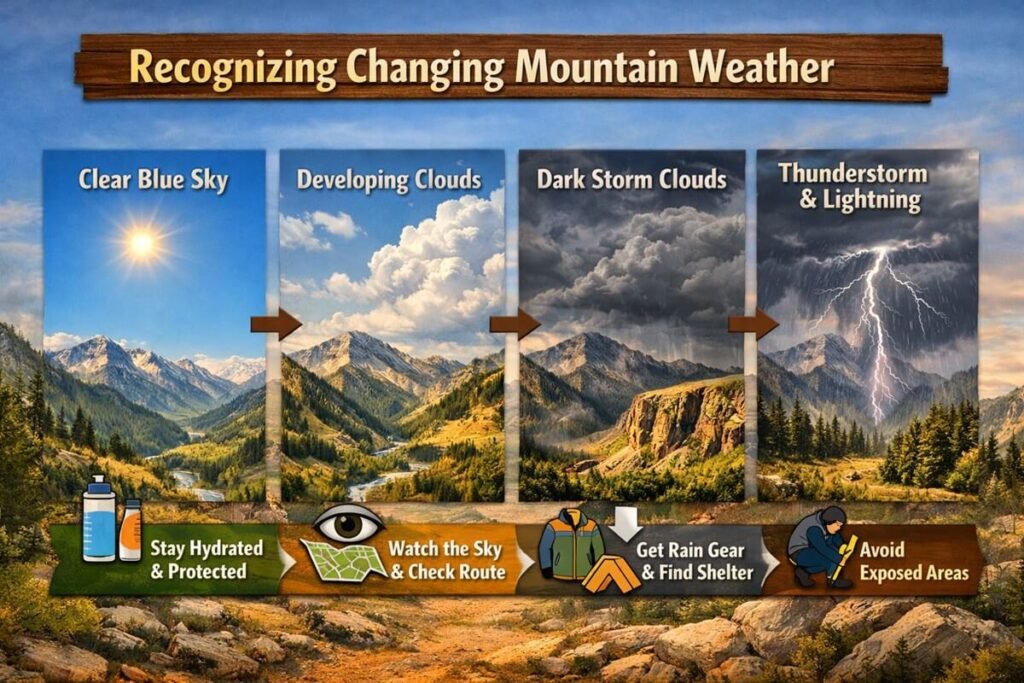
Few factors influence outdoor travel more than weather. Weather determines trail conditions, water availability, visibility, temperature, river levels, avalanche risk, and even the behavior of wildlife. Many outdoor accidents occur not because people failed to check the forecast, but because they underestimated how quickly conditions could change.
Experienced hikers develop the habit of monitoring weather throughout the day rather than treating the morning forecast as final. They pay attention to:
- Cloud development
- Wind direction
- Air pressure changes
- Temperature trends
- Humidity
- Visibility
- Storm timing
These observations help answer an important question:
Is the environment becoming more forgiving—or less?
Recognizing subtle weather changes early provides valuable time to adjust plans before conditions become hazardous.
3. Water Management: More Than Staying Hydrated
Water is one of the few resources every outdoor traveler depends on every single day. Yet effective water management extends far beyond carrying enough to drink. It involves understanding where reliable sources are located, estimating daily consumption, recognizing environmental factors that increase water needs, and conserving supplies without compromising health or performance.
Experienced backpackers think about water continuously throughout a trip. Questions they regularly consider include:
- Where is the next dependable water source?
- How much water should I carry between locations?
- Will today’s temperature increase my water requirements?
- Should I refill now or wait until later?
- How will tomorrow’s route affect availability?
This forward-thinking approach prevents both dehydration and unnecessary weight while improving overall trip efficiency.
4. Movement Efficiency: Conserving Energy Throughout the Day
One of the least discussed wilderness skills is simply moving well. Strong hikers are not always the fastest—they’re often the most efficient. Efficient movement means using terrain wisely, maintaining a sustainable pace, avoiding unnecessary effort, and preserving energy for unexpected challenges later in the day.
Experienced hikers rarely race uphill or exhaust themselves early in the morning. Instead, they develop a steady rhythm that allows them to travel comfortably for hours while minimizing fatigue.
5. Communication: The Skill That Matters Before an Emergency
When people think about communication in the wilderness, they often imagine satellite messengers, emergency beacons, or rescue situations. Although those tools are valuable, communication begins long before an emergency occurs.
Experienced outdoor travelers understand that clear communication reduces uncertainty for everyone involved. Whether hiking alone or with a group, sharing plans, setting expectations, and discussing potential changes helps prevent confusion and supports better decision-making throughout the trip.
Effective wilderness communication includes:
- Sharing your itinerary with a trusted contact before leaving.
- Discussing turnaround times with your hiking partners.
- Confirming meeting points and alternative routes.
- Agreeing on emergency procedures before starting the hike.
- Keeping group members informed about changing conditions.
Communication also plays an important role within hiking groups. Experienced leaders encourage open discussion rather than assuming everyone feels comfortable speaking up. A quieter group member may notice deteriorating weather, increasing fatigue, or navigation concerns before anyone else.
Many outdoor incidents occur not because people lack technical skills, but because important information isn’t shared until it’s too late. Strong communication creates better teamwork, better decisions, and safer adventures.
6. Self-Reliance: Becoming Less Dependent on Perfect Conditions
One of the defining characteristics of experienced outdoorspeople is self-reliance. Self-reliance doesn’t mean refusing help or intentionally traveling without equipment. Instead, it means developing the confidence to solve ordinary problems independently when circumstances change.
Every outdoor trip presents small challenges:
- A trail becomes washed out.
- Heavy rain delays your progress.
- A trekking pole breaks.
- Your planned campsite is occupied.
- A water source has dried up.
- Thick fog reduces visibility.
Self-reliant hikers rarely panic when plans change because they expect uncertainty to be part of every trip. Instead of searching for a perfect solution, they evaluate available options, adapt to current conditions, and continue moving safely toward their objective.
This ability develops gradually through experience. Each challenge overcome adds another layer of confidence, making future decisions easier and more measured. Over time, self-reliance becomes less about mastering individual techniques and more about trusting your ability to adapt.
7. Emergency Preparedness: Planning for Problems You Hope Never Happen
Preparation is often mistaken for pessimism. In reality, experienced hikers prepare for emergencies precisely because they expect their trips to be enjoyable. Emergency preparedness isn’t about expecting disaster—it’s about reducing the consequences if something unexpected occurs.
Preparation begins with asking practical questions before every trip:
- What if the weather changes unexpectedly?
- What if someone becomes injured?
- What if navigation becomes difficult?
- What if the planned route is blocked?
- What if we finish much later than expected?
Thinking through these possibilities encourages flexible planning rather than rigid schedules. Prepared hikers develop backup plans for important decisions, carry essential emergency equipment appropriate to the environment, and know when to modify or abandon an original objective if conditions become unfavorable.
“Good preparation provides options. And in the wilderness, having options often makes the difference between inconvenience and genuine danger.”
Move With the Terrain, Not Against It
One of the most common beginner mistakes is trying to maintain the same pace regardless of terrain. Experienced outdoorspeople adjust their movement to elevation, surface conditions, weather, visibility, group ability, and pack weight rather than forcing a constant speed.
Efficiency matters more than speed over long distances. A steady, sustainable pace usually preserves more energy and reduces unnecessary fatigue.
Uphill Travel: Climb Efficiently, Not Quickly
Steep climbs challenge both your muscles and cardiovascular system. Many hikers waste energy by attacking hills too aggressively, only to stop repeatedly to recover. Experienced hikers focus on maintaining a rhythm instead.
Helpful techniques include:
- Take Smaller Steps: Shorter strides reduce muscle fatigue and improve balance on steep slopes. Instead of climbing with powerful lunges, think of each step as controlled and deliberate.
- Maintain a Sustainable Breathing Rhythm: Avoid hiking at an intensity where conversation becomes impossible. If you’re constantly out of breath, you’re probably climbing too fast. A slightly slower pace usually allows you to continue much longer without needing extended breaks.
- Use Natural Rest Positions: Whenever appropriate, pause briefly using rocks, trekking poles, or stable trees rather than sitting down immediately. Short standing rests often allow muscles to recover without losing momentum.
- Look Ahead—Not Just at Your Feet: Scanning the trail several meters ahead helps identify easier lines through the terrain while reducing unnecessary movements. This becomes especially valuable on rocky trails.
Downhill Travel: Slow Is Often Faster
Descending feels easier than climbing, but many hiking injuries actually occur on the way down. Gravity increases impact forces on your knees, ankles, and feet. Experienced hikers descend with control rather than speed. Good downhill habits include:
- Short, balanced steps.
- Keeping your center of gravity over your feet.
- Avoiding sudden jumps between rocks.
- Looking ahead instead of directly downward.
- Using trekking poles to improve stability.
A controlled descent preserves energy and greatly reduces the likelihood of slips and falls.
Traveling Across Rocky Terrain
Rocky trails require constant balance adjustments. Instead of stepping from obstacle to obstacle randomly, experienced hikers begin looking several steps ahead. They choose stable footing before reaching it.
Whenever possible:
- Step onto large, solid rocks rather than loose stones.
- Test questionable surfaces before committing full weight.
- Avoid polished rocks that become slippery when wet.
- Keep your knees slightly bent to absorb impact.
Smooth, deliberate movement is usually more efficient than trying to move quickly.
Moving Through Dense Forest
Travel becomes significantly slower once trails disappear. Dense vegetation limits visibility, hides obstacles, and increases physical effort. Experienced wilderness travelers avoid fighting directly through thick vegetation whenever alternatives exist. Instead they look for:
- Natural openings.
- Animal paths.
- Ridge lines.
- Dry streambeds (when appropriate).
- Forests with wider tree spacing.
Choosing a slightly longer but more open route often saves considerable time and energy.
Traveling Through Open Alpine Terrain
Above the tree line, navigation often becomes easier because visibility improves. However, exposure increases dramatically. Challenges include:
- Strong winds.
- Sudden weather changes.
- Increased UV exposure.
- Lightning risk.
- Loose rock.
- Limited shelter.
Experienced hikers spend less time lingering in exposed locations than necessary and remain aware of escape routes back to lower terrain.
Crossing Loose Scree and Talus
Loose rock fields demand patience. Every step should be intentional. More willingly than focusing only on speed, concentrate on maintaining balance and minimizing unnecessary movement.
Helpful practices include:
- Testing large rocks before stepping.
- Keeping weight centered.
- Avoiding rapid direction changes.
- Maintaining spacing between group members to reduce rockfall hazards.
If conditions become unstable, slowing down usually improves both efficiency and safety.
Traveling Through Wet Ground, Mud, and Bogs
Wet terrain often tempts hikers to make unnecessary detours. Ironically, repeatedly avoiding mud can damage fragile vegetation and increase environmental impact.
Whenever practical:
- Stay on established trails.
- Step on durable surfaces.
- Avoid widening existing paths.
- Accept that muddy boots are often part of wilderness travel.
Good footwear and gaiters generally solve the problem better than constantly searching for perfectly dry footing.
Moving Across Snow
Snow completely changes how terrain behaves. Gentle hills may become slippery. Hidden rocks and streams disappear beneath the surface. Trails become difficult to follow. Instead of assuming summer techniques still apply, experienced hikers adjust their movement based on:
- Snow depth.
- Surface firmness.
- Temperature.
- Slope angle.
- Avalanche conditions.
Travel generally becomes slower and more deliberate, with greater emphasis on maintaining balance and evaluating terrain before every step.
Traveling in Hot, Dry Environments
Desert and exposed environments place different demands on hikers than forests or mountains. Sooner than conserving only physical energy, experienced hikers also conserve body temperature and water.
Common strategies include:
- Starting before sunrise.
- Resting during peak afternoon heat.
- Wearing breathable sun-protective clothing.
- Monitoring hydration continuously.
- Planning reliable water sources well in advance.
Managing heat is often more important than maintaining speed.
Adjusting Your Pace Throughout the Day
Experienced hikers adjust their pace as terrain, weather, daylight, and fatigue change throughout the day. The goal is not maximum speed but a sustainable rhythm that preserves energy, safety, and decision-making ability.
Moving Efficiently as a Group
Group travel introduces additional challenges. A group’s effective pace is rarely determined by its fastest member—it is determined by its slowest. Strong outdoor leaders focus on keeping the group together rather than pushing the pace.
Good habits include:
- Matching speed to the least experienced hiker.
- Taking short, regular breaks instead of infrequent long stops.
- Communicating upcoming obstacles.
- Regrouping at trail junctions.
- Watching for signs of fatigue or dehydration.
A well-managed group often covers ground more efficiently than individuals moving independently.
Wilderness Navigation Beyond GPS: How Experienced Navigators Stay Found
Modern GPS devices, mapping apps, and satellite communicators have transformed backcountry travel. They make route planning easier, improve emergency communication, and provide an extra layer of safety.
However, experienced outdoorspeople rarely rely on technology alone. Batteries fail. Devices break. Dense forests, deep valleys, and severe weather can reduce GPS accuracy. More importantly, blindly following a screen causes hikers to stop paying attention to the landscape around them.
Navigation Begins Before You Leave Home
Successful navigation starts long before your boots touch the trail. Experienced hikers spend time studying maps and building a mental picture of the route before beginning the trip. Rather than memorizing every turn, they focus on understanding the landscape.
Questions they ask include:
- Where are the major ridgelines?
- Which valleys collect water?
- Where are the highest and lowest points?
- Which sections are exposed?
- Where are likely campsites?
- Where are reliable water sources?
- What natural features will help confirm my location?
When you already understand the terrain, navigation becomes much less stressful.
Build a Mental Map Instead of Following a Line
Many beginners simply follow a GPS track. Experienced navigators build a three-dimensional understanding of the landscape.
Instead of thinking:
“Turn left in 500 meters.”
They think:
“The trail follows this ridge, crosses a creek, climbs the saddle, then enters a forest before reaching the lake.”
This mental model allows them to notice immediately when something doesn’t match expectations. A mental map also improves confidence if electronic navigation tools become unavailable.
Use the Landscape as Your Guide
Nature provides countless navigation clues if you know what to look for. Experienced hikers continuously relate their position to major terrain features, such as:
- Mountain ridges
- Valleys
- Rivers
- Lakes
- Cliffs
- Forest edges
- Open meadows
- Distinctive rock formations
These large features are far easier to recognize than individual trail markers and often remain visible even in unfamiliar terrain. If you are connecting your location to the broader landscape, you become less dependent on constant GPS checks.
Recognize Navigation Checkpoints
In preference over waiting until they feel uncertain, experienced hikers regularly confirm their position using natural checkpoints.
Examples include:
- Stream crossings
- Trail intersections
- Mountain passes
- Bridges
- Lakes
- Summits
- Large clearings
- Distinctive bends in rivers
Each checkpoint answers an important question:
“Does my current location match what I expected?”
Frequent confirmation prevents small navigation errors from becoming large ones.
Stay Ahead of Your Position
One habit shared by experienced navigators is that they’re always thinking one step ahead.
Instead of asking:
“Where am I?”
They ask:
“What should I see next?”
For example:
- A creek crossing in half a mile.
- A sharp climb after the valley.
- A ridge opening toward the west.
- A campsite near a lake.
When expected features appear at roughly the right time and place, your confidence in your location increases. If they don’t, it’s an early signal to stop and reassess.
Navigate With All Your Senses
Navigation isn’t purely visual. Experienced outdoorspeople gather information through multiple senses.
They notice:
- Wind becoming stronger as they approach an exposed ridge.
- Cooler air collecting in a valley.
- The sound of rushing water before reaching a river.
- The smell of damp vegetation near wetlands.
- Echoes changing in narrow canyons.
These subtle clues rarely replace a map, but they provide additional confirmation about the surrounding environment.
Know When to Stop
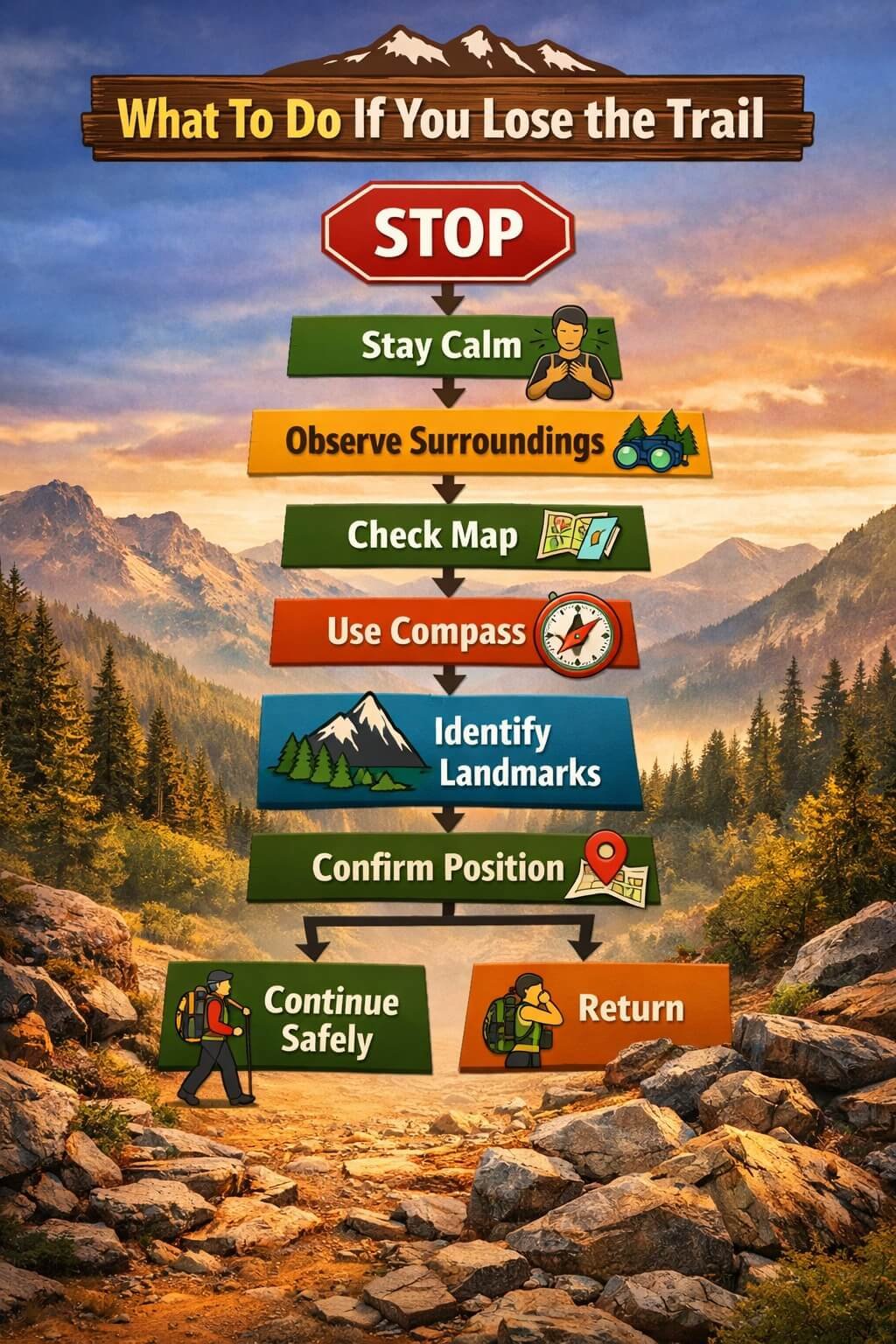
One of the biggest mistakes lost hikers make is continuing to walk after uncertainty appears. Experienced navigators do the opposite. When something doesn’t make sense, they stop moving. They compare the terrain with their mental map, review recent landmarks, and calmly evaluate possible explanations.
Often, a few minutes of careful observation prevents hours of unnecessary wandering. Movement without confidence usually increases the problem.
Recovering After a Navigation Error
Every experienced hiker has made navigation mistakes. The difference is how they respond. Rather than panicking or rushing ahead, experienced navigators follow a simple process:
- Stop moving.
- Identify the last location they knew with certainty.
- Compare the surrounding terrain with the map.
- Consider multiple explanations rather than assuming one is correct.
- Choose the safest option before continuing.
Treating navigation errors as puzzles instead of emergencies helps maintain clear thinking.
Technology Should Support Good Judgment
GPS watches, mapping apps, satellite messengers, and digital maps are outstanding tools. But they should support—not replace—your understanding of the landscape. Experienced outdoorspeople use technology to:
- Confirm their location.
- Check progress.
- Monitor weather.
- Record tracks.
- Communicate in emergencies.
They avoid becoming so focused on a screen that they stop observing the world around them. Good navigation comes from combining technology with awareness, preparation, and sound judgment.
Developing Navigation Confidence
Confidence doesn’t come from never making mistakes. It comes from learning to recognize small errors early and correcting them before they become significant. The more time you spend consciously observing terrain, comparing maps with reality, and thinking ahead, the more natural navigation becomes.
Eventually, you’ll notice something interesting.
You’ll spend less time asking, “Where am I?”
And more time thinking, “Everything around me makes sense.”
That quiet confidence is one of the clearest signs that your wilderness skills are maturing.
Expert Tip: Practice Navigation Before You Need It
The safest place to improve your navigation skills is on familiar trails. Challenge yourself to predict upcoming terrain before checking your map. Estimate where the next stream crossing, ridgeline, or junction will appear, then compare your expectations with reality.
Small exercises like these build observational habits that become invaluable in unfamiliar wilderness, where good navigation depends less on memorization and more on understanding how landscapes fit together.
Campcraft: Building a Safe and Efficient Wilderness Camp
At the end of a long day on the trail, many hikers think the difficult part is over. In reality, some of the most important wilderness decisions happen after you stop walking. A well-organized camp helps you recover physically, protects you from changing weather, conserves energy for the following day, and reduces the likelihood of small problems becoming serious overnight.
Experienced outdoorspeople don’t simply set up a tent—they build a temporary living system where every activity has a purpose and every piece of gear has a place. Good campcraft isn’t about comfort alone. It’s about creating an environment that supports good decisions, efficient routines, and responsible wilderness travel.
Think of Camp as a System
Beginners often see camp as just a place to sleep. Experienced wilderness travelers see it as a base of operations. Every part of camp should work together:
- Shelter protects against weather.
- Cooking area supports nutrition.
- Water system maintains hydration.
- Storage keeps equipment organized.
- Sleep system promotes recovery.
- Morning routine prepares the group for efficient travel.
Arrive Before You’re Exhausted
One of the biggest mistakes in wilderness travel is waiting too long to stop. When hikers continue until they’re completely exhausted, decision-making often suffers. They may rush camp setup, overlook hazards, skip meals, or neglect important equipment checks.
Experienced outdoorspeople try to arrive with enough daylight and energy to:
- Evaluate the area carefully.
- Set up camp without rushing.
- Prepare food comfortably.
- Organize equipment.
- Enjoy time outdoors.
- Review plans for the following day.
Reaching camp with energy in reserve usually results in a safer and more enjoyable evening.
Organize Camp Into Functional Zones
Instead of placing equipment wherever there’s space, experienced campers naturally organize their campsite into practical areas. General zones include:
Shelter Zone
Your sleeping area should remain clean, dry, and uncluttered. Avoid bringing muddy boots, cooking equipment, or unnecessary gear inside unless weather requires it. A tidy shelter makes it easier to find essential items during the night or in poor weather.
Cooking Zone
Preparing meals away from your sleeping area reduces clutter and encourages safer cooking practices. Keep fuel, cookware, and food organized so meals can be prepared efficiently, especially during bad weather. Cleaning up immediately after eating also helps discourage wildlife from investigating camp.
Water Zone
Treat water collection as its own routine rather than an afterthought. Whenever practical:
- Refill bottles before they’re empty.
- Filter or purify water soon after collecting it.
- Keep clean and untreated water separate.
- Know where tomorrow’s water source will be.
Good water management prevents unnecessary delays the following morning.
Equipment Zone
Assign consistent locations for frequently used gear. For example:
- Headlamp
- First aid kit
- Rain jacket
- Navigation tools
- Water filter
- Extra clothing
Knowing exactly where essential items are located becomes especially valuable after dark or during unexpected weather.
Develop Evening Habits
Experienced wilderness travelers rarely end the day by simply crawling into their sleeping bags. Instead, they follow simple routines that prepare both themselves and their equipment for tomorrow.
Common evening habits include:
- Refilling water bottles.
- Checking weather conditions.
- Organizing tomorrow’s clothing.
- Charging electronic devices if possible.
- Reviewing the next day’s route.
- Hanging damp clothing to dry.
- Inspecting footwear for damage.
- Repacking gear before sleeping.
These routines reduce morning stress and allow for earlier, more efficient departures.
Prepare for the Morning Before Going to Sleep
Morning efficiency begins the night before. Instead of searching for equipment after waking up, experienced hikers prepare as much as possible before bed.
They often:
- Pack non-essential gear.
- Store breakfast together.
- Keep warm clothing accessible.
- Place boots where they’re easy to find.
- Keep headlamps within reach.
- Review departure times with the group.
Small preparations save time when temperatures are low or weather changes overnight.
Manage Moisture Constantly
Water is one of the greatest challenges in wilderness travel—not only rain, but also sweat, condensation, and damp ground. Experienced campers work continuously to keep critical equipment dry.
They pay particular attention to:
- Sleeping bags.
- Insulating clothing.
- Spare socks.
- Electronic devices.
- Fire-starting supplies.
- Maps and notebooks.
They don’t wait until gear becomes soaked; they address moisture throughout the day whenever opportunities arise. Keeping insulation dry has a greater impact on comfort than carrying additional clothing.
Leave Camp Better Than You Found It
Good campcraft includes responsible stewardship. Every campsite should look as though nobody stayed there. Before leaving:
- Walk through the entire area slowly.
- Check for forgotten equipment.
- Remove all trash.
- Restore disturbed natural materials where appropriate.
- Inspect cooking and rest areas one final time.
Taking a few extra minutes protects both the environment and the experience of future visitors.
Recovery Is Part of Wilderness Performance
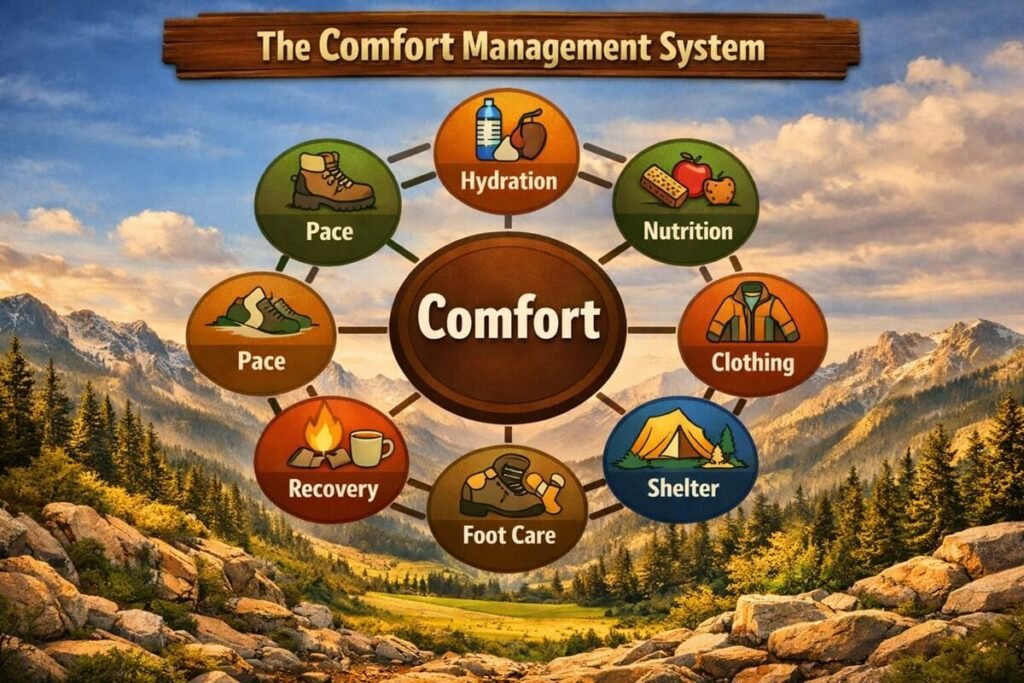
Many people think outdoor success depends entirely on what happens while hiking. In reality, recovery is just as important. A good night’s sleep, proper nutrition, hydration, and organized camp routines allow you to start each morning physically and mentally prepared.
Professional guides often say that tomorrow’s hike begins with tonight’s camp. That mindset separates simply spending a night outdoors from building sustainable wilderness experience.
Manage Your Energy Like a Limited Resource
Many hikers think only about reaching the destination. Experienced wilderness travelers think about arriving with energy to spare. Every unnecessary movement, poor decision, or heavy load gradually drains physical reserves.
Eat Before You Feel Depleted
Food provides more than calories. It supports concentration, balance, decision-making, and endurance. Rather than waiting until they’re extremely hungry, experienced hikers eat small amounts regularly throughout the day.
This steady approach helps maintain consistent energy levels without large fluctuations. Nutrition also becomes increasingly important on multi-day trips, where recovery between hiking days directly influences performance. Good fueling habits support both physical strength and mental clarity.
Hydration Is a Continuous Process
Most dehydration develops gradually. By the time intense thirst appears, physical and cognitive performance may already be declining. Experienced outdoorspeople don’t rely on thirst alone.
Instead, they build hydration into their routine by drinking regularly throughout the day and adjusting intake based on temperature, humidity, elevation, and activity level. Maintaining hydration consistently is far easier than trying to recover after becoming dehydrated.
Protect Your Body From Small Problems
Major injuries are relatively uncommon. Minor problems are far more frequent. Left unmanaged, however, those small issues can become trip-ending complications. Experienced wilderness travelers routinely monitor:
- Hot spots on their feet.
- Developing blisters.
- Chafing.
- Sun exposure.
- Minor muscle soreness.
- Tight shoulders from pack straps.
- Small cuts and scrapes.
Addressing these problems immediately often prevents much larger issues later.
Build Daily Recovery Into Your Routine
Recovery doesn’t begin when the trip ends. It happens every evening. Experienced hikers intentionally create time for recovery by:
- Eating soon after stopping.
- Drinking enough fluids.
- Stretching tight muscles.
- Changing into dry clothing.
- Reviewing minor injuries.
- Preparing for quality sleep.
These habits allow the body to recover more effectively before the next day’s travel. Over multiple days, consistent recovery often matters more than exceptional fitness.
Protect Your Mental Energy
Physical fatigue isn’t the only challenge in wilderness travel. Mental fatigue can quietly reduce awareness, patience, and decision-making ability. Long periods of navigation, changing weather, difficult terrain, and continuous problem-solving all require concentration.
Experienced outdoorspeople recognize signs of mental fatigue such as:
- Rushing decisions.
- Losing focus.
- Becoming easily frustrated.
- Missing obvious landmarks.
- Forgetting simple tasks.
When concentration begins to decline, they often slow down, take a short break, eat, hydrate, or reassess the day’s objectives. Mental recovery is just as important as physical recovery.
Adapt to Changing Conditions Instead of Fighting Them
Nature rarely follows your schedule.
- Weather changes.
- Trails deteriorate.
- Water sources vary.
- Plans evolve.
Experienced wilderness travelers remain flexible rather than becoming emotionally attached to a single outcome. For example, if rain begins, they adjust clothing early. If temperatures rise, they slow their pace. And if progress falls behind schedule; they modify the day’s objective.
Adaptability conserves both energy and morale.
Long-Term Wilderness Success Comes From Consistency
The hikers who continue exploring remote places for decades usually aren’t the strongest or fastest. They’re the ones who consistently take care of themselves.
They understand that staying warm, dry, hydrated, rested, and mentally focused isn’t separate from wilderness skills. It is wilderness skill. When your body and mind are functioning well, nearly every other outdoor challenge becomes easier to manage.
Comfort isn’t the opposite of adventure. It’s one of the foundations that makes adventure sustainable.
Wilderness Risk Management: Prevent Problems Before They Start
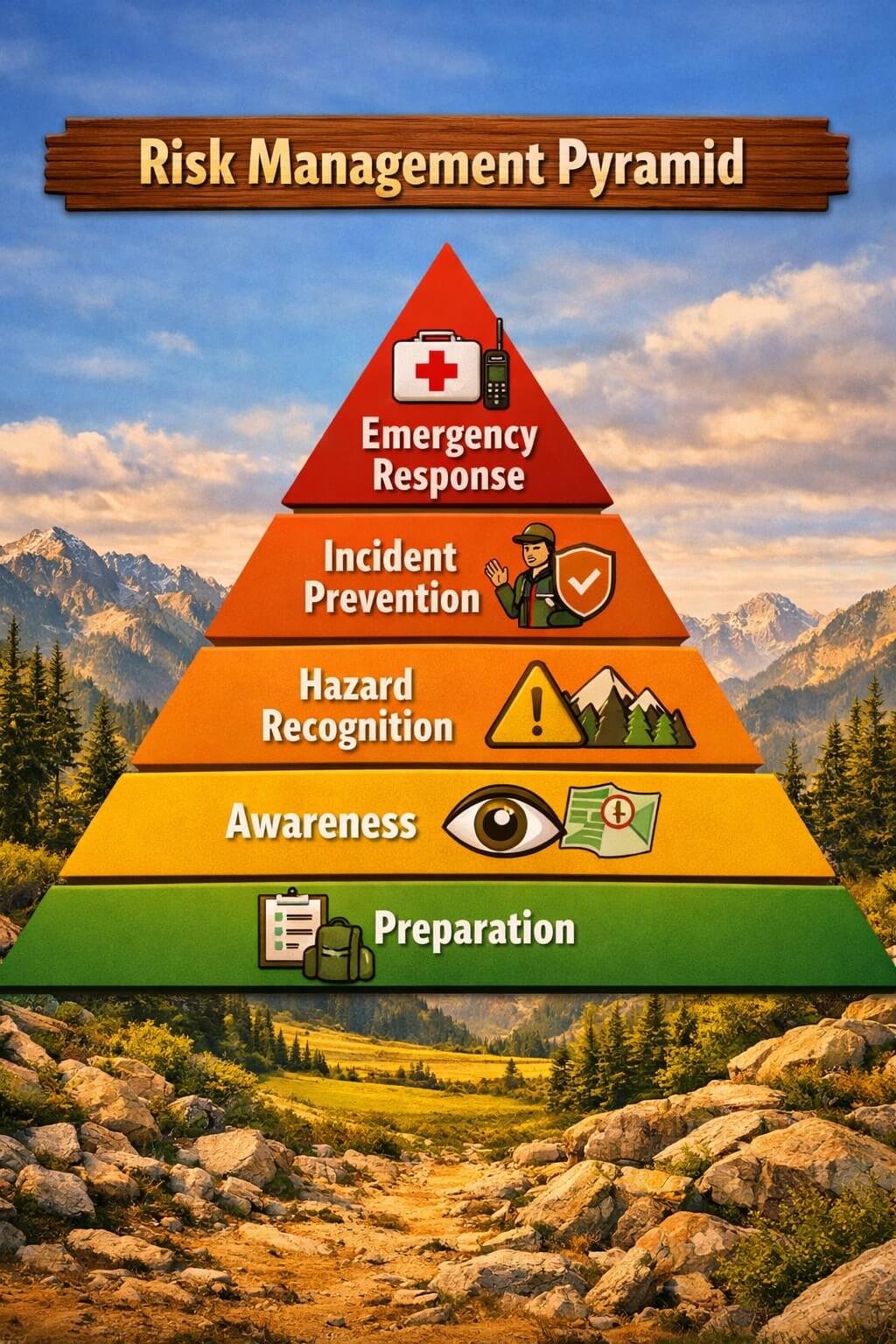
One of the biggest differences between beginners and experienced wilderness travelers isn’t strength, speed, or expensive gear. It’s the ability to recognize potential problems before they become emergencies.
Most outdoor incidents don’t happen because of a single dramatic mistake. Instead, they’re usually the result of several small decisions that gradually increase risk throughout the day. Experienced hikers constantly evaluate conditions, monitor their own abilities, and adjust their plans before small problems become serious.
Risk management isn’t about avoiding adventure. It’s about making informed decisions that allow you to continue exploring safely.
Risk Is Always Changing
Many people think of risk as something fixed. In reality, it changes constantly. A trail that feels easy in the morning may become difficult after heavy rain. A manageable river crossing can become dangerous after several hours of snowmelt.
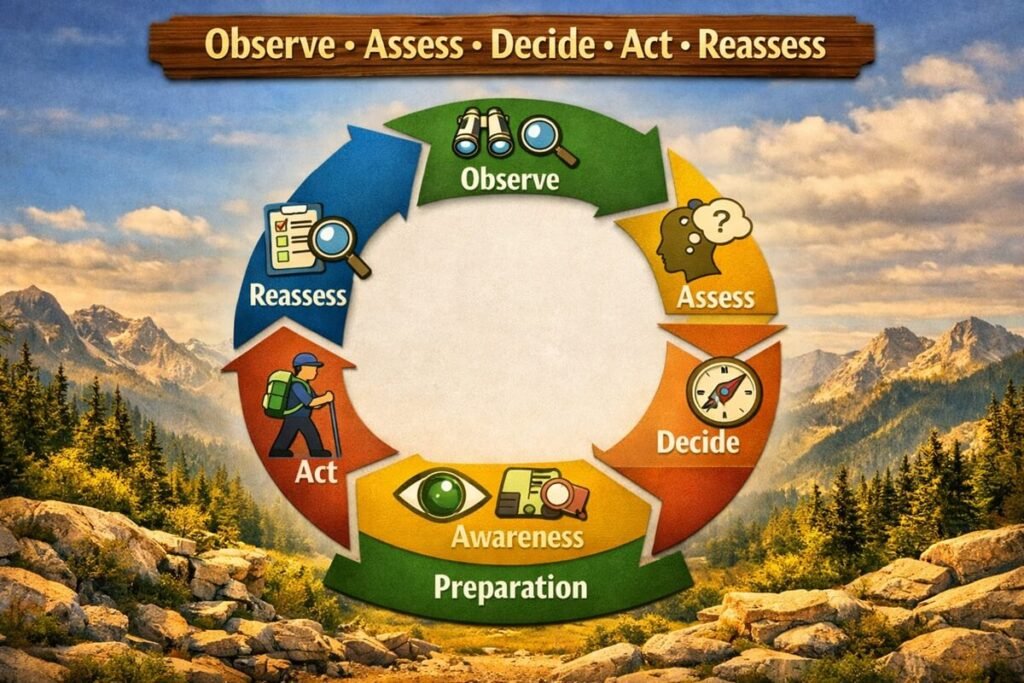
A well-rested hiker may navigate confidently early in the day but make poor decisions after ten hours of fatigue. Experienced outdoorspeople understand that every situation should be reassessed as conditions change. Instead of assuming today’s plan will remain safe, they continuously ask:
- What has changed?
- What new hazards exist?
- Do today’s conditions still match our original plan?
- Is there a safer option?
Understand the Difference Between Hazard and Risk
A hazard is something that has the potential to cause harm. Examples include:
- Steep terrain
- Fast-moving water
- Lightning
- Loose rocks
- Extreme temperatures
- Wildlife
- Falling trees
Risk is different. Risk depends on your exposure to those hazards and your ability to manage them. For example, a steep slope isn’t automatically dangerous.
The level of risk depends on factors such as:
- Weather conditions
- Trail surface
- Visibility
- Experience level
- Equipment
- Fatigue
- Group decision-making
Recognizing this difference helps hikers make better choices instead of reacting emotionally to every obstacle.
Avoid Decision Fatigue
Decision-making becomes harder as the day progresses. Every navigation choice, weather adjustment, clothing change, and route decision requires mental energy. By late afternoon, tired hikers often begin making rushed choices simply because they’re exhausted. Experienced wilderness travelers reduce unnecessary decisions by building consistent routines.
For example, they may:
- Check navigation at every junction.
- Eat at regular intervals.
- Review weather during breaks.
- Repack gear the same way every morning.
- Establish camp before darkness.
These habits free mental energy for situations that genuinely require careful judgment.
Recognize the Human Factors That Lead to Accidents
Outdoor incidents are often caused by human behavior rather than environmental conditions. Common examples include:
Overconfidence
Previous success can create false confidence. Just because a difficult crossing was safe yesterday doesn’t guarantee today’s conditions are the same.
Summit Fever
Many hikers become so focused on reaching a destination that they ignore warning signs. Weather, fatigue, or limited daylight may all indicate it’s time to turn around. Experienced hikers understand that reaching the trailhead safely is a greater success than reaching a summit at any cost.
Peer Pressure
Groups sometimes continue because nobody wants to disappoint others. Strong outdoor leaders encourage honest conversations about fatigue, comfort levels, and concerns. Everyone should feel comfortable suggesting a slower pace or an alternate plan.
Time Pressure
Trying to “make up lost time” often leads to poor decisions. Speed rarely solves problems in the wilderness. Good judgment usually does.
Build Layers of Safety
Experienced hikers rarely depend on a single solution. Instead, they create multiple layers of protection.
For example:
- Carry both digital and paper navigation tools.
- Have more than one way to start a fire.
- Pack backup lighting.
- Store emergency supplies separately from daily gear.
- Share route plans before departure.
- Travel with communication devices where appropriate.
If one system fails, another is already available. This approach significantly reduces overall risk.
Know When to Change the Plan
One of the most valuable wilderness skills is knowing when not to continue. Turning around is not failure. It is often the smartest decision available. Reasons experienced hikers commonly adjust plans include:
- Weather deteriorating faster than expected.
- Increasing fatigue.
- Injury within the group.
- Equipment failure.
- Navigation uncertainty.
- Reduced daylight.
- Unsafe water crossings.
- Unexpected trail closures.
Successful wilderness travelers remain flexible rather than committed to a single outcome.
Conduct a Personal Risk Check
Throughout the day, experienced wilderness travelers perform quick self-assessments. A simple checklist includes questions such as:
- Am I hydrated?
- Have I eaten recently?
- Am I getting cold or overheated?
- Do I know exactly where I am?
- Am I making careful decisions?
- Is my pace sustainable?
- Does today’s plan still make sense?
These brief check-ins often identify small issues before they become larger problems.
Wilderness Leadership & Group Travel Skills
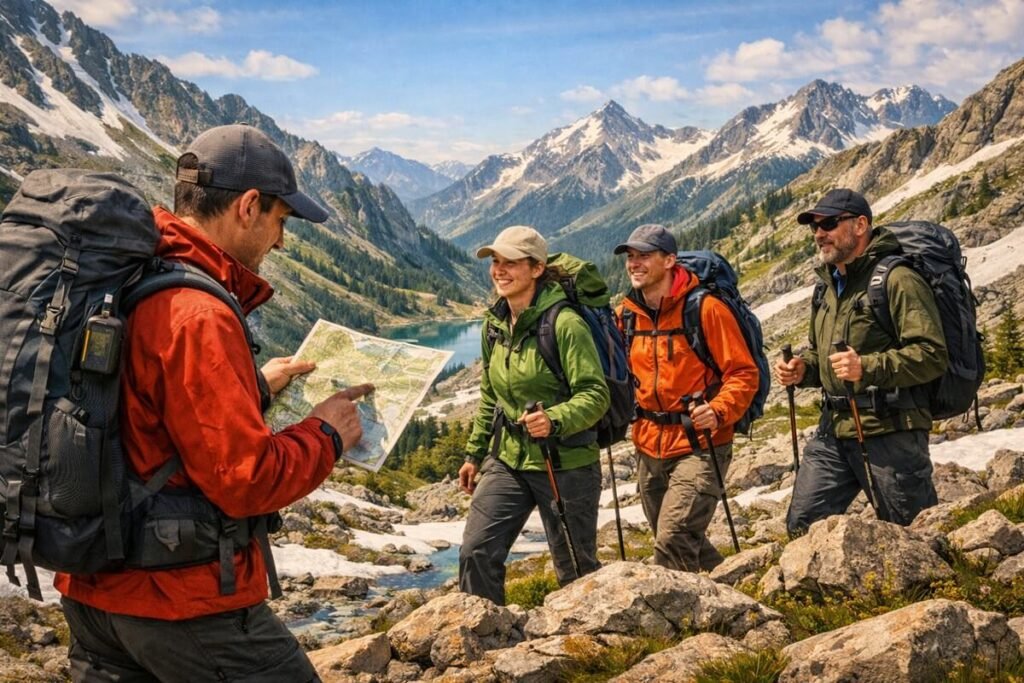
Traveling through the wilderness with other people introduces opportunities that don’t exist on solo trips. A well-coordinated group can share equipment, solve problems more effectively, and provide support during challenging situations.
At the same time, group travel also introduces new responsibilities. Different fitness levels, personalities, experience, and expectations all influence how safely and efficiently the group moves through the backcountry. Good wilderness leadership isn’t about giving orders. It’s about helping everyone make better decisions together.
Leadership Is a Skill, Not a Title
Many people assume the most experienced person automatically becomes the leader. In reality, effective wilderness leadership is based on actions rather than experience alone.
Good leaders:
- Encourage communication.
- Listen before making decisions.
- Stay calm under pressure.
- Adapt when conditions change.
- Consider the entire group’s abilities.
- Focus on safety rather than personal goals.
Keep the Group Together
- Groups naturally spread out over time.
- Faster hikers move ahead.
- Slower hikers fall behind.
Small gaps can quickly become large separations, especially on difficult terrain or in poor visibility. Experienced groups avoid unnecessary separation by maintaining a pace that works for everyone.
Instead of constantly catching up, the group moves steadily with regular opportunities to rest together. This approach improves communication and reduces the chance of someone becoming isolated. The group should generally set its pace around the least experienced or slowest member, rather than forcing slower hikers to repeatedly catch up.
Communicate Early and Often
Many outdoor problems begin because someone hesitated to speak up. A hiker notices worsening weather, developing blisters, fatigue, or navigation concerns but remain silent to avoid slowing the group. Experienced teams encourage open communication throughout the trip.
Everyone should feel comfortable discussing:
- Energy levels.
- Water needs.
- Equipment issues.
- Route concerns.
- Weather observations.
- Wildlife encounters.
- Injury or discomfort.
Small conversations often prevent larger problems later.
Make Decisions Together
Strong leaders seek input before making important decisions. When evaluating route changes, weather conditions, or turnaround points, involving the group helps identify risks that one person may overlook.
Group discussions also increase commitment to the chosen plan because everyone understands the reasoning behind it. While one person may make the final decision in some situations, collaborative decision-making generally leads to better outcomes.
Respect Different Experience Levels
Every outdoor group contains a range of abilities. Experienced hikers should avoid overwhelming beginners with technical language or unrealistic expectations. Instead, they can explain:
- Why certain decisions are made.
- How navigation works.
- What signs indicate changing weather.
- How to recognize hazards.
- Why specific camp routines matter.
Teaching during the trip helps newer hikers build confidence while creating a safer group overall.
Share Responsibilities
Carrying the entire workload isn’t an effective leadership strategy. Instead, experienced groups distribute responsibilities according to ability. Common shared tasks include:
- Navigation.
- Water collection.
- Meal preparation.
- Camp setup.
- Equipment checks.
- Wildlife awareness.
- Route planning for the next day.
Sharing responsibilities increases efficiency while giving everyone an active role in the trip’s success.
Plan for Unexpected Situations
Even well-prepared groups encounter challenges.
- Weather changes.
- Equipment breaks.
- Someone becomes injured or fatigued.
Rather than reacting emotionally, experienced teams pause and evaluate the situation together. General questions include:
- What exactly happened?
- Is anyone in immediate danger?
- What resources do we have?
- What options are available?
- Which solution presents the lowest overall risk?
A calm, methodical approach usually leads to better decisions than rushing into action.
Encourage a Learning Mindset
Every trip provides opportunities to improve. Rather than focusing only on reaching a destination, experienced hikers regularly discuss what worked well and what could be improved. After each trip, consider questions such as:
- Which equipment performed well?
- What slowed us down?
- Were our navigation decisions effective?
- Did we manage food and water efficiently?
- How could camp routines improve?
- What skills should we practice before the next trip?
Reflecting on each outing turns experience into lasting knowledge.
Leadership Is About Helping Everyone Return Safely
The success of a wilderness trip isn’t measured by miles traveled, peaks climbed, or photographs taken. It’s measured by whether everyone returns home safely, having enjoyed the experience and learned something new. Effective leaders create an environment where people communicate openly, support one another, and make thoughtful decisions together.
Building Wilderness Experience: From Beginner to Advanced
No one becomes highly skilled in the wilderness after reading a single guide. Experience develops gradually through preparation, observation, practice, and reflection. Every accomplished backpacker, mountaineer, wilderness guide, and search-and-rescue volunteer started by learning the same fundamental skills that beginners practice today.
The difference is that experienced outdoorspeople continue building those skills trip after trip, year after year. Rather than trying to master everything at once, they focus on steady improvement. That’s the approach that creates confidence, good judgment, and long-term safety.
Build Skills One Layer at a Time
Trying to learn everything during one trip usually leads to frustration. Instead, experienced hikers focus on mastering one or two new skills at a time.
For example:
First Trips
Practice:
- Packing efficiently
- Following marked trails
- Reading trail signs
- Managing clothing layers
- Building camp routines
Intermediate Trips
Add:
- Map reading
- Compass navigation
- Route planning
- Multi-day backpacking
- Weather interpretation
- Efficient camp systems
Advanced Trips
Develop:
- Off-trail navigation
- Remote expedition planning
- Complex terrain assessment
- Wilderness leadership
- Emergency decision-making
- Environmental observation
Each new skill builds naturally upon previous experience.
Learn From Every Environment
Every landscape teaches different lessons.
- Forests improve navigation and wildlife awareness.
- Mountains teach weather judgment and elevation management.
- Deserts develop water planning skills.
- Coastal environments introduce tides and changing terrain.
- Snow-covered landscapes require additional knowledge about cold-weather travel and changing conditions.
More willingly visiting only familiar places, experienced outdoorspeople gradually explore a variety of environments to expand their knowledge.
Keep a Wilderness Journal
One habit shared by many guides, explorers, and experienced backpackers is recording lessons after every trip. A simple journal might include:
- Date and location.
- Weather conditions.
- Distance traveled.
- Equipment used.
- Navigation challenges.
- Wildlife observations.
- Gear failures.
- Lessons learned.
- Skills to practice next.
Reviewing these notes before future trips often reveals patterns that help improve planning and decision-making.
Learn From Mistakes—Safely
Mistakes are an unavoidable part of learning. The goal isn’t to avoid every mistake. The goal is to recognize small mistakes before they become dangerous.
Examples include:
- Packing unnecessary gear.
- Starting too late.
- Wearing the wrong clothing.
- Carrying too little water.
- Poor pace management.
- Inefficient camp organization.
Reflecting on these experiences helps build judgment that no book alone can teach.
Seek Knowledge From Experienced Outdoorspeople
Books and online guides provide valuable information. Real-world experience provides context. Whenever possible, hike with people who have more experience than you.
Observe:
- How they plan trips.
- How they read weather.
- How they organize camp.
- How they move through difficult terrain.
- How they make decisions.
Watching experienced hikers solve everyday problems is one of the fastest ways to improve your own skills.
Practice Before You Need the Skill
Many outdoor skills are difficult to learn during an emergency. Experienced hikers practice them in low-pressure situations. Examples include:
- Navigating with a map and compass on familiar trails.
- Setting up shelter before severe weather arrives.
- Testing water treatment systems.
- Packing backpacks efficiently.
- Using communication devices.
- Building camp routines.
Practice creates confidence that remains available when conditions become more challenging.
Build Confidence Through Preparation
True confidence doesn’t come from taking greater risks. It comes from repeatedly proving to yourself that you can solve problems calmly and effectively. Each successful trip reinforces:
- Better planning.
- Better decision-making.
- Better organization.
- Better awareness.
- Better adaptability.
Over time, these improvements create quiet confidence rather than overconfidence. That’s one of the defining characteristics of experienced wilderness travelers.
The Complete Wilderness Skills Checklist
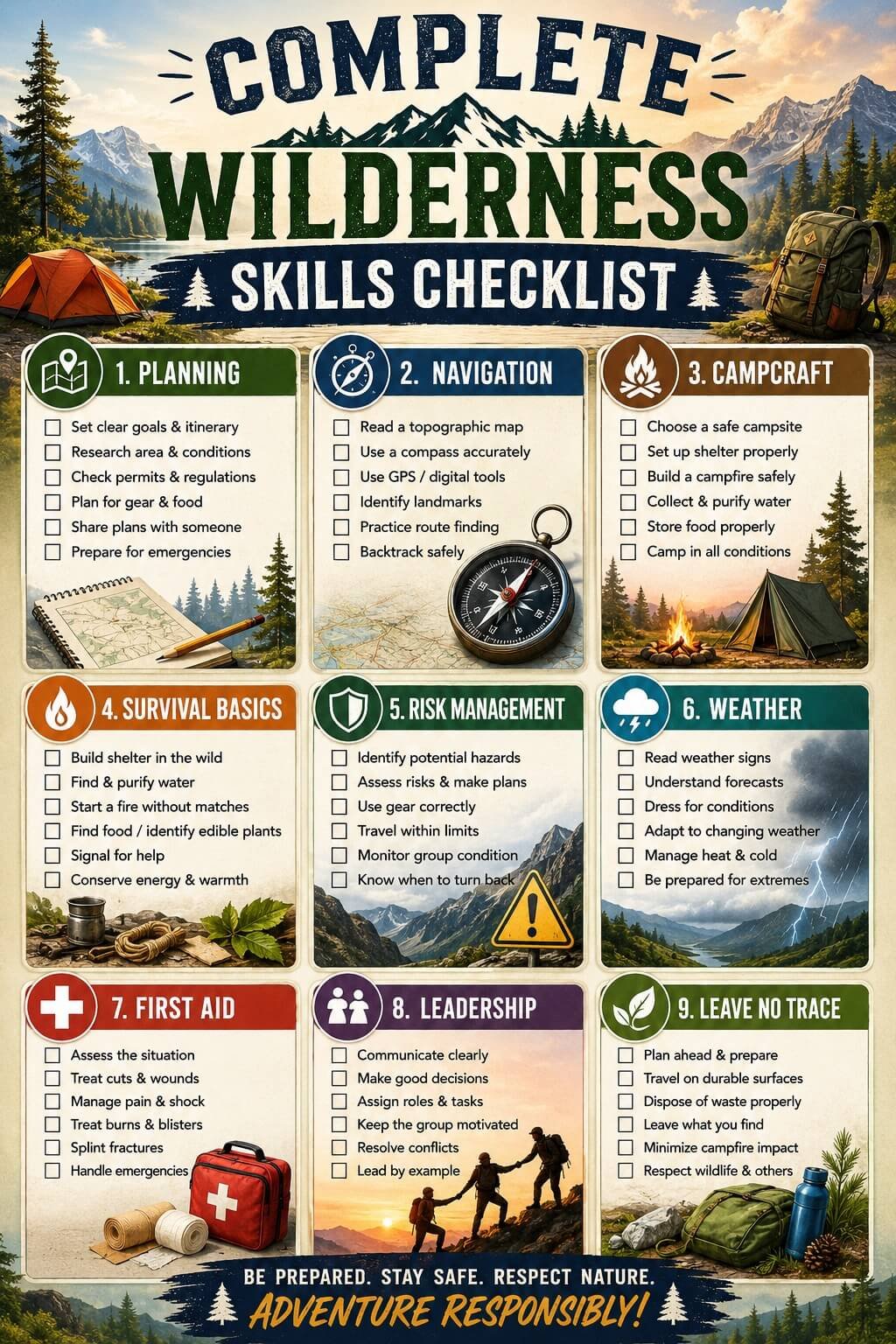
Learning wilderness skills is a lifelong process rather than a single milestone. Instead of trying to master every technique at once, use this checklist to evaluate your current abilities and identify the areas you want to improve next. The goal isn’t to check every box immediately. It’s to build confidence through consistent practice and real-world experience.
Trip Planning Skills
| Skill | Beginner | Intermediate | Advanced |
| Research trail conditions | ☐ | ☐ | ☐ |
| Understand weather forecasts | ☐ | ☐ | ☐ |
| Estimate hiking time accurately | ☐ | ☐ | ☐ |
| Create backup plans | ☐ | ☐ | ☐ |
| Share trip itinerary | ☐ | ☐ | ☐ |
| Identify emergency exit routes | ☐ | ☐ | ☐ |
| Plan food and water requirements | ☐ | ☐ | ☐ |
Navigation Skills
| Skill | Beginner | Intermediate | Advanced |
| Read trail signs | ☐ | ☐ | ☐ |
| Follow trail markers | ☐ | ☐ | ☐ |
| Read topographic maps | ☐ | ☐ | ☐ |
| Use a compass confidently | ☐ | ☐ | ☐ |
| Estimate distance and elevation | ☐ | ☐ | ☐ |
| Navigate without marked trails | ☐ | ☐ | ☐ |
| Combine digital and paper navigation | ☐ | ☐ | ☐ |
Campcraft Skills
| Skill | Beginner | Intermediate | Advanced |
| Organize camp efficiently | ☐ | ☐ | ☐ |
| Keep shelter dry | ☐ | ☐ | ☐ |
| Build effective camp routines | ☐ | ☐ | ☐ |
| Manage food storage | ☐ | ☐ | ☐ |
| Maintain clean camp practices | ☐ | ☐ | ☐ |
| Break camp efficiently | ☐ | ☐ | ☐ |
Wilderness Safety Skills
| Skill | Beginner | Intermediate | Advanced |
| Recognize weather hazards | ☐ | ☐ | ☐ |
| Assess trail risks | ☐ | ☐ | ☐ |
| Make turnaround decisions | ☐ | ☐ | ☐ |
| Manage fatigue safely | ☐ | ☐ | ☐ |
| Build safety redundancies | ☐ | ☐ | ☐ |
| Conduct personal risk assessments | ☐ | ☐ | ☐ |
Outdoor Living Skills
| Skill | Beginner | Intermediate | Advanced |
| Stay hydrated consistently | ☐ | ☐ | ☐ |
| Maintain energy throughout the day | ☐ | ☐ | ☐ |
| Prevent blisters and hot spots | ☐ | ☐ | ☐ |
| Manage clothing layers | ☐ | ☐ | ☐ |
| Protect gear from moisture | ☐ | ☐ | ☐ |
| Recover effectively after hiking | ☐ | ☐ | ☐ |
Observation Skills
| Skill | Beginner | Intermediate | Advanced |
| Read cloud formations | ☐ | ☐ | ☐ |
| Notice wildlife signs | ☐ | ☐ | ☐ |
| Observe terrain changes | ☐ | ☐ | ☐ |
| Identify natural hazards | ☐ | ☐ | ☐ |
| Monitor changing conditions | ☐ | ☐ | ☐ |
Decision-Making Skills
| Skill | Beginner | Intermediate | Advanced |
| Adapt plans when conditions change | ☐ | ☐ | ☐ |
| Stay calm under pressure | ☐ | ☐ | ☐ |
| Prioritize safety over goals | ☐ | ☐ | ☐ |
| Evaluate multiple solutions | ☐ | ☐ | ☐ |
| Learn from previous trips | ☐ | ☐ | ☐ |
Leadership & Teamwork Skills
| Skill | Beginner | Intermediate | Advanced |
| Communicate clearly | ☐ | ☐ | ☐ |
| Help less experienced hikers | ☐ | ☐ | ☐ |
| Share responsibilities | ☐ | ☐ | ☐ |
| Keep groups together | ☐ | ☐ | ☐ |
| Encourage collaborative decisions | ☐ | ☐ | ☐ |
Wilderness Mindset
The most valuable wilderness skill isn’t listed in any checklist. It’s developing the mindset of continuous improvement. Experienced outdoorspeople never stop learning.
After every trip, ask yourself:
- What went well?
- What challenged me?
- What skill improved?
- What mistake taught me something?
- What should I practice before my next adventure?
Those questions will improve your wilderness abilities far more than simply completing another hike.
FAQs: Wilderness Skills Guide
What are the most important wilderness skills for beginners?
The most important skills include trip planning, navigation, weather awareness, camp organization, hydration, risk management, and decision-making. Instead of trying to master advanced survival techniques immediately, beginners should focus on building strong fundamentals that apply to every outdoor trip.
Do I need survival skills for day hiking?
Basic wilderness skills benefit every hiker, even on short day hikes. Understanding navigation, weather changes, hydration, emergency planning, and risk assessment helps prevent common problems before they develop.
How long does it take to become experienced in the wilderness?
There is no fixed timeline. Experience develops through repeated trips in different environments, continuous learning, and honest reflection after each outing. Most experienced hikers improve gradually over years rather than months.
What’s the difference between hiking skills and wilderness skills?
Hiking skills focus on moving safely along trails, while wilderness skills include broader abilities such as navigation, campcraft, environmental awareness, leadership, risk management, and long-term outdoor self-sufficiency.
Is expensive gear necessary to develop wilderness skills?
No. High-quality gear can improve comfort and efficiency, but knowledge, preparation, and good decision-making have a much greater impact on safety and success than expensive equipment alone.
Should I learn navigation if I use GPS?
Yes. Electronic navigation tools are excellent resources, but batteries fail, devices can become damaged, and signals may not always be reliable. Learning traditional navigation provides an important backup.
How can I improve my wilderness skills faster?
Practice consistently on progressively more challenging trips, hike with experienced people, review each outing afterward, and focus on improving one or two skills at a time rather than trying to learn everything at once.
What is the biggest mistake beginners make?
Many beginners focus primarily on gear while overlooking planning, navigation, weather awareness, pacing, and decision-making. Equipment is important, but sound judgment is what keeps outdoor adventures safe and enjoyable.
Final Thoughts: Wilderness Skills
The wilderness has a way of teaching lessons that no classroom, video, or guidebook can fully replicate. Every trail presents new terrain new season introduces different conditions, and every trip offers opportunities to observe, adapt, and grow. The skills covered in this guide—from planning and navigation to campcraft, risk management, leadership, and outdoor decision-making—are not isolated techniques. Together, they form the foundation of safe, confident, and responsible wilderness travel.
Remember that becoming proficient outdoors isn’t about learning everything at once or tackling the most difficult adventures immediately. The strongest wilderness skills are built through preparation, practice, curiosity, and a willingness to learn from every experience.
Whether you’re heading out for your first day hike or planning a multi-day backcountry expedition, focus on steady progress. Build one skill at a time, refine your routines, and respect the environments you explore. The wilderness will always present new challenges—but that’s also what makes every journey worthwhile.
The more you learn, the more confident you’ll become. And the more confident you become, the more you’ll appreciate that true wilderness expertise isn’t measured by the miles you’ve traveled, but by the wisdom you’ve gained along the way.



One Comment