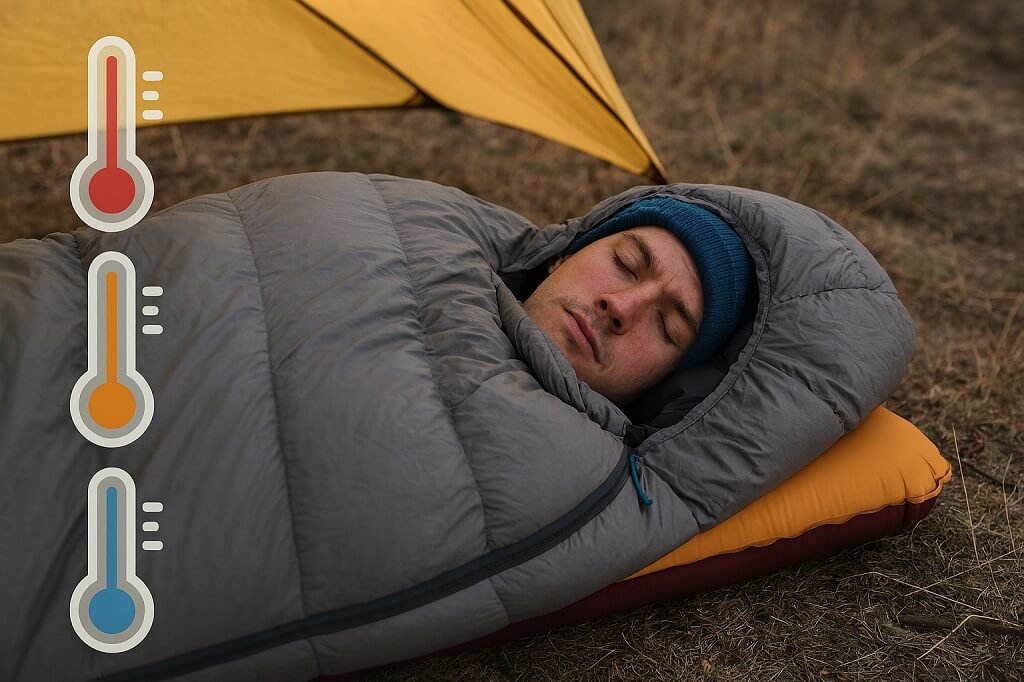
Spring Camping Tips for Beginners: Stay Warm, Dry, and Comfortable

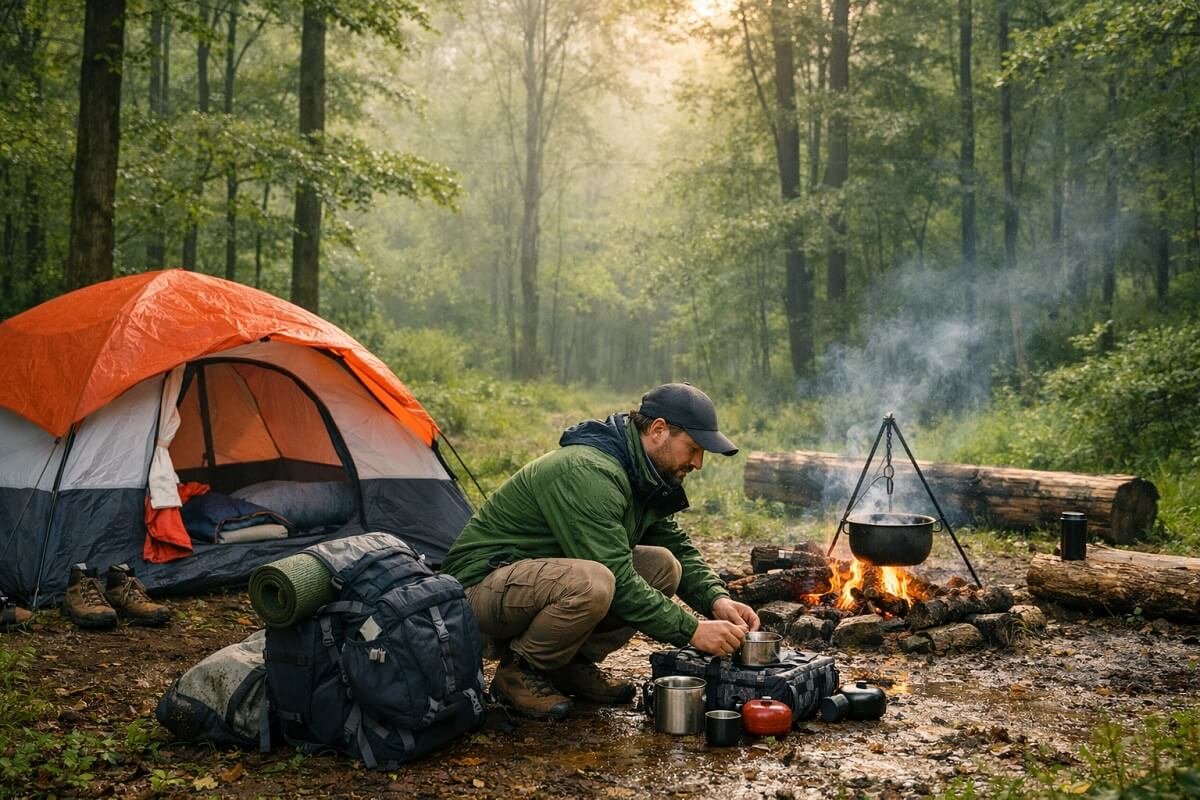
Spring camping sounds simple—mild weather, fewer crowds, and a fresh start to the season. But in reality, it’s one of the easiest times to make costly mistakes. Temperatures can drop fast at night, the ground stays damp, and sudden rain can catch you off guard if you’re not prepared.
After more than 9 years of camping in early-season conditions—from cold, wet weekends to unpredictable weather swings—I’ve learned that comfort in spring comes down to preparation, not luck. The right gear setup keeps you warm. Small decisions, like site selection and layering, keep you dry and comfortable.
In this guide, you’ll get practical, field-tested spring camping tips built on real experience. These are simple, proven strategies that help you stay warm, dry, and comfortable—so you can enjoy your trip instead of dealing with avoidable problems.
Spring Camping Tips for Beginners (Quick Guide)
Spring camping tips for beginners include dressing in proper layers, packing waterproof gear, choosing elevated campsites, and preparing for frosty nights. Staying warm and dry is the key to a comfortable and stress-free trip.
Spring camping sounds simple—mild weather, fewer crowds, and a fresh start to the season. But in reality, it’s one of the easiest times to make costly mistakes, especially with unpredictable weather patterns (source: National Weather Service).
Layering vs Bulky Clothing (Quick Comparison)
| Factor | Layering System | Bulky Clothing |
| Flexibility | Easy to adjust | Hard to adapt |
| Warmth Control | регулируется by adding/removing layers | Often too hot or too cold |
| Moisture Control | Keeps you dry | Traps sweat |
| Comfort | Lightweight and breathable | Heavy and restrictive |
| Best For | Changing spring conditions | Static, cold conditions |
Why Spring Camping Is More Challenging Than It Looks?
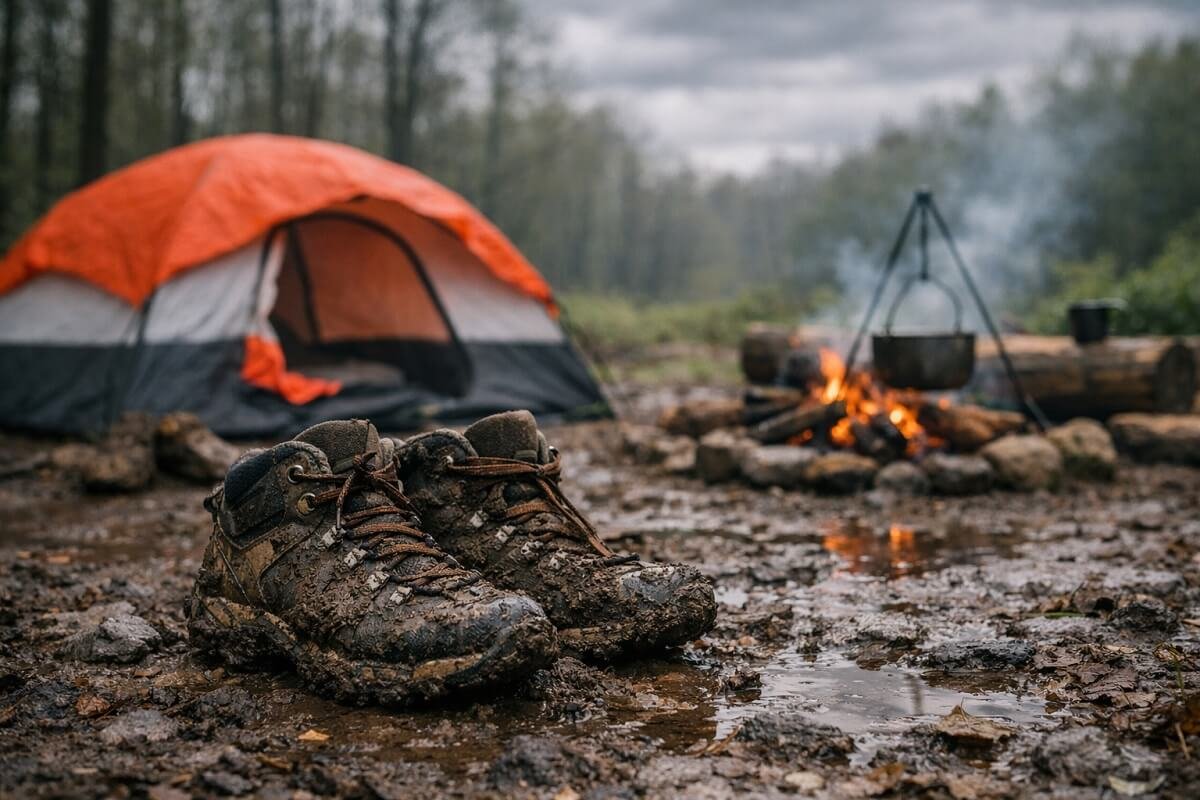
Spring weather is unpredictable. A warm, sunny afternoon can shift into a cold, damp night faster than most beginners expect.
Early on, I made the mistake of underestimating those temperature drops. I packed light, skipped extra layers, and ended up dealing with a long, uncomfortable night. That experience made one thing clear—spring camping rewards preparation and punishes shortcuts.
Here’s what makes this season more challenging:
- Large temperature swings: Warm days can quickly turn into cold nights, especially in open or elevated areas.
- Wet and muddy ground: Melting snow and frequent rain leave campsites damp and uncomfortable.
- Unpredictable rain showers: Sudden weather changes can catch you off guard without proper gear.
- High moisture and humidity: Damp air makes it harder to stay warm and dry, even with decent gear.
The upside is simple: once you plan for these conditions, spring becomes one of the most enjoyable times to camp. Fewer crowds, quieter campsites, and fresh surroundings make the extra preparation worth it.
Essential Spring Camping Gear (What I Actually Use)
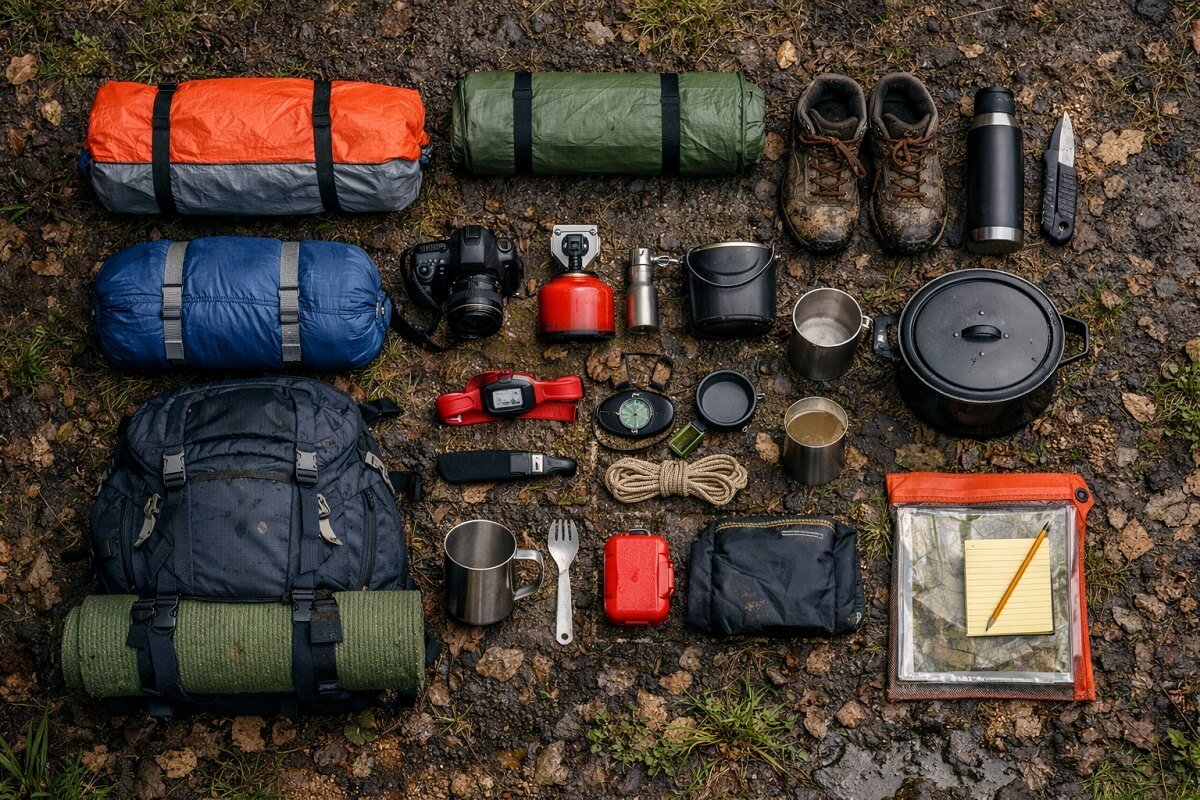
Gear plays a much bigger role in spring than most beginners expect. You don’t need expensive equipment, but you do need a setup that handles cold, moisture, and changing weather.
After years of camping in damp, early-season conditions, I’ve learned to stick with gear that’s simple, reliable, and proven in the field. These are the essentials I rely on for comfort and consistency:
- Tent with a full rainfly: Provides full coverage against rain and wind. Partial rainflies often fail in sustained wet weather.
- Sleeping bag (lower temperature rating): Spring nights often drop lower than forecasted. A warmer-rated bag keeps you comfortable without layering too much.
- Insulated sleeping pad: Prevents heat loss to the cold ground, which is one of the biggest causes of discomfort at night.
- Groundsheet or footprint: Adds a barrier between your tent and wet ground, reducing moisture and wear.
- Tarp: Useful for extra rain protection, cooking cover, or creating a dry space around camp.
- Headlamp or flashlight: Cloudy conditions and shorter daylight hours make reliable lighting essential.
- Portable stove: Hot food and drinks help maintain body heat and improve overall comfort.
“One piece of gear I never skip is a groundsheet. It’s simple, lightweight, and has protected my tent floor countless times—especially on muddy or damp campsites.”
How I Stay Warm During Cold Spring Nights
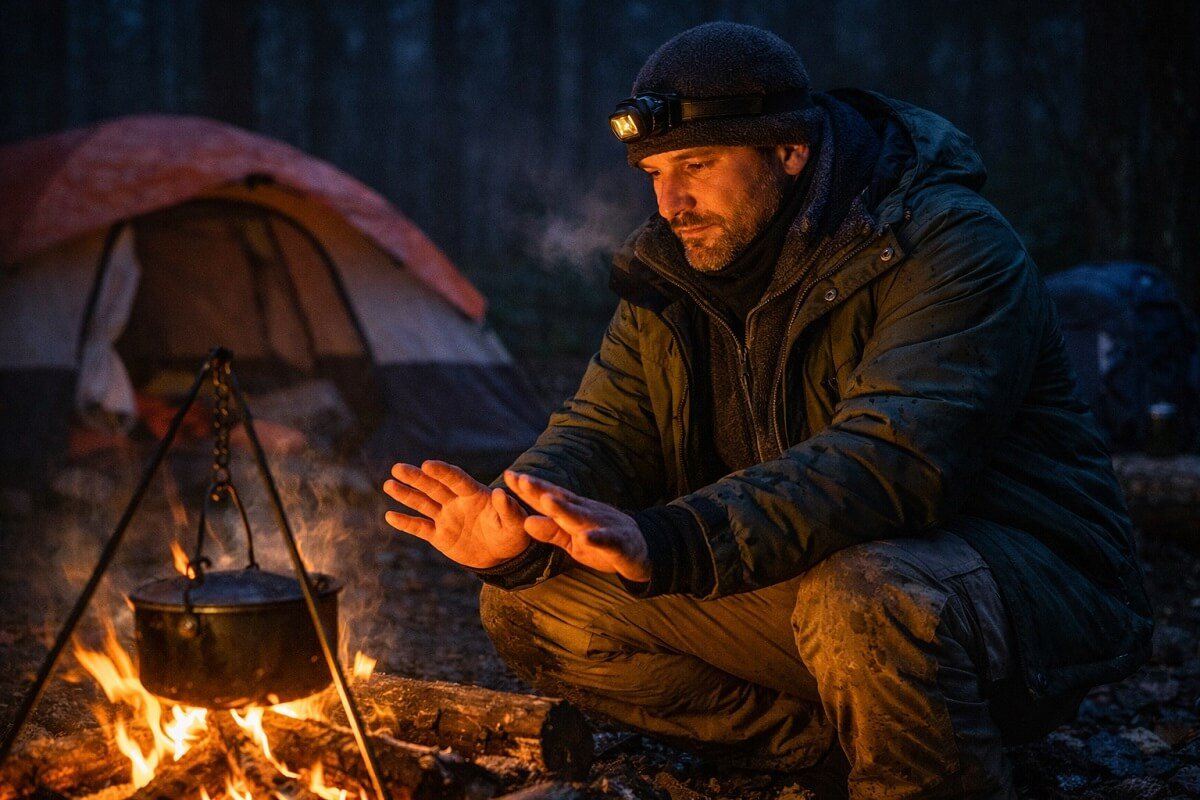
Most beginners think a thick sleeping bag is enough. It’s not. Warmth comes from a combination of small things working together.
Here’s what works consistently:
- Layering system: Use a base layer, insulating mid-layer, and outer layer
- Dry clothes for sleeping: Never sleep in damp clothing
- Insulated sleeping pad: Ground cold drains body heat fast
- Warm meal before bed: Helps your body generate heat
- Hot water bottle trick: A simple trick that works every time
“From experience, the sleeping pad is just as important as the sleeping bag, especially for side sleepers. Without it, you’ll feel cold no matter how good your bag is.”
How to Stay Dry (Lessons Learned the Hard Way)
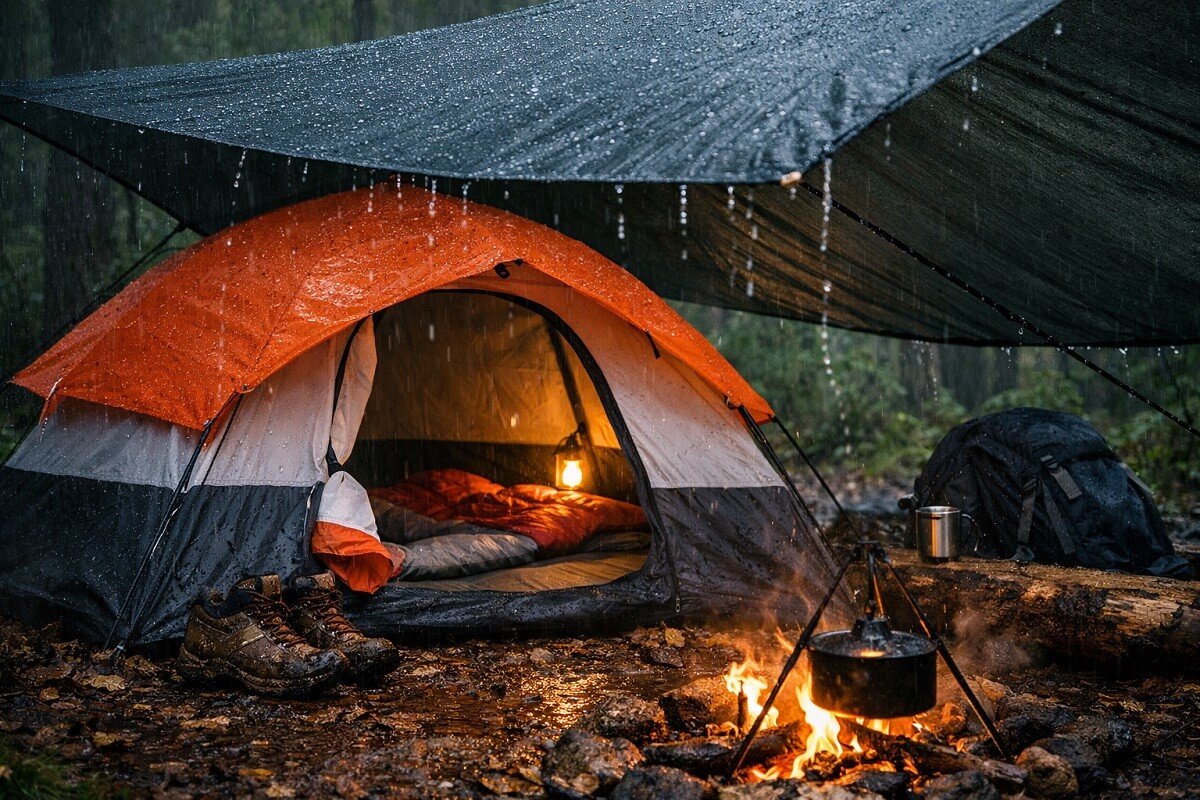
Staying dry is often harder than staying warm. One of my early trips ended with soaked gear because I set up camp on slightly low ground. It didn’t look like a problem at first. Overnight rain proved otherwise.
Here’s what actually works:
- Choose elevated ground
- Set up rainfly first if rain is coming
- Keep gear covered or inside the tent
- Carry extra socks and dry clothes
- Use a tarp for additional protection
Even small moisture build up over time. Keeping things dry from the start is easier than trying to fix it later.
Choosing a Campsite That Won’t Flood
Campsite selection matters more in spring than in any other season. A poor spot can turn a comfortable setup into a wet, miserable night. I’ve learned to slow down and assess the ground before pitching a tent. A few extra minutes here can save hours of discomfort later.
Look for:
- Slightly elevated areas: Higher ground helps prevent water from pooling around your tent during rain.
- Natural drainage paths away from your tent: Pay attention to how water would flow if it rains. Set up away from low channels or runoff paths.
- Wind protection using trees or terrain: Natural barriers reduce exposure and help maintain warmth.
- Morning sunlight exposure: Sunlight helps dry out condensation and damp gear faster.
Avoid low spots, even if they seem flat and comfortable. Those areas collect water quickly and can flood overnight with even light rain.
Tent Setup Tips for Wet and Muddy Conditions
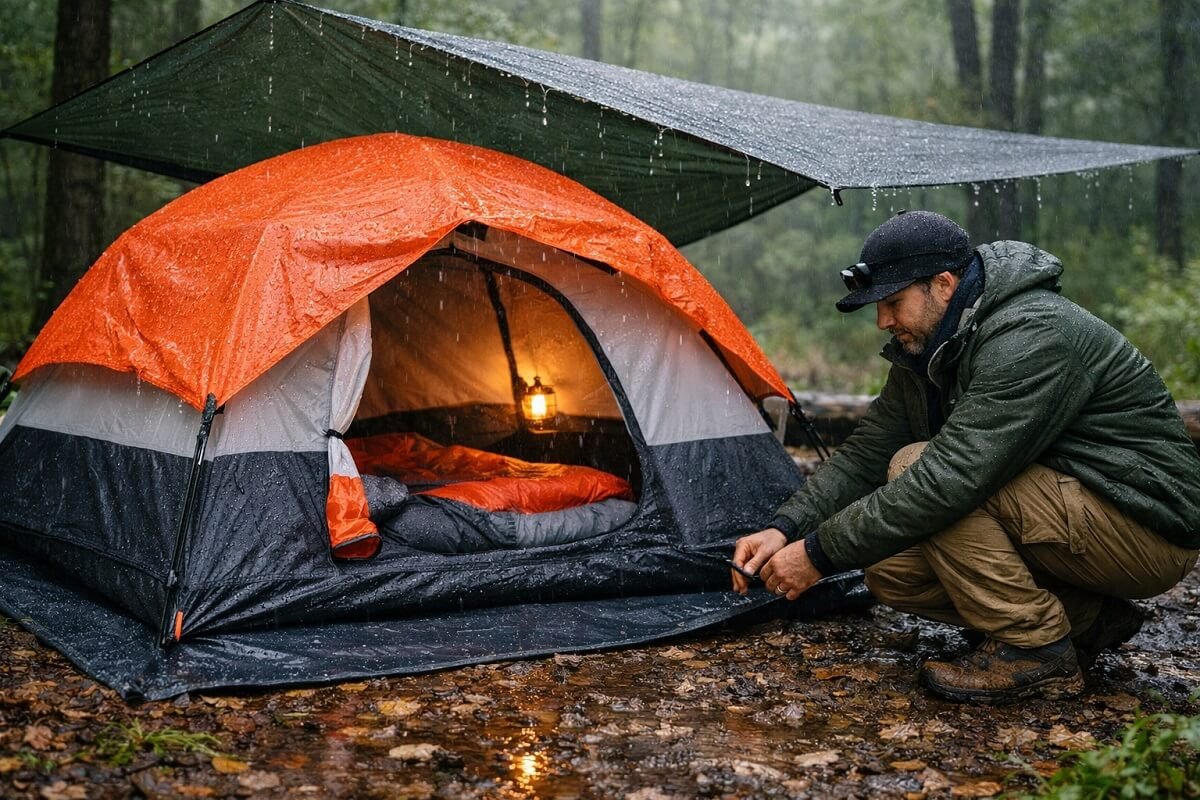
A proper tent setup can make or break your spring camping trip. In wet conditions, small mistakes lead to leaks, condensation, and uncomfortable nights. Over time, I’ve developed a simple routine that keeps my setup dry and reliable—even in steady rain.
Here’s what I follow every time:
- Use a groundsheet or footprint: Creates a barrier between your tent and wet ground, reducing moisture and protecting the floor.
- Pitch the rainfly first during rain: This keeps the inner tent dry while setting up, especially during sudden showers.
- Keep the tent entrance facing away from the wind: Prevents rain from blowing inside when you open the door.
- Avoid water pooling near tent edges: Check the ground slope and adjust your position to keep runoff away.
- Ensure proper ventilation: Even in cold weather, airflow reduces condensation buildup inside the tent.
“One habit that has consistently saved my setup is pitching the rainfly first. It’s a small step, but it makes a huge difference when rain starts unexpectedly.”
What to Wear for Spring Camping (Layering That Works)
Clothing is one of the most common places beginners get it wrong. Spring conditions change quickly, and what feels comfortable during the day can turn cold and damp by night.
Over the years, I’ve tested different setups in early-season trips, and one approach consistently works—layering. It gives you flexibility without overheating or getting stuck in wet clothing.
Here’s a simple system that covers most conditions:
- Base layer – Moisture-wicking: Pulls sweat away from your skin to keep you dry and prevent chills.
- Mid layer – Insulation (fleece or down): Traps body heat and keeps you warm as temperatures drop.
- Outer layer – Waterproof and windproof: Protects against rain, wind, and moisture, which are common in spring.
Additional tips that make a real difference:
- Pack extra socks: Wet feet are uncomfortable and can quickly ruin your trip.
- Avoid cotton: Cotton holds moisture and dries slowly, making it a poor choice in damp conditions.
- Keep a dry set of clothes for night: Changing into dry layers before bed helps you stay warm and sleep better.
This layering system keeps you adaptable throughout the day. You can add or remove layers as conditions change, staying comfortable without overcomplicating your setup.
Food and Cooking Tips for Cold Weather
Food does more than just fill you up during spring camping—it plays a key role in keeping your body warm and maintaining energy levels. After long, cold days outdoors, I’ve noticed that a hot meal can completely change how comfortable you feel. It’s not just about calories, it’s about warmth and recovery.
Keeping things simple works best in cold conditions:
- Easy-to-cook meals: Go for options like soups, noodles, or instant meals that require minimal effort and time.
- High-calorie snacks: Foods like nuts, energy bars, and trail mix help maintain energy throughout the day.
- Quick cooking setups: The less time you spend cooking in cold air, the better. Fast setups reduce exposure and keep things efficient.
- Warm drinks: Tea, coffee, or hot chocolate can help raise your body temperature and improve comfort, especially in the evening.
Simple, warm meals and quick cooking routines make a noticeable difference. They keep your energy up, your body warm, and your overall camping experience far more enjoyable.
Common Beginner Mistakes I See All the Time
These mistakes come up again and again:
- Underestimating cold nights
- Ignoring ground conditions
- Poor tent setup
- Packing the wrong clothing
- Not checking weather forecasts
These are the same mistakes I made early on. Fixing them makes a huge difference immediately.
Safety Tips for Spring Camping
Safety doesn’t need to be complicated, but it does need to be intentional—especially in unpredictable spring conditions.
Carry a simple first aid kit (recommended by the American Red Cross). Over the years, I’ve found that sticking to a few core habits prevents most issues before they start. It’s not about overpacking or overthinking, it’s about being prepared for the basics.
Here’s what to focus on:
- Check the weather before leaving: Spring conditions change fast. Knowing what’s coming helps you pack and plan properly.
- Carry a simple first aid kit: Minor cuts, blisters, or scrapes are common. A basic kit keeps small problems from getting worse.
- Inform someone about your trip: Let a friend or family member know your location and expected return time.
- Stay aware of your surroundings: Watch for changing weather, uneven ground, and potential hazards around your campsite.
These simple steps don’t take much effort, but they make a big difference. Prepared campers avoid most problems—and handle the rest with confidence.
My Simple Spring Camping Checklist
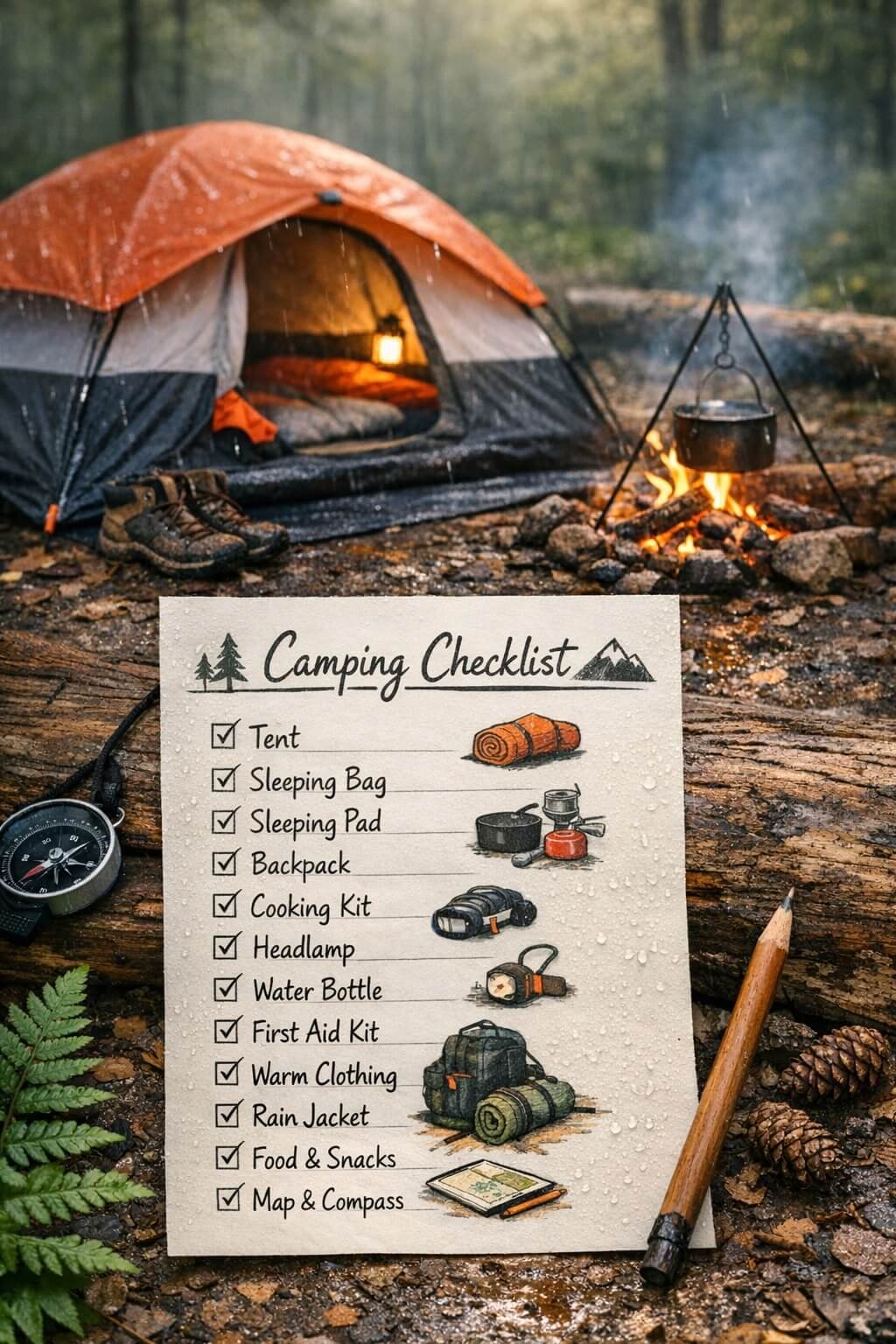
Use this quick checklist before heading out to stay prepared and comfortable:
- Tent with rainfly
- Groundsheet or footprint
- Warm sleeping bag and insulated pad
- Waterproof clothing
- Cooking gear
- Headlamp or flashlight
- Extra socks and dry clothes
- Basic emergency kit
Keeping your setup simple and focused on warmth and dryness makes spring camping much easier. A quick check before you leave can save you from dealing with avoidable problems at camp.
FAQs
Is spring a good time for beginner camping?
Yes. With the right preparation, spring offers a great balance of mild daytime weather, fewer crowds, and a more relaxed camping experience.
How cold does it get while camping in spring?
Temperatures can drop significantly at night, even after warm days. It’s common to experience chilly or near-cold conditions after sunset, so proper insulation is essential.
How do you stay dry while camping in the rain?
Choose an elevated campsite, use waterproof gear, and set up your tent correctly with a rainfly and groundsheet. Small setup details make a big difference in wet conditions.
What is the most important gear for spring camping?
Shelter, insulation, and waterproof protection are the most important. A reliable tent, warm sleeping system, and proper clothing will keep you comfortable in changing weather.
Conclusion
Spring camping doesn’t need to be uncomfortable. Most problems come from poor preparation, not the season itself. With the right gear, a good campsite, and a simple setup, you can stay warm, dry, and comfortable even in unpredictable conditions.
Once you get these basics right, spring quickly becomes one of the most enjoyable times to camp.