Mummy vs Rectangular Sleeping Bags: Which Is Best for Camping?

When it comes to camping, few pieces of gear are as important as your sleeping bag. A good sleeping bag can make the difference between a restful night under the stars and a night tossing and turning in the cold.
Choosing the right sleeping bag is not just about brand or price; it’s about style, design, warmth, and comfort. Two of the most common types are mummy sleeping bags and rectangular sleeping bags. But which one is the best for camping?
This guide will break down all the differences, advantages, disadvantages, and tips to help you pick the perfect sleeping bag for your next adventure.
Overview of Sleeping Bags
Before comparing the two, it’s important to understand what each style offers.
Mummy Sleeping Bags
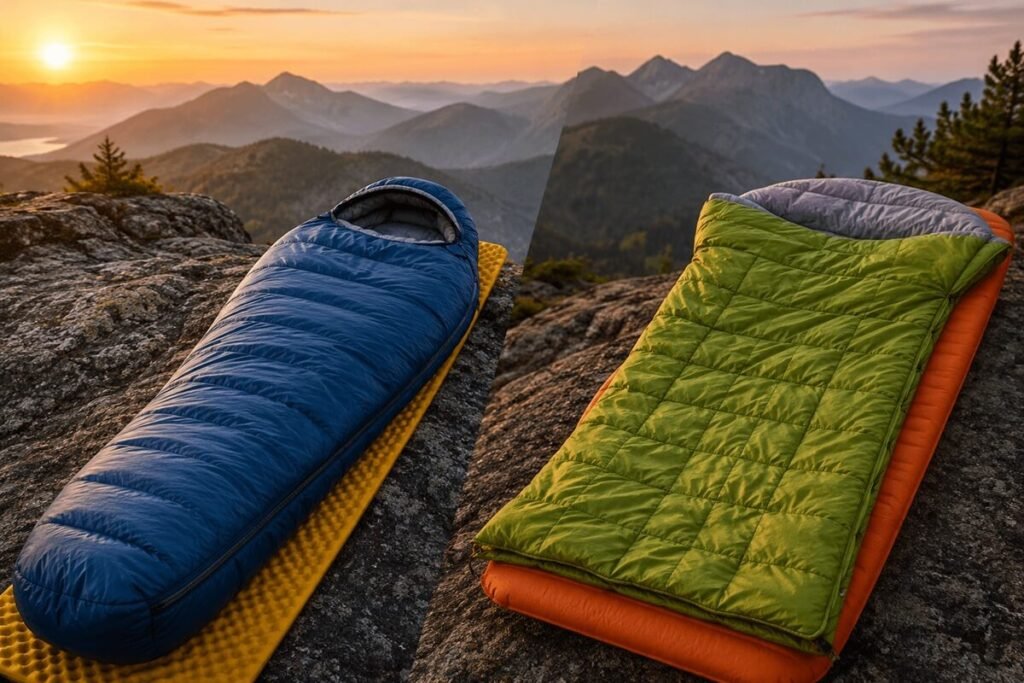
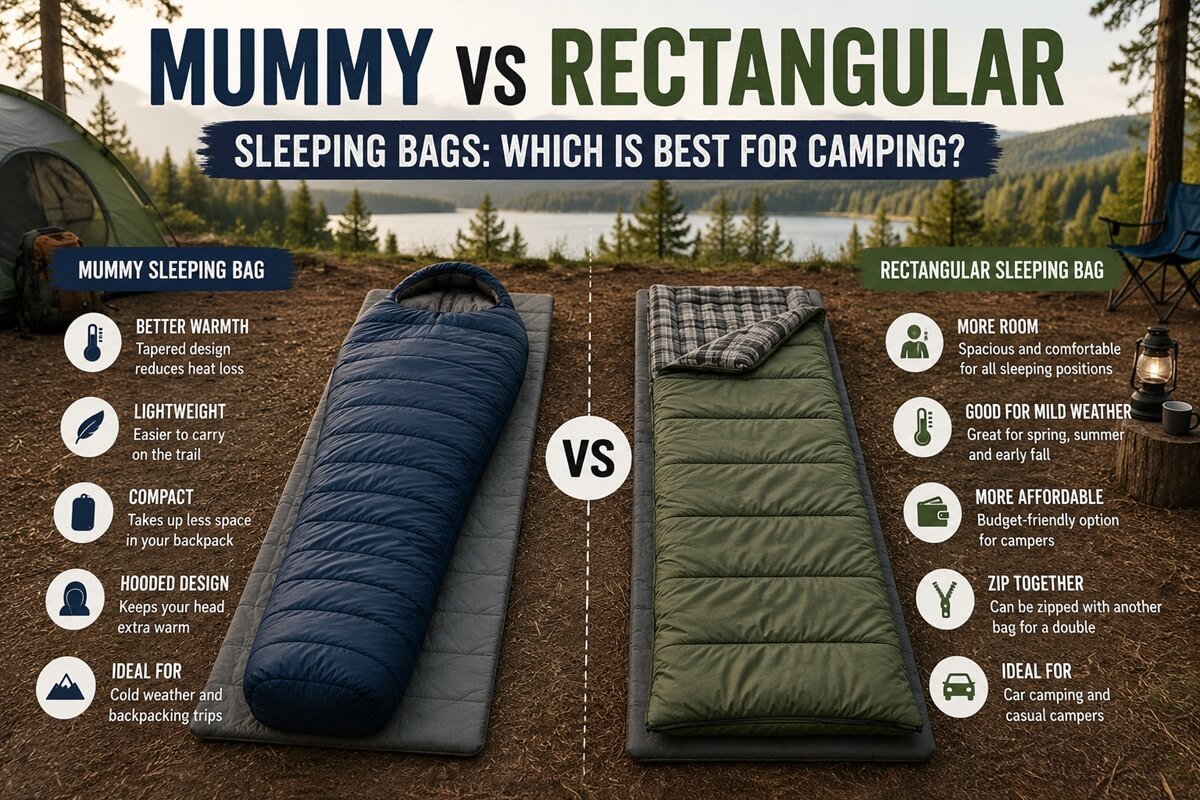
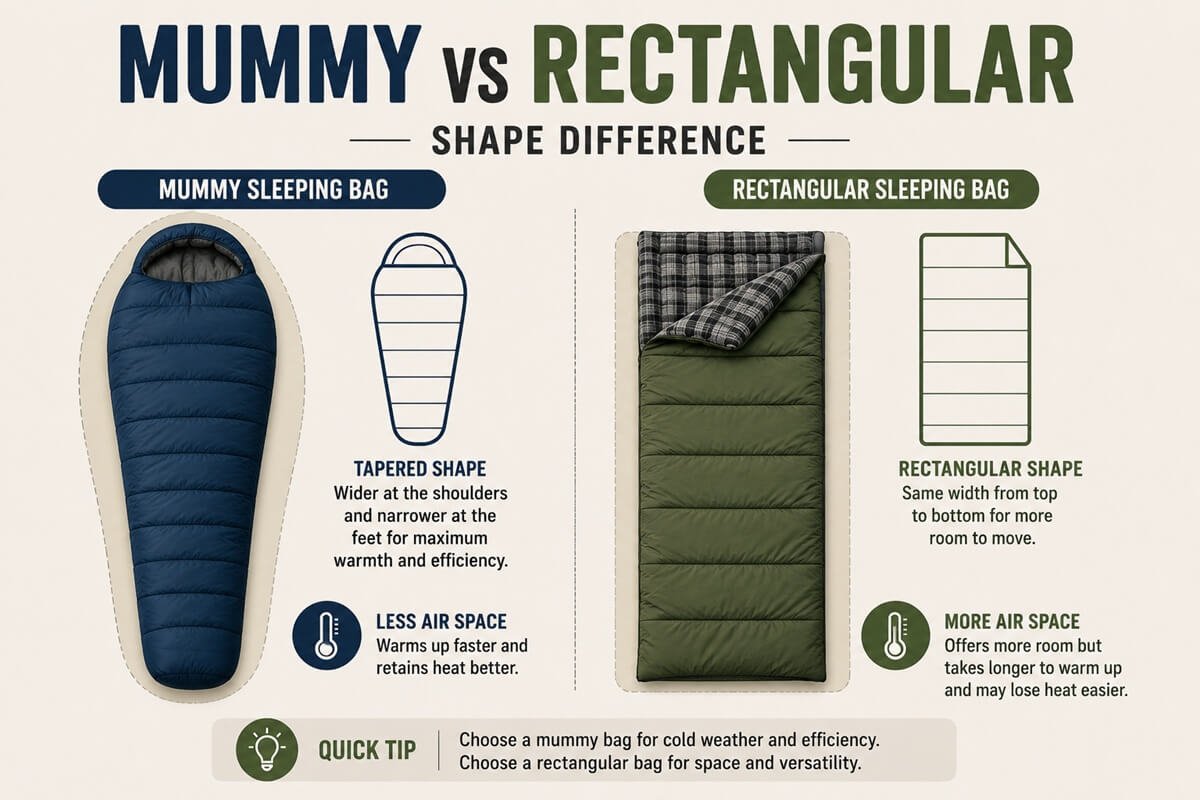
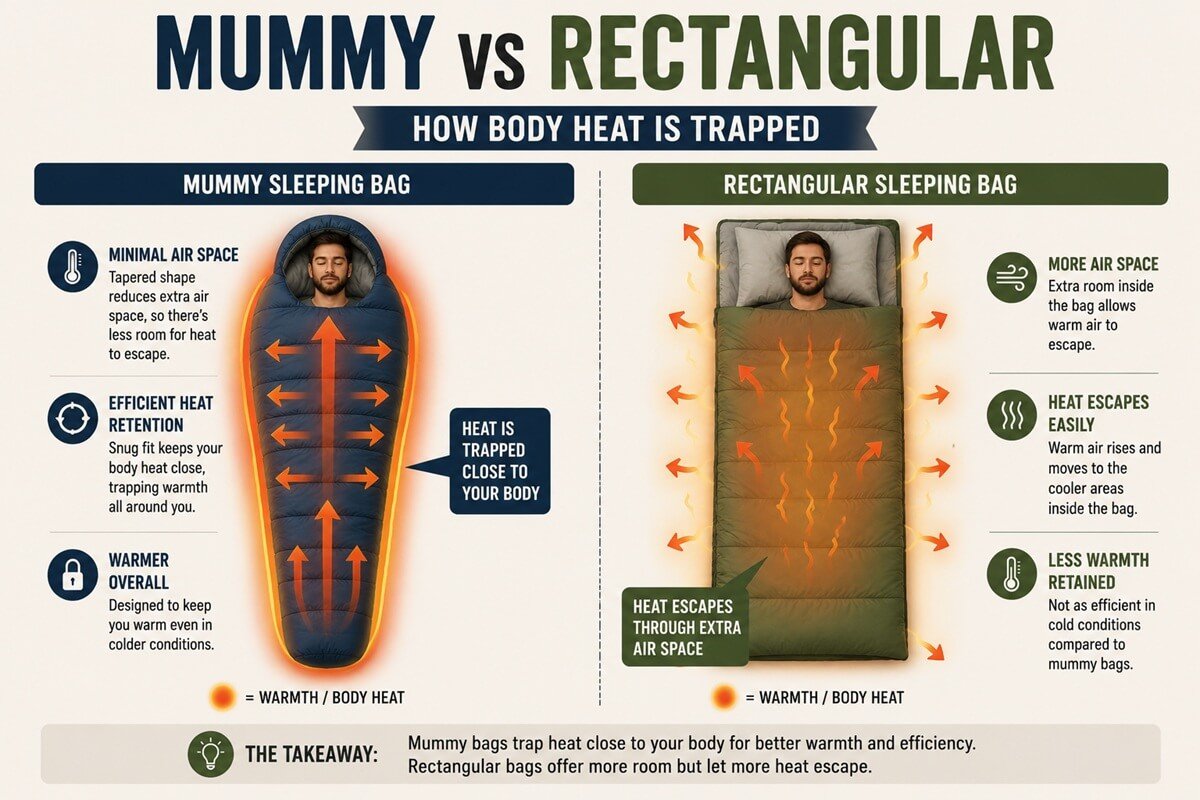
Mummy sleeping bags are designed with a tapered shape—wider at the shoulders and narrower at the feet. This snug design helps trap body heat and improves thermal efficiency. The mummy shape often includes a hood that can be cinched around your head, providing extra warmth during cold nights.
These bags are a favorite among backpackers and winter campers because they are lightweight, compact, and highly efficient at retaining heat. If you’re looking for top-rated options, check out our guide to the best mummy sleeping bags.
Rectangular Sleeping Bags
Rectangular sleeping bags, also known as traditional sleeping bags, have a boxy, straight shape. They offer more space to move around, making them ideal for those who prefer comfort over compactness. Some rectangular bags can even be zipped together to form a double bed, which is convenient for couples or family camping. They are usually heavier and bulkier than mummy bags but can provide a more comfortable sleeping experience in milder conditions.
Pros and Cons
Mummy Sleeping Bags
Pros:
- Superior warmth retention due to tapered shape
- Lightweight and easy to pack
- Ideal for backpacking and cold weather camping
- Hooded design keeps head warm
- Efficient insulation reduces material needed, often making it more affordable for weight-to-warmth ratio
Cons:
- Limited movement space inside
- Can feel restrictive for restless sleepers
- Not ideal for sharing with a partner
Rectangular Sleeping Bags
Pros:
- More room to move and stretch
- Comfortable for side sleepers or those who move a lot
- Can be zipped together for two-person use
- Easier to enter and exit quickly
- Versatile for car camping or indoor use
Cons:
- Heavier and bulkier
- Less heat-efficient in colder temperatures
- Not as suitable for backpacking
Warmth & Insulation
Warmth is one of the most important factors when choosing a sleeping bag, especially for cold-weather camping.
Mummy Sleeping Bags
The tapered design reduces empty space inside the bag, which means your body heat warms the air more efficiently. Many mummy bags also include draft collars, insulated hoods, and zipper baffles to prevent heat loss. This makes them ideal for temperatures below freezing or high-altitude camping.
For campers who regularly face changing weather conditions, our roundup of the best 3-season sleeping bags highlights versatile models designed for spring, summer, and fall adventures.
Material options:
- Down insulation: Extremely lightweight and highly compressible. Excellent for dry conditions but loses warmth when wet. The insulation experts at Allied Feather + Down provide an excellent explanation of down fill power, loft, and warmth performance.
- Synthetic insulation: Heavier but performs better in damp conditions and dries faster.
Rectangular Sleeping Bags
Rectangular bags tend to leave more airspace inside, which can make them cooler at night. They are better suited for spring, summer, or mild fall camping. Some modern rectangular bags include higher-quality insulation to compensate, but they rarely match the thermal efficiency of mummy bags in cold environments.
Temperature Ratings: Always check the EN or ISO temperature rating to match your sleeping bag to your camping conditions. If you’re comparing different styles and temperature ratings, our guide to the best camping sleeping bags can help narrow down the right option for your needs.
Comfort & Space
Comfort is subjective and depends on your sleeping style.
Mummy Bags
- Fit closely to the body, restricting movement.
- Ideal for solo campers or those who prefer minimalistic design.
- Can feel tight for side sleepers or people who toss and turn frequently.
Rectangular Bags
- Extra width and length allow more freedom to stretch.
- Comfortable for back or side sleepers.
- Can accommodate children or pets easily.
- Some rectangular bags are designed to double as blankets, making them multifunctional.
Weight & Portability
For backpackers or anyone carrying gear over long distances, weight and pack size matter.
Mummy Sleeping Bags
- Lighter and more compact due to tapered design and less material.
- Easier to fit into backpacks or compression sacks.
- Often preferred by hikers, mountaineers, and winter campers.
Rectangular Sleeping Bags
- Bulkier and heavier due to extra material.
- More suitable for car camping, RV trips, or casual outdoor stays.
- Can be cumbersome if you need to carry them over long distances.
Durability & Maintenance
Both types of sleeping bags require care to maintain insulation and lifespan.
Mummy Sleeping Bags
- Often made with lightweight, durable shell fabrics.
- Down-filled mummy bags require special washing and drying techniques.
- Synthetic mummy bags are easier to clean but can lose loft over time.
Rectangular Sleeping Bags
- Heavier fabrics may last longer in rough use.
- Easier to machine wash, especially synthetic-filled bags.
- Less likely to lose insulation quickly due to more material.
Maintenance Tips:
- Always dry bags completely before storage.
- Store loosely to preserve loft.
- Use a liner to reduce washing frequency.
A quality liner can also improve warmth and keep your bag cleaner on extended trips. See our recommendations for the best sleeping bag liners for backpacking.
Best Use Cases
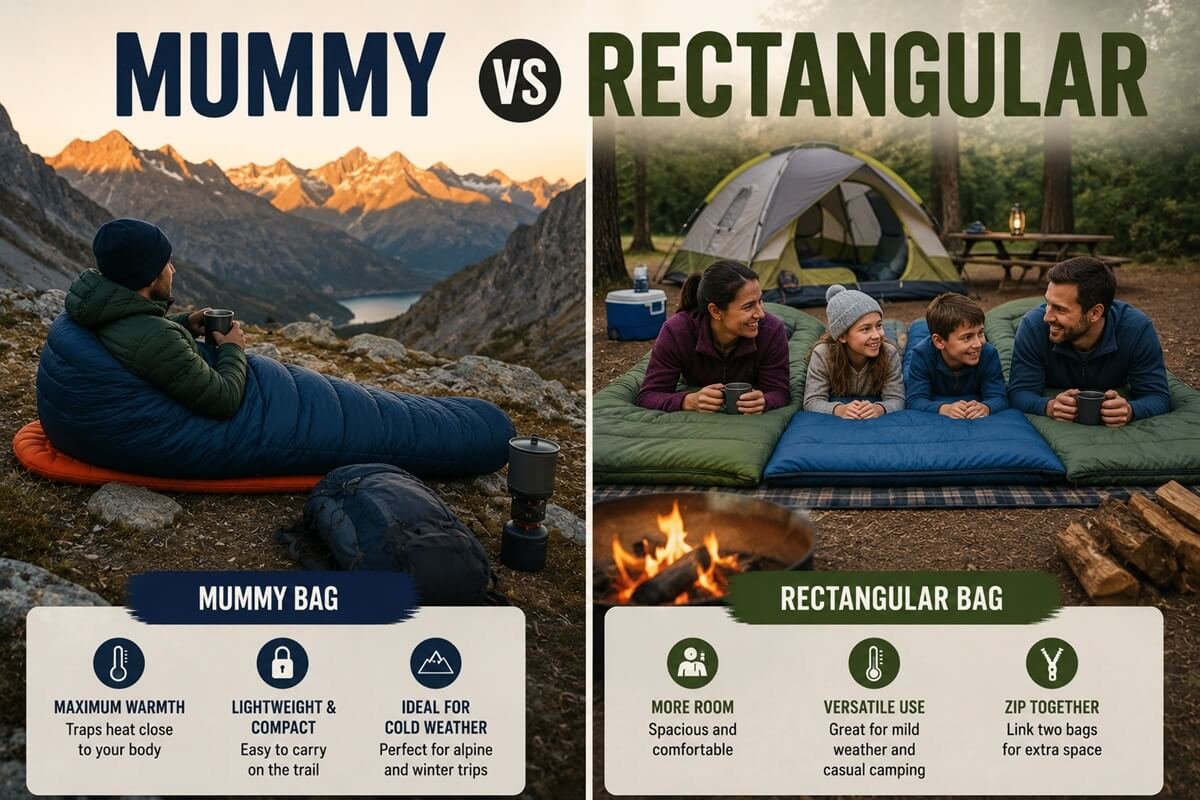
Choosing the right sleeping bag depends on how and where you camp. While both styles can be used in various situations, each design performs best under specific conditions.
| Camping Scenario | Recommended Sleeping Bag | Why It Works Best |
| Backpacking | Mummy | Lightweight, compact, and easy to carry over long distances |
| Winter Camping | Mummy | Superior heat retention and reduced heat loss |
| High-Altitude Treks | Mummy | Better thermal efficiency in cold mountain environments |
| Thru-Hiking | Mummy | Saves valuable pack space and reduces carried weight |
| Solo Adventure Camping | Mummy | Maximizes warmth-to-weight ratio |
| Car Camping | Rectangular | Comfort and spaciousness matter more than pack size |
| Family Camping | Rectangular | Extra room and ability to zip bags together |
| Summer Camping | Rectangular | Improved airflow and freedom of movement |
| RV Camping | Rectangular | Home-like comfort without weight restrictions |
| Indoor Sleepovers | Rectangular | Functions similarly to a blanket or bed covering |
| Couples Camping | Rectangular | Some models can create a double sleeping bag |
| Mixed Conditions | Semi-Rectangular | Balances warmth, comfort, and versatility |
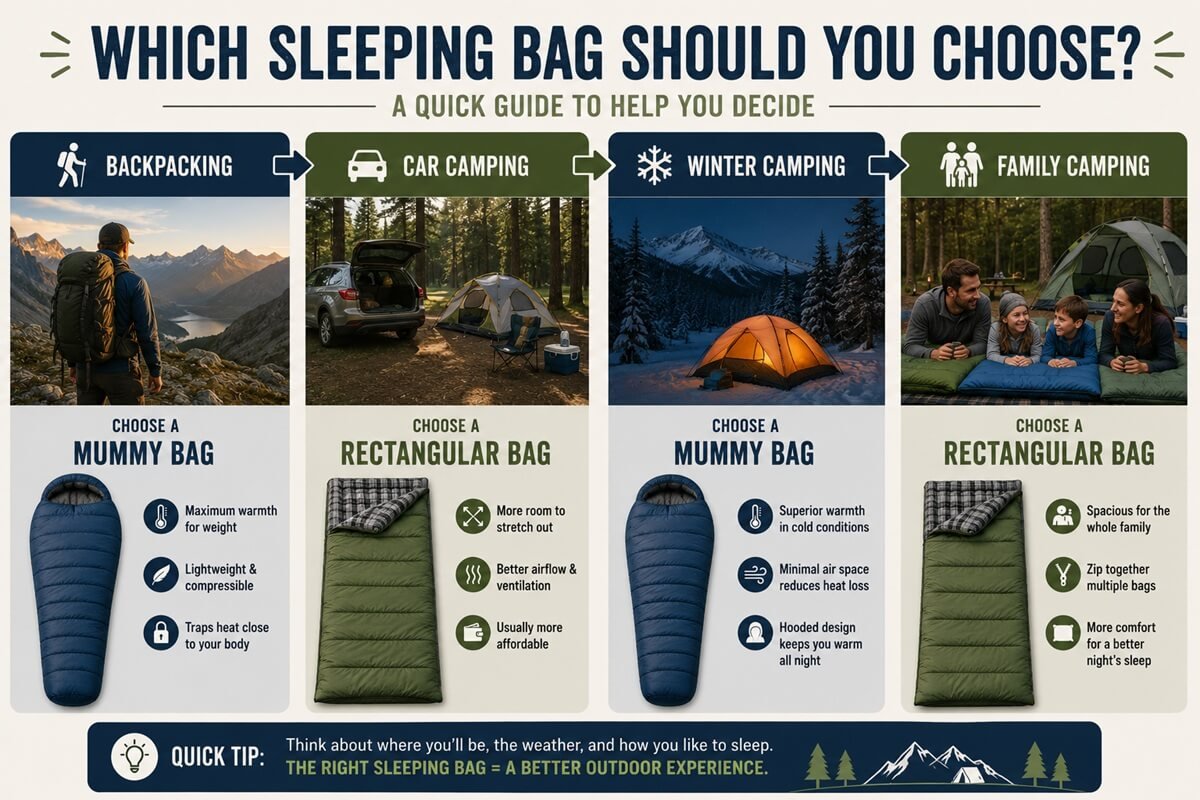
Quick Rule: If you’re carrying your gear on your back, a mummy sleeping bag is usually the better choice. If your vehicle is close to the campsite, prioritize comfort and consider a rectangular sleeping bag.
Cost Considerations
- Mummy Bags: Generally slightly more expensive for high-end models because of lightweight and insulated designs. A good down mummy bag can cost $150–$400 depending on temperature rating.
- Rectangular Bags: Usually cheaper for basic models, but premium rectangular bags with synthetic insulation or special features can also reach $200+. Campers shopping on a tighter budget can explore our picks for the budget sleeping bags that balance affordability and performance.
💡 Tip: Don’t compromise warmth for price—always choose a bag rated for the lowest temperature you expect to encounter.
Expert Recommendations
Rather than asking which sleeping bag is universally better, ask which one matches the way you actually camp.
Choose a Mummy Sleeping Bag If You:
- Hike long distances to your campsite.
- Camp in mountainous or cold-weather environments.
- Prioritize warmth-to-weight efficiency.
- Have limited backpack space.
- Regularly camp in temperatures below 40°F (4°C).
Choose a Rectangular Sleeping Bag If You:
- Mostly enjoy campground or car camping trips.
- Value sleeping comfort over packability.
- Frequently camp during spring and summer.
- Share sleeping space with children or a partner.
- Want a sleeping bag that can also function as a blanket.
A Practical Rule of Thumb
If you’ll carry your sleeping bag on your back for hours, choose a mummy bag. If your vehicle is parked near your campsite, choose the sleeping bag that feels most comfortable.
Our Final Verdict
For most backpackers and adventure campers, a mummy sleeping bag delivers the best balance of warmth, weight, and packability.
For casual campers, families, and weekend campground trips, a rectangular sleeping bag often provides the more enjoyable sleeping experience.
Neither design is inherently better—the right choice depends on where you camp, how you travel, and what helps you get the best night’s sleep outdoors.
FAQs: Mummy vs Rectangular Sleeping Bags
Can a sleeping bag be too warm for camping?
Yes. Using a sleeping bag with a temperature rating far below the actual nighttime temperature can lead to overheating, sweating, and disrupted sleep. If you camp across different seasons, consider using a sleeping bag liner or choosing a bag designed for three-season use.
What size sleeping bag should I buy?
Most sleeping bags come in regular and long sizes. A bag that is too large creates extra air space that your body must heat, while a bag that is too small can feel uncomfortable and compress insulation. Always check the manufacturer’s sizing recommendations based on your height and shoulder width.
Do sleeping bags work without a sleeping pad?
Not very well. Even the warmest sleeping bag loses effectiveness when compressed beneath your body. A quality sleeping pad provides insulation from the cold ground and significantly improves overall warmth and comfort.
How long should a quality sleeping bag last?
With proper care, a high-quality sleeping bag can last 10 years or more. Down-filled bags often have the longest lifespan when stored correctly, while synthetic insulation may gradually lose loft after years of heavy use.
Is it worth buying an expensive sleeping bag?
For frequent campers and backpackers, investing in a higher-quality sleeping bag can improve comfort, reduce pack weight, and provide better long-term durability. Occasional campers may find that a mid-range model offers the best balance of performance and value.
What is the biggest mistake campers make when choosing a sleeping bag?
Many campers focus only on temperature ratings and overlook factors such as fit, sleeping position, insulation type, and trip style. The best sleeping bag is the one that matches your specific camping needs rather than simply having the lowest temperature rating.
Conclusion
Choosing between a mummy and a rectangular sleeping bag ultimately comes down to camping style, climate, and personal preference. Mummy sleeping bags excel in warmth, compactness, and portability, making them ideal for backpackers and winter campers. Rectangular sleeping bags provide comfort, extra room, and versatility, making them perfect for family trips and milder weather. Understanding these differences ensures you invest in the right sleeping bag and sleep comfortably no matter where your camping adventures take you.
Remember, a well-chosen sleeping bag can enhance your camping experience significantly. Focus on fit, warmth, weight, and your camping conditions, and your nights in the wild will be restful and cozy.