
7 Best Solar Chargers for Backpacking: 2026 Guide


Whether you’re heading out for a weekend hike or a multi-day backpacking adventure, keeping your essential devices charged can be a real challenge. A reliable backpacking solar charger lets you recharge your smartphone, GPS, satellite communicator, headlamp, camera, or power bank without relying on wall outlets. The best solar charger for backpacking should be lightweight, durable, weather-resistant, and efficient enough to generate usable power even when sunlight conditions aren’t perfect.
With dozens of portable solar chargers on the market, choosing the right one isn’t always easy. Some prioritize ultralight weight for long-distance hikers, while others focus on faster charging speeds, multiple USB outputs, or higher wattage for powering several devices at once. Understanding these differences can help you avoid carrying unnecessary weight while ensuring you have dependable off-grid power throughout your trip.
To help you choose the right option, we compared seven portable solar chargers for backpacking, considering their power output, weight, charging connections, weather resistance, and value. The reviews below explain which types of trips and charging needs each model is best suited for.
How We Evaluated These Backpacking Solar Chargers
Our comparison focuses on practical backpacking needs, including portability, rated power output, device compatibility, durability, and ease of use. We considered manufacturer specifications and available product information to assess the strengths and limitations of each model.
Testing transparency: Manufacturer specifications and hands-on test results are not the same. We distinguish rated capabilities from independently measured performance and do not present unverified charging speeds or output measurements as test results. Product specifications and availability can change, so check the current manufacturer’s information before purchasing.
Best Solar Chargers for Backpacking – At a Glance
Comparison table of the top seven best solar chargers for backpacking in 2026.
| Name | Power | Rating | Weight | Price |
| Goal Zero Nomad 10 | 10 Watt | 5.0 | 1.43 lbs | Check |
| Nekteck 28W Solar Panel | 28 Watt | 5.0 | 1.44 lbs | Check |
| Powertraveller Falcon 21 | 21 Watt | 4.0 | 2.33 lbs | Check |
| Anker 21W 2-Port USB | 21 Watt | 5.0 | 14.7 oz | Check |
| BigBlue [Upgraded] 3 USB-A | 28 Watt | 4.0 | 1.48 lbs | Check |
| BioLite SolarPanel 5+ 2.0 | 5 Watt | 4.0 | 13.8 oz | Check |
| SunJack ETFE Monocrystalline | 60 Watt | 4.0 | 3.52 oz | Check |
- Best Overall – Goal Zero Nomad 10
- Ultralight Solar Charger for Backpacking – Anker 21W 2-Port USB
- Best Value for the Money – Nekteck 28W Solar Panel
1. Goal Zero Nomad 10 Monocrystalline Solar Panel
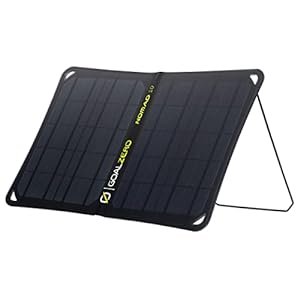
The Goal Zero Nomad 10 is a foldable and portable solar panel that is designed for backpacking, hiking, and travel. It features a monocrystalline solar panel that can generate up to 10 watts of power. It has a highly efficient built-in USB port for charging your devices very efficiently. However, the USB port isn’t water resistant.
The adjustable kickstand allows you to position this device at the perfect angle to maximize the amount of sunlight it receives. The solar panel is weather-resistant and durable, making it ideal for all types of outdoor use. However, the device has no input, only a single output.
I plugged my iPhone directly into it to test, and it started charging immediately. I was able to achieve 8 watts with direct sunlight outside on a clear day in the Midwest, with the panels pointed directly at the sun. It is very light. You can carry it in your bag daily carry. To ensure quality, the manufacturer also offers 1 year warranty.
Pros | Cons |
|
|
2. Nekteck 28W Portable Solar Panel with 2 USB Port
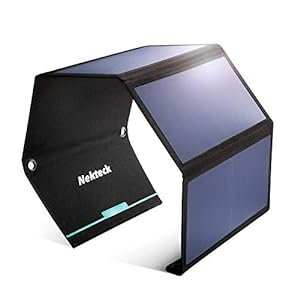
The Nekteck 28W is a portable solar panel that can generate up to 28 watts of power without losing charging efficiency. It features two USB ports, which allow you to charge multiple devices at the same time. It is IPX4 waterproof, making it ideal for outdoor activities such as hiking and camping.
Nekteck 28W solar charger is compatible with a variety of devices, including the iPhone 12/11/11pro/Xs, iPad, Samsung Galaxy, and cameras. It is also designed with a smart IC chip, which automatically detects the optimal charging speed for your device.
You can use this device to charge a rechargeable battery charger. However, it will take a while to fully charge your rechargeable battery. Nekteck portable solar panel comes with an attached zip pouch that you can put your phone in while your device is charging. It is also surprisingly thin and folds up nicely.
Pros | Cons |
|
|
3. Powertraveller Falcon 21: Folding Solar Charger
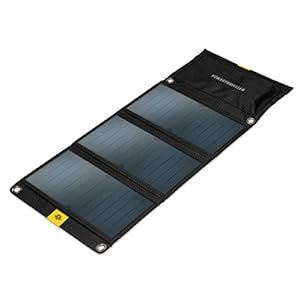
The Powertraveller Falcon 21 is a portable folding solar panel that can charge up to 3 devices simultaneously (2 via USB and 1 via DC). It features both a 5V USB output and a 20V DC output, making it compatible with a wide range of devices, including laptops, tablets, smartphones, SAT phones, GPS devices, and action cameras.
The Falcon 21 solar panel is rugged, lightweight, and splashproof, making it ideal for backpacking. It can charge laptops with a power consumption of up to 40 watts, making it a great option for people who need to work or use their laptops while in outdoors.
This device incorporates high-efficiency monocrystalline cells from SunPower, which produce up to 30% more power compared to conventional cells. The order includes a variety of connectors and cables so that you can charge your devices easily, no matter where you are.
However, it has a limited range of angle adjustments. This makes it difficult to position the solar panels optimally for maximum sun exposure. This model is more expensive than some other portable solar panels on the market.
| Pros | Cons |
|
|
4. Anker 21W 2-Port Solar Charger with Foldable Panel
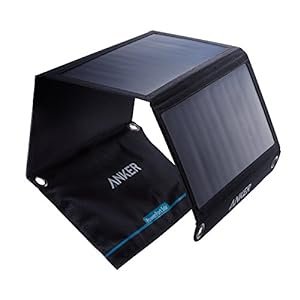
If you’re looking for a portable, powerful solar charger for a long period, the Anker 21W is the best option for you. With a compact and slim design, it can generate up to 21 watts of power. It features two USB ports, which allow you to charge two devices at the same time.
It is lightweight and compact, making it easy to carry around in your backpack or luggage. It’s also weather-resistant, which makes it ideal for outdoor activities such as camping and hiking. It has four foldable sections: three sections have solar panels, and the fourth section has a small velcro-closed pocket that contains two USB ports.
The solar panel is compatible with a wide range of devices, and the Anker’s “PowerIQ” system allows it to communicate with essentially all USB devices. The PowerIQ technology automatically detects the optimal charging speed for your device. This ensures that your devices charge as quickly and efficiently as possible.
However, this device is made of delicate materials, and it can be damaged easily if not handled carefully. It isn’t compatible with devices that require more than 2.4 amps of power or devices with proprietary charging cables.
Pros | Cons |
|
|
5. BigBlue [Upgraded] 3 USB-A 28W Solar Charger
![BigBlue [Upgraded] 3 USB-A 28W](https://outdoorshell.com/wp-content/uploads/2023/04/5.-BigBlue-Upgraded-3-USB-A-28W-Solar-Charger.jpg)
BigBlue has been committed to developing energy storage products with higher safety factors. The BigBlue 28W Solar Charger is very powerful with 28 watts of power supply. It features three USB-A ports, which allow you to charge up to three devices at the same time.
Like most of the solar panels in our ranking, this model is compatible with a variety of devices, including the iPhone 11/XS/XS Max/XR/X/8/7, iPad, Samsung Galaxy, and LG devices.
It is IPX4 waterproof, which means it’s protected from splashes of water from any direction, making it ideal for outdoor activities such as camping and hiking. It’s also designed with high-efficiency SunPower solar panels, which convert more solar energy into usable power than traditional solar panels.
BigBlue 28W Solar Charger has built-in safety features, including a surge protection circuit and short circuit prevention. These safety features help to protect your devices from damage while they’re charging. It can automatically change the charging according to the sunlight’s brightness.
Pros | Cons |
|
|
6. BioLite SolarPanel 5+ 2.0 With Onboard Battery
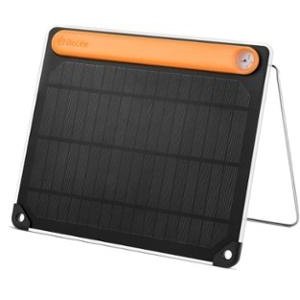
The BioLite SolarPanel 5+ 2.0 is an ultralight solar panel that can generate up to 5 watts of power to charge up your gear when you need it most. It features an onboard battery, which allows you to store energy for later use. It is suitable for charging smartphones, cameras, and other small electronic devices.
BioLite solar charger is designed with a slim profile and lightweight design, making it easy to carry around in your backpack or luggage. It also has a kickstand that can be adjusted to different angles, which allows you to position the solar panel for maximum sun exposure. It has an IPX4 rating, which means this device can withstand splashing water from any angle.
BioLite SolarPanel 5+ 2.0 also features an LED meter that displays the solar panel’s power output, as well as the battery level. This makes it easy to monitor the performance of the solar panel and make adjustments as needed. Its rugged and durable exterior makes it resistant to water and dust. This makes it ideal for outdoor activities, such as camping and hiking.
Pros | Cons |
|
|
7. SunJack 60 Watt ETFE Monocrystalline Solar Panel
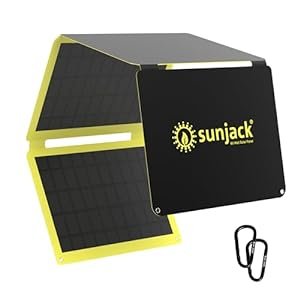
The SunJack 60 Watt Foldable Portable Solar Panel provides a high-powered and efficient source of renewable energy for outdoor enthusiasts, backpackers, hikers, and campers. With its foldable design, it is easy to carry and transport. It can be deployed quickly and easily to provide power to a variety of electronic devices, including cell phones, laptops, and power stations.
It is constructed using high-quality ETFE monocrystalline solar cells, which are known for their high efficiency and durability. This can significantly extend the life of the solar panels. It comes with a durable carrying case, so you can easily transport and store it when not in use. Its IP67 waterproof rating can withstand heavy rain and splashes.
It also features multiple charging ports, including DC, USB QC3.0, and Type-C, which allow you to charge multiple devices simultaneously. Furthermore, the solar panel is IP67 waterproof, which makes it resistant to water and dust, making it suitable for outdoor use in all weather conditions.
However, this model is a bit heavy, which makes it less suitable for backpacking and hiking. It is also relatively expensive compared to other portable solar panels in the market.
Pros | Cons |
|
|
Backpacking Solar Chargers Compared: Which One Should You Choose?
After reviewing each solar charger, use the comparison table below to find the best fit for your backpacking needs. Compare rated power output, portability, key features, and potential drawbacks to narrow down your options. Whether you need a compact panel for occasional phone charging or a higher-output option for a longer trip, consider your device requirements, available sunlight, and pack weight before making your final decision.
| Solar Charger | Rated Output | Best For | Advantage | Drawback | Check |
|---|---|---|---|---|---|
| Goal Zero Nomad 10 | 10W | Short trips and lightweight charging setups | Compact, portable design | Lower rated output than larger panels | Check Price |
| Nekteck 28W Solar Panel | 28W | Multi-day trips with compatible USB devices | Higher rated output for its portable-panel category | Performance depends heavily on sunlight and positioning | Check Price |
| Powertraveller Falcon 21 | 21W | Hikers needing more output than a small panel | Foldable design for carrying on trips | Check packed size, weight, and device compatibility | Check Price |
| Anker 21W Solar Panel | 21W | Charging compatible USB devices outdoors | Portable foldable-panel format | Actual charging speed varies with conditions and device | Check Price |
| BigBlue 28W Solar Charger | 28W | Backpackers charging compatible devices on longer trips | Higher rated output in a portable panel | Needs good sunlight; verify ports and weather resistance | Check Price |
| BioLite SolarPanel 5+ 2.0 | 5W | Day hikes and small-device charging | Integrated battery can store energy for later | Lower rated output than larger panels | Check Price at REI |
| SunJack 60W ETFE Solar Panel | 60W | Higher-power outdoor charging setups | Higher rated output for compatible equipment | Panel size and carrying weight may be less suitable for ultralight backpacking | Check Price |
- Note: Wattage represents rated output, not guaranteed real-world charging performance. Confirm current product specifications, weight, ports, and availability before purchasing.
Best Solar Chargers for Backpacking: Buying Guide
Choosing the best solar charger for backpacking involves more than simply picking the highest wattage model. The ideal charger should match your backpacking style, the devices you carry, and the environments you’ll be exploring.
Here’s what to consider before making your purchase.
Power Output (Watts)
Power output determines how quickly a solar charger can generate electricity under ideal sunlight. Most backpackers will find that a 10W to 20W solar charger is sufficient for charging smartphones, GPS devices, headlamps, and small power banks.
If you plan to charge multiple devices simultaneously or larger electronics like tablets, consider a 28W to 40W model. Higher-wattage panels produce more power but also add extra weight and bulk to your pack.
The table below helps you choose the right solar charger wattage based on the devices you plan to charge during your backpacking trips.
| Wattage | Best For |
|---|---|
| 5–10W | Phones, GPS, emergency charging |
| 20–28W | Backpacking, hiking, power banks |
| 40–60W | Tablets, laptops, portable power stations |
Solar Panel Efficiency
Solar panel efficiency measures how effectively sunlight is converted into usable electricity. High-efficiency monocrystalline solar panels generally outperform polycrystalline models by producing more power from the same surface area.
They also maintain better performance in partially cloudy conditions, making them the preferred choice for backpacking and hiking trips where weather can change quickly.
Weight and Packability
Every ounce matters on the trail. A lightweight solar charger is easier to carry during long hikes and multi-day backpacking adventures.
Foldable solar panels weighing between 10 ounces and 1.5 pounds provide a good balance between portability and charging performance. Before purchasing, check both the folded dimensions and total weight to ensure the charger fits comfortably inside or outside your backpack.
Foldable vs. Rigid Solar Panels
Foldable solar chargers are the most popular option for backpackers because they’re compact, lightweight, and easy to store. Many can also be attached to a backpack during rest stops or while camping.
Rigid solar panels, while generally more durable and efficient, are heavier and better suited for vehicle camping, RVs, or permanent outdoor setups rather than long-distance hiking.
USB-C vs. USB-A Connectivity
Modern portable solar chargers increasingly feature USB-C Power Delivery (PD) alongside traditional USB-A ports. USB-C offers faster charging speeds and supports newer smartphones, tablets, and power banks.
If you own multiple USB-C devices, choosing a charger with at least one USB-C output provides better long-term compatibility. Models with both USB-C and USB-A ports offer the greatest flexibility for charging different devices simultaneously.
Use the comparison below to understand the differences between USB-A and USB-C ports and choose the best option for your charging needs.
| USB Type | Advantages | Best For |
|---|---|---|
| USB-A | Widely compatible | Older devices |
| USB-C | Faster charging | Modern smartphones |
| USB-C PD | High power output | Tablets, laptops |
Built-in Battery vs. Direct Solar Charging
Some solar chargers include an integrated battery, allowing you to store solar energy during the day and charge devices later. Others generate power only when exposed to sunlight. For extended backpacking trips, many experienced hikers prefer pairing a lightweight solar panel with a high-quality power bank. This setup stores energy more efficiently and provides reliable charging even after sunset or during cloudy weather.
Weather Resistance and Durability
Outdoor gear should be able to withstand changing conditions. Look for solar chargers made with durable materials such as ETFE-coated monocrystalline panels, reinforced stitching, and water-resistant fabrics.
Although many portable solar chargers feature IPX4 or IP67 ratings for splash resistance, very few are fully waterproof. Always check the manufacturer’s specifications before exposing the charger to heavy rain or harsh environments.
The following table explains common IP ratings so you can select a solar charger that offers the right level of weather protection for outdoor adventures.
| IP Rating | Protection Level |
|---|---|
| IPX4 | Splash resistant |
| IP65 | Water jets and dust resistant |
| IP67 | Temporary immersion |
Charging Speed in Real-World Conditions
Manufacturer wattage ratings are measured under ideal laboratory conditions. Actual charging speed depends on factors such as sunlight intensity, panel angle, temperature, cloud cover, and shading. Positioning your solar charger directly toward the sun and avoiding partial shade can significantly improve charging efficiency.
For the most consistent performance, use your solar charger to recharge a power bank first, then charge your electronic devices from the power bank.
Device Compatibility
Before purchasing, ensure the solar charger supports all the devices you plan to carry. Most modern models are compatible with smartphones, GPS units, action cameras, smartwatches, rechargeable headlamps, satellite communicators, and USB power banks.
If you intend to charge tablets, laptops, or portable power stations, choose a higher-output model with USB-C PD or DC outputs that meet your devices’ power requirements.
Backpackers usually only need to charge small electronics, but campers traveling with larger gear benefit from affordable solar power stations for off-grid camping, which can power laptops, portable refrigerators, and other high-demand devices.
Build Quality and Warranty
A backpacking solar charger is an investment, so build quality matters. Reinforced hinges, durable fabrics, weather-resistant ports, and quality solar cells contribute to longer service life. Reputable manufacturers provide warranties ranging from one to five years, giving you added confidence in the product’s durability and long-term reliability. Reading user reviews can also help identify common durability issues before you buy.
“If you’re building a complete off-grid camping setup, consider pairing your solar charger with solar-powered stoves to reduce your reliance on traditional fuel sources.”
What Size Power Bank Do You Need for Backpacking?
Choose a power bank based on your devices, trip length, and access to charging opportunities. A compact battery may be enough for occasional phone top-ups, while a longer trip or several electronic devices may justify a higher-capacity model.
Check the power bank’s rated capacity, weight, input charging speed, and USB-C compatibility before buying. Remember that solar charging is variable, so don’t assume a panel will fully recharge a power bank every day. Carry enough stored power for essential navigation and emergency communication when sunlight is limited.
FAQs: Best Solar Chargers for Backpacking
Here is a list of questions and answers people are commonly interested in.
How long does it take for a solar charger to charge a device?
The charging time depends on the capacity of the solar charger and the device being charged. It can take anywhere from a few hours to a full day to charge a device fully.
Can a solar charger charge multiple devices simultaneously?
Some solar chargers can charge multiple devices at once, while others may only charge one device at a time. It is essential to check the specifications of the solar charger before purchasing.
Which solar charger works best in cloudy weather?
No portable solar charger performs at full capacity in cloudy weather, but models with high-efficiency monocrystalline solar panels generally deliver the best performance in low-light conditions. Chargers from brands like Goal Zero, BigBlue, and Anker use premium solar cells that continue generating usable power even under overcast skies, although charging speeds will be significantly slower than in direct sunlight. For the most reliable results, pair your solar charger with a power bank.
Can a solar charger overcharge my device?
A compatible phone or other USB device generally manages its own battery charging, but protection depends on the device and the charging equipment. Solar panel output can fluctuate as sunlight changes, so use a compatible charging setup and follow the manufacturer’s instructions. For more consistent charging, connect the panel to a suitable power bank and charge your devices from the stored energy.
Can solar chargers store energy for later use?
Yes, some solar chargers come with a built-in battery that can store energy for later use. Make sure to check the battery capacity of the solar charger before purchasing.
How do I clean my solar charger?
To clean a solar charger, use a soft cloth or a brush to remove any dirt or debris on the solar panels. Avoid using harsh chemicals that can damage the solar panels.
Is pairing a solar charger with a power bank recommended for backpacking?
Using a power bank alongside a solar charger is highly recommended for backpacking applications. Solar panels generate variable output depending on sunlight conditions, while power banks allow energy storage for later use. This combination ensures consistent device charging during low-light periods.
If you’re still unsure which model to buy, this quick recommendation table highlights the best solar charger for each backpacking need.
| If You Need… | Recommended Solar Charger |
|---|---|
| Best Overall | Goal Zero Nomad 10 |
| Best Budget | Nekteck 28W |
| Best Ultralight | Anker 21W |
| Best Built-in Battery | BioLite SolarPanel 5+ |
| Best High Power | SunJack 60W |
Conclusion
When choosing the best solar charger for backpacking, consider factors such as power output, portability, charging capacity, durability, and price. The Anker, Goal Zero, and RAVPower are some of the best brands available. Choose a solar charger that meets your power needs. It must be durable and fit within your budget. With the right solar charger, you can enjoy a reliable source of power during your outdoor adventures.
However, if you prefer dedicated lighting, check out our guide of the best solar lanterns for camping for illuminating your campsite without disposable batteries.



One Comment