How Does a Rooftop Tent Affect Your Car’s Gas Mileage?

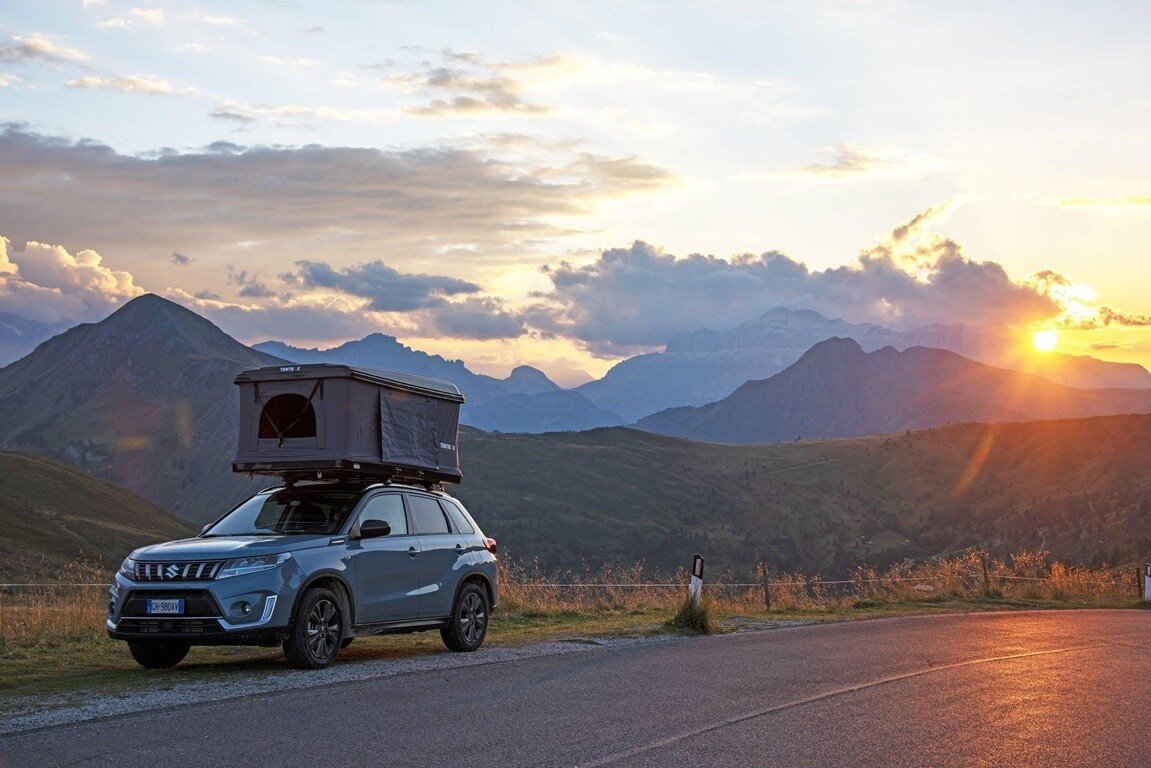
A rooftop tent can reduce your vehicle’s gas mileage by increasing aerodynamic drag and adding weight. The effect is usually more noticeable at highway speeds, where air resistance plays a larger role in fuel consumption. However, the actual loss depends on your vehicle, tent design, mounting system, driving speed, weather, and road conditions.
There is no single MPG reduction that applies to every rooftop tent. A low-profile tent mounted on a large SUV can affect fuel economy differently from a bulky tent mounted on a smaller crossover. Even two similar vehicles can produce different results depending on their speed and driving conditions.
If you’re considering rooftop camping, understanding these factors can help you estimate fuel costs, choose a suitable tent, and avoid unnecessary fuel consumption on your next trip.
Quick Answer: How Much Gas Mileage Does a Rooftop Tent Cost?
A rooftop tent can noticeably reduce highway fuel economy, but the exact amount varies by vehicle and setup. Published tests involving rooftop cargo boxes and roof racks demonstrate that equipment mounted above a vehicle can have a measurable aerodynamic penalty. Those tests provide useful context, but their results should not be treated as direct measurements of rooftop tent performance.
For example, Consumer Reports tested rooftop cargo carriers at 65 mph and found that a carrier and rack reduced the fuel economy of a 2019 Nissan Altima from nearly 48 MPG to about 39 MPG. A 2019 Toyota RAV4 dropped from 41 MPG to 35 MPG with the carrier installed. These results concern cargo carriers, not rooftop tents, so your actual results may differ.
The most important factors are:
- Driving speed: Aerodynamic drag generally increases rapidly as speed rises.
- Tent shape and height: A bulky or poorly streamlined setup can disturb airflow more than a lower-profile design.
- Vehicle type: Vehicle size, shape, engine, and baseline fuel economy affect the result.
- Roof rack and mounting hardware: Crossbars and brackets can create additional drag even when the tent is not installed.
- Driving conditions: Headwinds, hills, traffic, tire pressure, and acceleration all influence fuel consumption.
The practical takeaway is simple: expect some fuel-economy penalty, especially during sustained highway driving, but measure your own vehicle rather than relying on a universal percentage. You can read the full Consumer Reports fuel-economy test of rooftop carriers for the test conditions and vehicle-specific results.
Why Does a Rooftop Tent Reduce Fuel Economy?
Three main factors explain why carrying a tent on your roof can increase fuel consumption.
1. Aerodynamic Drag and Wind Resistance
Aerodynamic drag is the resistance your vehicle encounters as it moves through the air. Cars and SUVs are designed with particular shapes to manage airflow, but adding a rooftop tent changes that shape.
A tent can increase the vehicle’s effective frontal area, disturb airflow over the roof, and create additional turbulence behind the vehicle. The engine must provide more energy to overcome the resulting resistance.
This effect becomes increasingly important at higher speeds. Aerodynamic drag rises approximately with the square of airspeed relative to the surrounding air. The power required to overcome that drag rises approximately with the cube of speed under simplified conditions.
That does not mean your fuel consumption will follow an exact mathematical formula in everyday driving. Rolling resistance, engine efficiency, transmission behavior, wind, and other factors also matter. Nevertheless, it explains why a rooftop tent can be more noticeable on a long highway trip than during slower local driving.
2. Added Weight
A rooftop tent, mounting brackets, and roof rack add weight to your vehicle. Depending on the model, the combined setup can weigh enough to make vehicle compatibility an important consideration.
Extra weight requires additional energy when accelerating and climbing hills. It can also affect fuel consumption in stop-and-go traffic.
However, weight is only part of the story. During steady highway cruising, aerodynamic drag can be a more important factor than the tent’s mass. Choosing the lightest tent available does not automatically guarantee the best fuel economy if its shape creates substantial wind resistance.
3. Roof Racks and Mounting Hardware
Your tent is not always the only source of additional drag. Crossbars, mounting brackets, exposed hardware, and other roof accessories can also disturb airflow.
If your vehicle already has roof rails or crossbars, adding a tent changes the complete roof setup. The combined effect depends on how the components interact with the vehicle’s shape.
When you remove your tent between trips, check whether your rack system can also be removed safely and conveniently. Taking off unused equipment may reduce unnecessary drag, provided removal and reinstallation follow the manufacturer’s instructions.
Hard-Shell vs. Soft-Shell Rooftop Tents: Which Uses Less Gas?
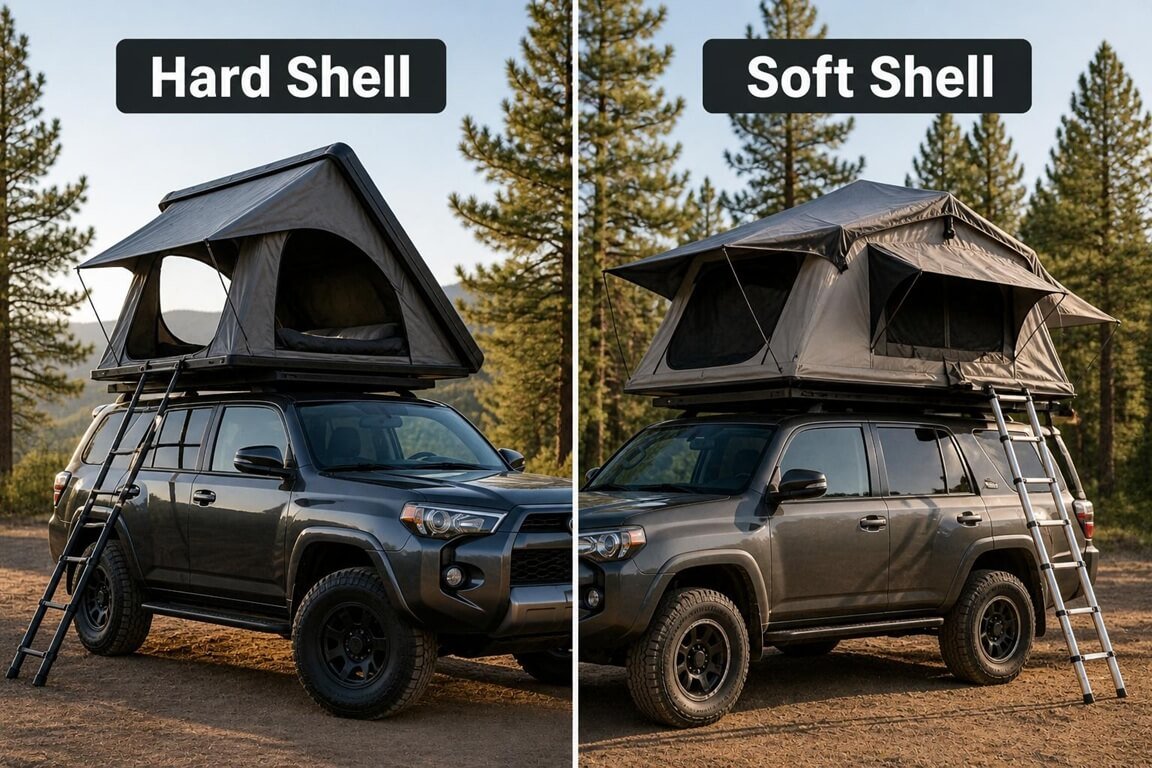
The type of rooftop tent can influence fuel economy, but there is no universal winner. Hard-shell tents typically have a rigid outer shell and may close into a relatively compact package. Some designs have a low, streamlined profile. Others sit higher or have shapes that create considerable drag.
Soft-shell tents often fold out from a fabric-covered package. Their packed height, cover shape, mounting position, and rack arrangement can vary significantly between models.
Here’s how to compare them.
| Factor | Hard-shell rooftop tent | Soft-shell rooftop tent |
|---|---|---|
| Packed profile | Often compact, but varies by model | Can be taller or wider, depending on the design |
| Aerodynamics | Potentially favorable with a low-profile shape | Depends on packed shape, cover, rack, and mounting |
| Weight | Varies; some models are heavy | Varies; some models are lighter |
| Fuel economy | No guaranteed advantage | No guaranteed disadvantage |
| Best comparison method | Check actual dimensions and installed height | Check actual dimensions and installed height |
Which should you choose?
If fuel economy is a major concern, compare the complete installed profile rather than relying on the hard-shell or soft-shell label. Look at the tent’s height above the roof, front-facing shape, width, weight, rack design, and manufacturer-approved mounting arrangement.
A compact hard-shell tent may be a good option for a frequent road-tripper, but a well-designed soft-shell tent could be a better choice for another vehicle or budget. Without controlled tests comparing specific models on the same vehicle, it would be misleading to claim that one category always saves more fuel.
If you’re still comparing designs, explore the best rooftop tents to explore options for different camping needs. Another option for travelers who want more sheltered outdoor space is a campervan with an awning. Explore our guide to the best campervan awnings for ways to create shade and extra usable space at camp.
How Much Extra Fuel Could a Rooftop Tent Use?
The easiest way to understand the cost is to compare your normal fuel economy with your fuel economy after installing the tent.
Consider this illustrative example:
- Normal fuel economy: 25 MPG
- Fuel economy with the tent: 22 MPG
- Distance traveled: 1,000 miles
At 25 MPG, the vehicle uses:
1,000 ÷ 25 = 40 gallons.
At 22 MPG, it uses:
1,000 ÷ 22 = approximately 45.5 gallons.
That means the vehicle would use about 5.5 additional US gallons over 1,000 miles.
The extra fuel percentage in this example is approximately 13.6%. The MPG figure itself fell by 12%, illustrating why a percentage reduction in MPG is not the same as the percentage increase in fuel consumed.
These numbers are an example of how to calculate fuel costs. They are not a prediction of the average fuel-economy penalty from a rooftop tent. For trips focused on alpine terrain, a specialized ground mountaineering tent is more suitable than a rooftop setup.
Calculate Your Potential Extra Fuel Cost
Use your own vehicle’s baseline MPG and a realistic estimate of its MPG with the tent. If you haven’t measured the second figure, try a few scenarios rather than assuming a particular loss. For a fair comparison, use the same distance and fuel price in both calculations.
Formula:
Extra fuel used = Trip distance ÷ MPG with tent − Trip distance ÷ MPG without tent.
Extra fuel cost = Extra fuel used × Price per gallon.
For example, if the additional fuel consumption is 5.5 gallons and fuel costs $3.50 per gallon, the added cost would be about $19.25 for the trip. Your local fuel price and actual fuel economy will determine the real cost.
Which Vehicles Are Most Affected by Rooftop Tents?
The impact depends on the vehicle’s shape, existing roof equipment, engine, and normal fuel economy. No single vehicle category is guaranteed to experience the greatest loss.
Small Cars and Compact Crossovers
A rooftop tent can significantly change the aerodynamic profile of a vehicle designed for relatively efficient road travel. The additional equipment may be especially noticeable during highway cruising.
Before mounting a tent on a small car, check roof-load limits and the manufacturer’s approved mounting requirements. Not every vehicle is suitable for every rooftop tent.
SUVs and Crossovers
SUVs are common rooftop camping platforms, but their fuel economy varies widely. A tall SUV may already encounter substantial aerodynamic resistance, and an added tent can increase it further.
A larger vehicle is not automatically immune to a fuel-economy penalty. Its shape, speed, tent profile, and baseline efficiency still matter.
For longer road trips in an RV, practical cooking equipment can also make campsite stops more comfortable. Our roundup of essential RV kitchen accessories highlights useful items for organizing a compact mobile kitchen.
Pickup Trucks
Pickup trucks can have different airflow patterns depending on cab height, bed configuration, and where the tent is mounted. A tent positioned over the cab may behave differently from one mounted on a bed rack.
Do not assume a tent mounted over a truck bed will have no effect on fuel economy. The result depends on its height relative to the cab, its shape, and the complete vehicle setup.
Hybrid and Fuel-Efficient Vehicles
Drivers of fuel-efficient vehicles may notice a meaningful change in MPG when adding roof-mounted equipment. However, the actual impact depends on the vehicle and driving conditions, not simply whether it uses a hybrid powertrain.
If you rely on long highway range, compare fuel consumption over a representative route before and after installation.
Seven Ways to Reduce Fuel Consumption With a Rooftop Tent

You may not be able to eliminate the aerodynamic penalty, but you can take practical steps to avoid wasting fuel.
1. Choose a Suitable Low-Profile Design
Compare the installed height and shape of different tents. A lower-profile design may reduce aerodynamic disruption, although shape and mounting details matter as well. Do not choose a tent based on height alone. It must also meet your sleeping, weather, vehicle compatibility, and safety requirements.
2. Remove Unused Roof Equipment
If you don’t use your rooftop tent regularly, consider removing it between trips. Where practical, remove unused crossbars and accessories too. Follow the manufacturer’s instructions and make sure any removed components are stored safely. Leaving unnecessary equipment on the roof can create drag even when you’re not camping.
3. Moderate Your Highway Speed
Driving at a steady, sensible speed can help reduce fuel consumption. Aerodynamic resistance becomes increasingly important as speed rises, so a modest reduction in highway speed can make a difference.
Always obey local speed limits and adjust your driving to traffic, weather, and road conditions. Avoid focusing on MPG at the expense of safety.
4. Avoid Carrying Unnecessary Weight
Pack only the equipment you need for the trip. Heavy camping gear, excess water, and unnecessary accessories add to the vehicle’s load. Weight reduction won’t remove the aerodynamic effect of the tent, but it can help avoid additional fuel consumption, especially in stop-and-go driving and on hills.
5. Check Tire Pressure
Maintain tire pressure according to the vehicle manufacturer’s recommendations, accounting for the vehicle’s load when applicable. Underinflated tires can increase rolling resistance and may compromise handling. Don’t inflate tires beyond recommended pressures in an attempt to compensate for the rooftop tent.
6. Drive Smoothly
Avoid unnecessary hard acceleration and braking. Look ahead, leave appropriate following distance, and maintain a steady pace when conditions allow. Smooth driving can improve fuel efficiency independently of the tent, making it a useful habit on road trips.
7. Compare Complete Tent and Rack Setups
When choosing equipment, compare the tent, crossbars, mounting hardware, and other accessories together. A tent that looks aerodynamic by itself may sit high on a particular rack. Prioritize compatibility and manufacturer-approved installation. Never modify a mounting system or compromise secure installation to improve airflow.
Should You Remove Your Rooftop Tent When You’re Not Camping?
If you use your tent only occasionally, removing it between trips may be worthwhile. A mounted tent adds weight and can increase aerodynamic drag even when folded and covered. Removing it eliminates the tent’s contribution to those effects, although the remaining rack may still create drag.
Whether removal makes financial sense depends on how often you drive, how much fuel economy changes, your fuel price, and the effort required to take the tent off and reinstall it.
Consider these questions:
- Do you drive long distances most weeks?
- Is your tent mounted year-round?
- Can you remove it without difficulty or unsafe lifting?
- Can the rack also be removed when it’s not needed?
- Do your measurements show a meaningful change in fuel consumption?
If you frequently use your rooftop tent, keeping it installed may be worth the convenience. If you use it only a few times per year, removing it between trips could reduce unnecessary fuel consumption. If you prefer traveling light without carrying equipment on your vehicle’s roof, a ground or bikepacking tent can be another option for certain trips.
How to Measure Your Rooftop Tent’s Actual MPG Impact
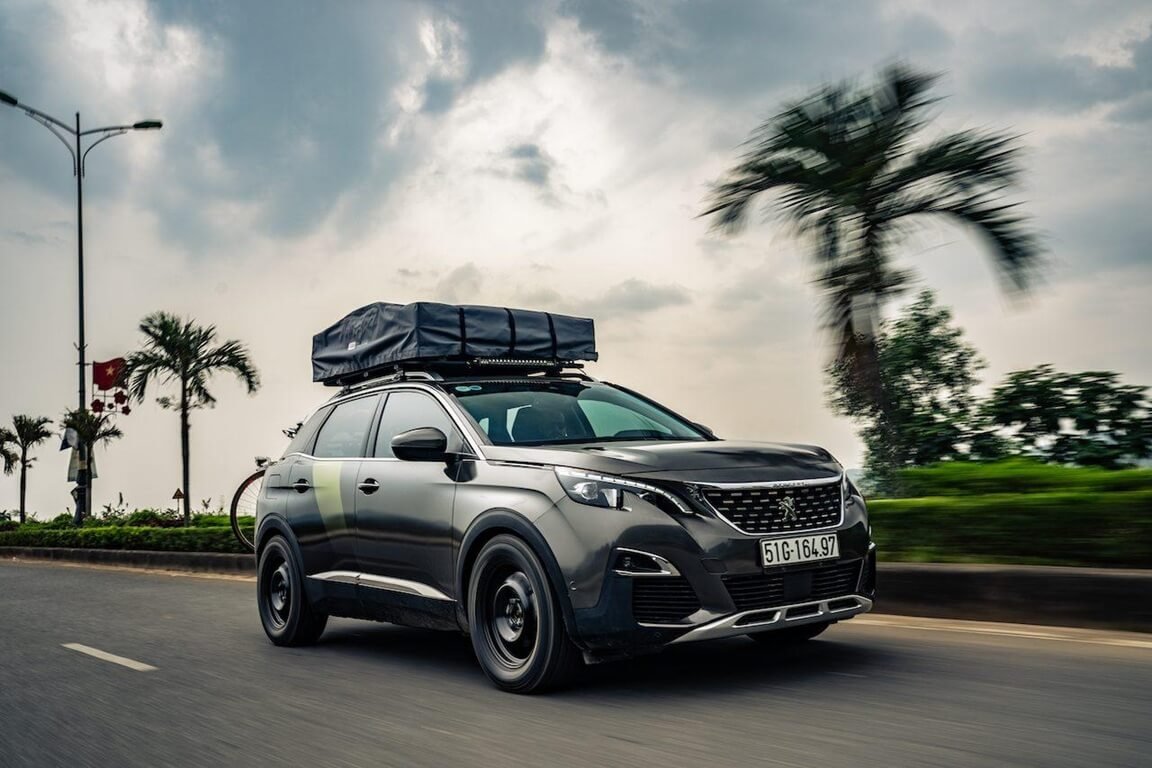
If you want a reliable estimate for your own vehicle, a simple before-and-after comparison is more useful than relying on a generic percentage.
Step 1: Record Baseline Fuel Economy
Measure your vehicle’s fuel economy with the tent removed. Ideally, include the roof rack in a separate test if you want to estimate its individual contribution.
Step 2: Install the Tent Correctly
Use the approved rack and mounting system. Record the tent model, its weight, the rack configuration, and its installed height.
Step 3: Repeat Comparable Trips
Drive the same route at similar speeds and under similar conditions. Try to avoid comparing a calm day with a strong headwind or a dry route with heavy rain.
Step 4: Measure Fuel Consumption
Use consistent measurements, such as the same fill-up method across several comparable trips, or reliable trip-computer data. A single short journey may be too variable to provide a meaningful result.
Step 5: Compare More Than One Run
Repeat the comparison several times. Note traffic, wind, temperature, tire pressure, passenger load, and other factors that could affect the outcome.
For greater accuracy, use a controlled route and consistent testing procedure. Do not describe a casual before-and-after observation as a scientific test.
What Published Fuel-Economy Tests Tell Us
Independent testing of roof-mounted cargo equipment confirms that added equipment can affect fuel economy, but the size of the effect varies by vehicle and setup.
Consumer Reports tested rooftop cargo carriers on a 2019 Nissan Altima and Toyota RAV4 at 65 mph. Its results showed lower fuel economy with the roof rack and carrier installed.
Car and Driver also reported a highway test involving a Toyota Grand Highlander Hybrid. The vehicle returned 25 MPG with a hitch-mounted carrier and 21 MPG with a rooftop cargo box. In another test involving a Kia Carnival, removing factory crossbars improved observed highway fuel economy from 25 MPG to 28 MPG.
These findings are useful because they demonstrate how roof-mounted equipment can change airflow and fuel consumption. However, a cargo box is not a rooftop tent, and the results cannot establish a universal MPG loss for rooftop tents.
For a trustworthy comparison, tent-specific tests would need to control for vehicle, speed, route, weather, rack configuration, and load. Until such evidence is available for a particular setup, treat numerical predictions as estimates rather than guarantees.
FAQs About How Does a Rooftop Tent Affect Your Car’s Gas Mileage
Do rooftop tents significantly affect gas mileage?
They can. The effect is often more noticeable during highway driving because aerodynamic drag increases with speed. The size of the penalty depends on the vehicle, tent shape, mounting hardware, and driving conditions.
How many MPG do you lose with a rooftop tent?
There is no reliable universal number. A tent’s effect varies by vehicle and setup. Measure your vehicle’s fuel economy before and after installation under comparable conditions to estimate your own loss.
Do hard-shell rooftop tents get better gas mileage than soft-shell tents?
Not always. A low-profile hard shell may have an aerodynamic advantage over a bulkier setup, but design and mounting position matter more than the category name alone. Direct comparisons on the same vehicle are needed to establish the difference.
Does a rooftop tent use more gas at highway speeds?
Usually, the aerodynamic penalty becomes more noticeable at higher speeds. Headwinds and other conditions can increase the effect further. Driving at a sensible, consistent speed may help reduce fuel consumption.
Does a roof rack reduce fuel economy without a tent?
Yes. Crossbars and other roof equipment can create additional aerodynamic drag even when no tent is mounted. Removing unused equipment may improve fuel economy, depending on the vehicle and rack design.
Is it worth leaving a rooftop tent on my vehicle all year?
That depends on how frequently you camp, the convenience of keeping it installed, and your measured fuel-economy penalty. If you rarely use the tent, removing it between trips may be worth considering.
Can I improve gas mileage by choosing a lighter rooftop tent?
A lighter tent reduces added weight, which can help in some driving conditions. However, aerodynamic shape and installed height can be more important during highway cruising. Consider both weight and design when choosing a tent.
Will a rooftop tent affect an electric vehicle’s range?
Yes, it can. Added weight and aerodynamic drag can increase energy consumption and reduce driving range, particularly at highway speeds. The actual impact depends on the vehicle, tent setup, weather, and speed.
Final Verdict: Is a Rooftop Tent Worth the Fuel Cost?
A rooftop tent can increase fuel consumption, particularly on long highway journeys. However, the size of the penalty depends on your vehicle, tent design, roof rack, and driving conditions. If fuel economy matters to you, choose a suitable low-profile setup, remove unused equipment when practical, keep the vehicle properly maintained, and avoid unnecessary high-speed driving.
Most importantly, don’t rely on a generic MPG-loss figure to make your decision. Measure your own vehicle if possible, estimate the added fuel cost for your typical trips, and weigh that cost against the convenience and enjoyment of rooftop camping.
For help choosing a tent that fits your needs, explore our guide to the best rooftop tents before making your purchase.