Osprey Atmos AG 65 Review: 4+ Years Later, Is It Still Worth It?

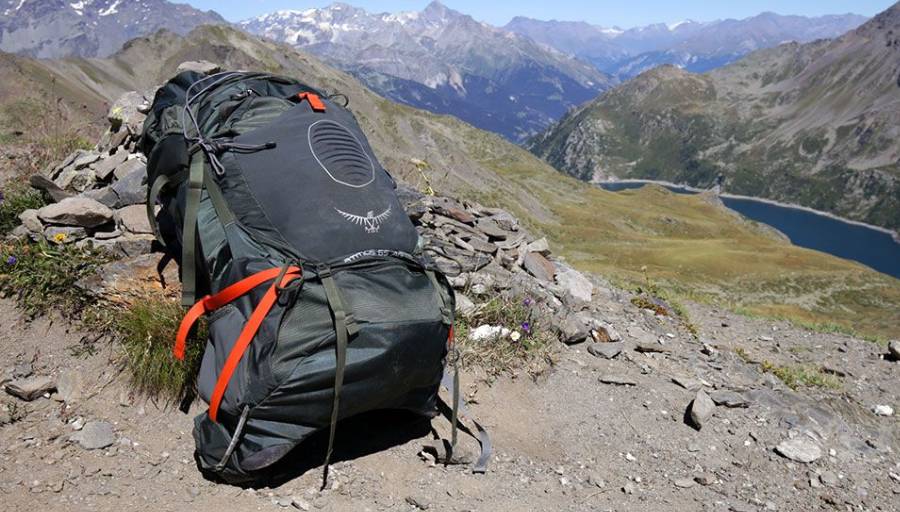
If you’re looking for a backpack for multi-day hiking trips, carrying comfort becomes just as important as capacity and durability. After using several packs over the years, I chose the Osprey Atmos AG 65 because its suspension system and 65-liter capacity seemed well suited to longer trips with heavier loads.
I’ve personally owned and used the Osprey Atmos AG 65 for more than four years, covering hundreds of miles of hiking and multi-day trips. One of my first major tests was a two-day hike where I carried roughly 15 kg (33 lb) of gear, including a tent, 5 liters of water, sleeping bag, sleeping pad, warm clothing, camera, and tripod. That experience gave me a good opportunity to see how the pack handled a realistic backpacking load rather than simply judging it from specifications.
Over the years, I’ve paid particular attention to the areas that matter most on the trail: how the weight transfers from the shoulders to the hips, back ventilation, fit and adjustability, pocket accessibility, storage capacity, and long-term durability. I’ve also used it on challenging trips where comfort becomes much more noticeable after several hours of walking.
The biggest strength I’ve found is the Anti-Gravity suspension system. Even with a relatively heavy load, the pack distributes weight effectively across the hips and back instead of putting excessive pressure on my shoulders. The ventilated back panel also helps reduce the hot, sweaty feeling that can become a problem with large backpacking packs.
That said, the Atmos AG 65 isn’t perfect. At more than 4.5 pounds, it is relatively heavy compared with many lightweight and ultralight alternatives. I also found a few practical limitations during long-term use, which I’ll cover below.
After four-plus years of real-world use, here’s what I think about the Osprey Atmos AG 65, including its comfort, storage, suspension, durability, weight, and the situations where I think it’s worth buying.
Quick Verdict: Osprey Atmos AG 65 Hiking Pack
The Osprey Atmos AG 65 is one of the most comfortable 65L backpacks I’ve used for multi-day trips, especially when carrying heavier loads. After more than four years and hundreds of miles, the Anti-Gravity suspension remains its biggest strength. However, it is relatively heavy, and ultralight backpackers may prefer a lighter pack.
- Best for: Multi-day backpacking, heavier loads, hikers who prioritize comfort
- Not ideal for: Ultralight backpackers, short day hikes, hikers trying to minimize pack weight
- Biggest strength: Carrying comfort
- Biggest weakness: Weight
Osprey Atmos AG 65 Backpack Review
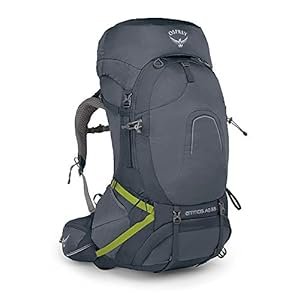
Best for: hikers who prioritize carrying comfort and ventilation over minimum pack weight.
Technical Specifications:
- Main Fabric: bluesign® approved recycled 210D honey comb nylon, PFC/PFAS-free DWR
- Accent Fabric: bluesign® approved recycled 210D high tenacity nylon, PFC/PFAS-free DWR
- Bottom Fabric: bluesign® approved recycled 500D high tenacity nylon, PFC/PFAS-free DWR
- Weight: 4.613 lbs.
- Size: M or L (to be defined with the Osprey app )
- Female model: Aura AG
- Dimensions: 32.68H X 15.35W X 14.17D in.
- Load Range: 30 – 40 lbs.
Specifications can vary by size and model year. The figures below are for the version I tested.
Pros
- Excellent carrying comfort!!!
- Multiple pockets
- Settings everywhere
- Ventilation nets
Cons
- No access other than from above
- Pretty much heavy
- The advertised “graphite grey” color is in fact a khaki green
Who Should Buy the Osprey Atmos AG 65?
- Multi-day backpackers who need around 65L of storage.
- Hikers carrying heavier loads, especially around 30–40 lb.
- Comfort-focused hikers who value excellent weight distribution.
- Backpackers who prefer good ventilation between their back and the pack.
- Travelers and trekkers who need plenty of pockets and adjustment options.
Who Should Skip It?
- Ultralight backpackers who prioritize the lowest possible pack weight.
- Day hikers who don’t need 65L of capacity.
- Hikers who usually carry less than 20–25 lb and want a simpler, lighter pack.
Osprey Atmos AG 65 vs. Other Backpacking Packs
| Pack | Best For | Main Advantage | Main Drawback |
|---|---|---|---|
| Atmos AG 65 | Multi-day trips | Comfort & ventilation | Heavy |
| Osprey Talon 44 | Shorter trips | Lighter & versatile | Less capacity |
| Gregory Baltoro 65 | Heavy loads | Support & organization | Heavy/bulky |
| Lightweight 60L pack | Weight-conscious hikers | Lower pack weight | Less suspension/support |
Carrying Comfort & Weight Distribution
For my first time with the Osprey Atmos AG 65 bag, I had filled it for a 2-day hike: a tent, 5L of water, a meal, warm clothes (fleece, down jacket, etc.) a sleeping bag, self-inflating mattress, camera and the tripod hanging outside. In short, there was a little over 15kg but the straps absorb the weight perfectly.
The padding is super nice and the internal frame distributes and maintains the weight on its whole from the bag to the belt (rather than pulling exclusively on the shoulders!). Admittedly, the thighs are well aware that there is a little more to wear than usual… but, you don’t feel any pressure at all.
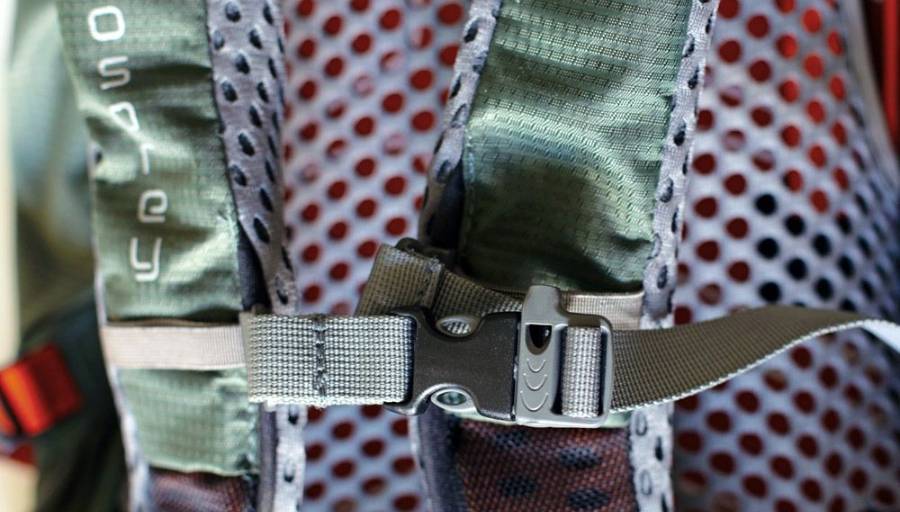
Osprey has equipped the pectoral attachment clips with a whistle in case of a problem or wants to seduce the grouse… With the ergonomic shoulder straps and the clipped chest strap, it doesn’t move a bit, without even having to pull on the straps. The tripod stowed outside the bag, however, favored the pendulum movement.
The inside of the waistband is a mesh that allows air and moisture to circulate around the hips. This net is flexible enough to avoid compressing too much and therefore the irritation created by movement.
Anti-Gravity Suspension & Back Ventilation
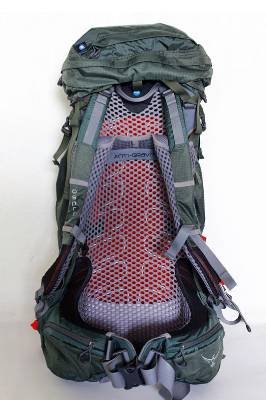
It is this same “AntiGravity 3D” mesh that is found along the back with a largely perforated mesh to facilitate the evacuation of heat and humidity. It’s quite impressive how you don’t feel your back suffocating under the bag.
The level of tension is an ideal compromise to keep the bag along the back while being flexible enough to follow its shape and absorb movements, a bit like a mini trampoline.
Lots of Pockets and Settings
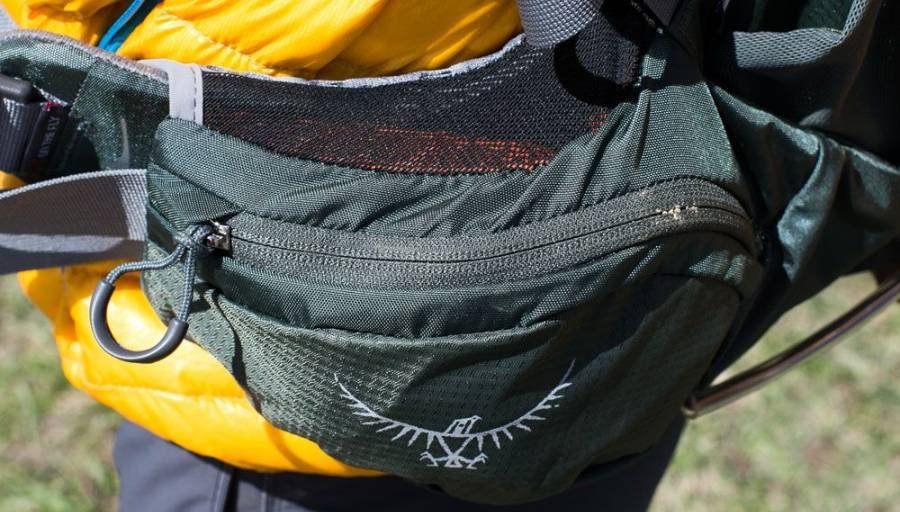
The other advantage of Osprey Atmos AG s65 is its practicality. When I received it, I enjoyed exploring its many pockets everywhere Outside, there are 2 pockets on the belt, which are quite small, just enough to put tissues, Swiss army knife, 2 slender side pockets, a net (slightly stretchy), 2 pockets upper layers (accessible without having to retract), a lower pocket for the sleeping bag and two mini-nets (I had stowed my tripod there as well as a pair of binoculars for the have on hand).
Two small elastic cords make it easy to fix and take back your hiking poles, systemStow-on-the-Go™.
Inside Available Space
Inside, there is a large space that is accessed from above with a drawstring. A small detail that I really liked was a charter for hikers (limiting their environmental impact, respecting wildlife, etc.). It might seem like a little damaged on the part of the Osprey, but it has the merit of reminding you of the good use of the mountain every time you open your bag and it can’t hurt, especially when you see the state of some trails or summits.
Water Bag Compartment
The essential thing in my eyes, there is a specific compartment to place your water bag (3L) with a dorsal hole to bring out the hose to the shoulder straps.
The space for the sleeping bag is separated by a partition, but this is adjustable by two small straps. You can even take full advantage of the entire 65L of the Osprey Atmos AG 65 by completely unlocking the straps, and that’s very practical!
Ergonomic
Everything is adjustable! There are straps everywhere to make more than one bandage fans fantasize. This also allows you to adjust the smallest part: height and length of the straps, tightening of the belt, the top flap, the bag compartment bedding (also allowing the mattress to be attached), the net, etc., and the compression of the bag in general.
For those who care about the slightest gram, know that the top flap with the two upper pockets can be removed to leave only a fabric flap. Otherwise, the bag comes with a waterproof cover.
FAQs About Osprey Atmos AG 55 Hiking Backpack
Is the Osprey Atmos AG 65 too heavy for backpacking?
At about 4.6 lb (2.1 kg), the Atmos AG 65 is heavier than many lightweight and ultralight backpacks. That extra weight is the trade-off for its substantial suspension, padding, ventilation, and adjustment options. For hikers who prioritize carrying comfort over saving every gram, the weight can be worthwhile.
Is the Osprey Atmos AG 65 good for a 2–3 days backpacking trip?
Yes. A 65-liter capacity is more than enough for most 2-3 days trips, although the amount of gear you carry will determine how much of the available space you actually need. It is particularly useful for trips involving bulky cold-weather equipment, camping gear, or heavier loads.
How do you adjust the Osprey Atmos AG 65 for a proper fit?
Start by adjusting the torso length to match your body, then position the hip belt so it sits securely around your hips. Tighten the shoulder straps, connect and adjust the sternum strap, and finally use the load-lifter and compression straps to stabilize the pack. Proper fitting is important because the suspension is designed to transfer much of the load to your hips.
Does the Osprey Atmos AG 65 have a separate sleeping bag compartment?
Yes. The lower section has a dedicated sleeping bag compartment with a removable divider. The divider can also be opened when you want to use the pack’s interior as one larger storage compartment.
Does the Osprey Atmos AG 65 work with a 3-liter hydration reservoir?
Yes. The pack has a dedicated hydration compartment designed to accommodate a reservoir and an external routing point for the drinking hose. This makes it possible to drink while hiking without repeatedly removing the pack.
Is the Osprey Atmos AG 65 worth buying for long-distance hiking?
For hikers who prioritize suspension comfort and regularly carry moderate to heavy loads, I think it is a strong option. My four-plus years of use showed that its comfort and load distribution are its biggest advantages. However, hikers focused primarily on ultralight gear may be better served by a lighter pack.
What is the biggest drawback of the Osprey Atmos AG 65?
The main drawback is its weight. At more than 4.5 lb, it adds noticeable weight before you put any camping equipment inside. If your priority is minimizing your base weight, there are lighter 60–65L alternatives worth considering.
Conclusion
The Osprey Atmos AG 65 is a super mega comfortable backpack with a perfectly balanced weight. The bag is held in place perfectly by the belt. Thanks to the padding of the shoulder straps, the internal shell, and the back net, I really didn’t feel much on my shoulders! Besides this, it is very functional with all its pockets and multiple settings. This is definitely my backpack for long hikes and travels. For shorter ones, I use the Osprey Talon 44.