How to Tie Hammock Knots: Step-by-Step Guide for a Secure Setup

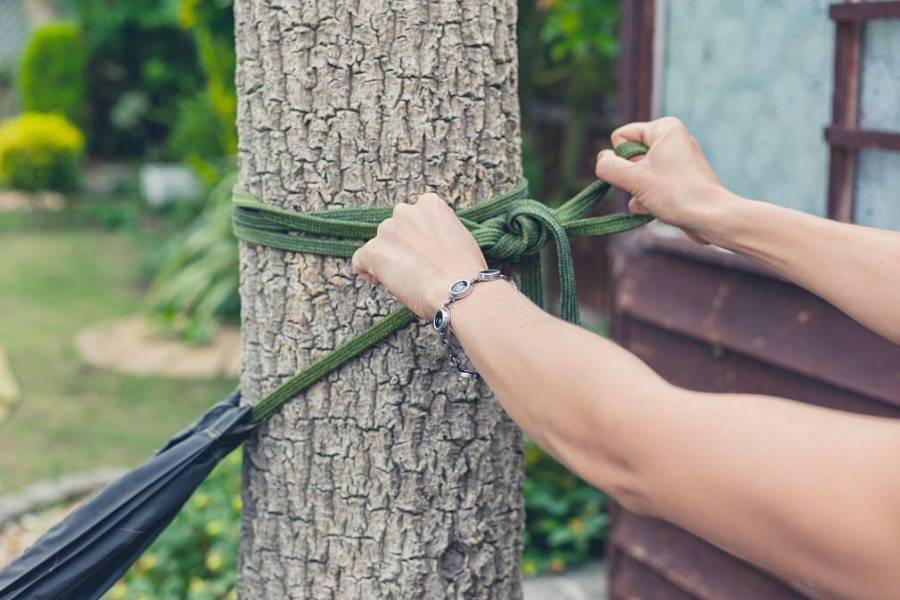
Tying hammock knots is an essential skill for any hammock enthusiast. Knowing how to tie hammock knots properly ensures both your safety and comfort while lounging or sleeping in your hammock. Nearly all hammock knot variations share a common requirement: the necessity for a secure and reliable knot to establish a strong attachment.
Mastering these techniques not only enhances your overall hammock experience but also gives you the confidence to set up your hammock almost anywhere safely. If you’re camping where trees aren’t available, check out our guide on how to hang a hammock without trees.
In our knot guide, we would like to introduce you to the most important knots for attaching your hammock and show you how to tie hammock knots. Only securely hung hammocks are good hammocks. And you have many options for this. You can find out more about this here: Hanging up a hammock: the right way to do it.
Not Every Knot is Suitable for Hammocks
Unboxing the package and simply attaching the hammock to the rope is not a good idea. You should definitely know what you are doing. After all, every knot bears a significant amount of stress. If you start tying knots carelessly or rush through the process, you could quickly find yourself landing on the ground instead of relaxing in your hammock.
For this reason alone, not all knots are suitable for attaching a hammock. Especially not the classic “housewife knot” that each of us intuitively uses in everyday life. But beware, the spade stitch is still important – as a safety knot. Before we get started with the little knots, we would like to point out that you should definitely master the knots shown before you lie down in the hammock. This shouldn’t be a problem as you can practice with almost any rope.
How to Tie Hammock Knots: Step by Step
The easiest way to hang up the hammock is with a simple rope. When attaching the hammock with knots, the primary concern is the strength and breaking load of the knot. However, it is just as important that the knot does not become too tight under load.
In our opinion, the Double Figure Eight Knot is the best knot for connecting the hammock to the rope, where the mat is anchored to the fixed point. It is a type of loop knot that tightens under load without loosening. At the same time, the double rope guide makes it easier to untie the knot when needed. This is how the node works step by step:
1. Creating a Secure Hammock Loop
Prepare the rope on the hanging loop of your hammock. Now make a loop as shown in the picture. Ensure that the loose end of the rope, positioned toward the hammock, has a minimum of one meter of clear space.

2. Forming a Figure-Eight Loop
Hold the crossing point between your thumb and forefinger. Next, pass the short end of the rope under the long end, then thread it through the loop from above. Pull the short end all the way through until it forms a figure-eight shape.
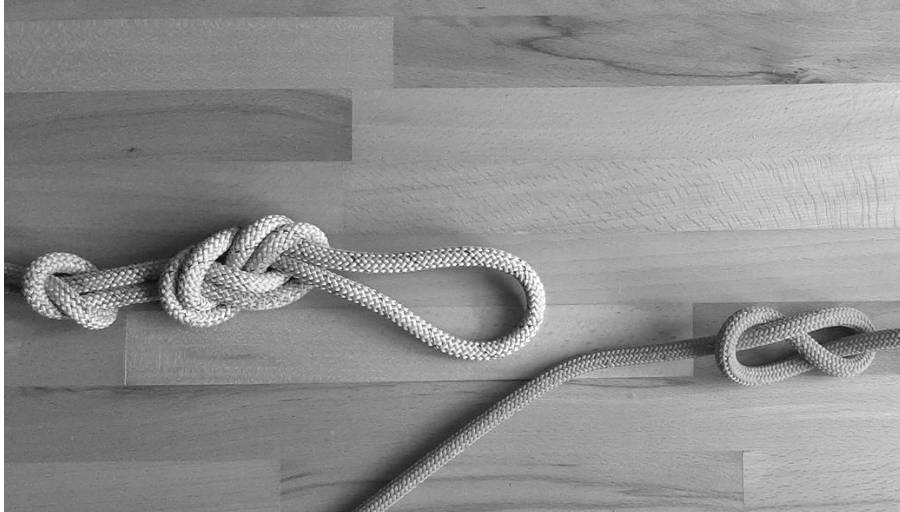
3. Securing Hammock Connection: Thread and Loop
Now take the short end and thread it through the hanging loop of your hammock. Make sure that the resulting loop does not get too big. Otherwise, in the last step, you will not have the necessary length of rope to secure the knot.
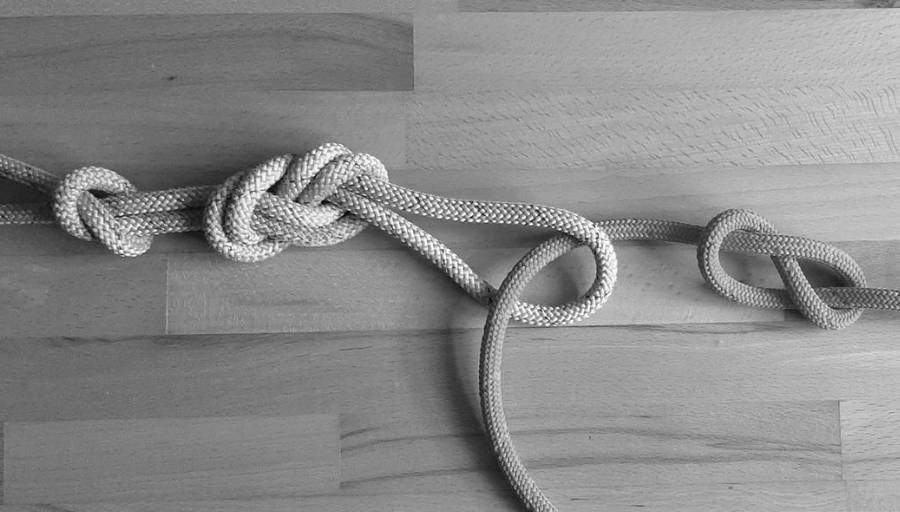
4. Completing the Figure-Eight: Reverse Rope Course
After identifying the ideal loop size, trace the path of the eight-shaped knot previously formed, using the short end of the rope in the opposite sequence.
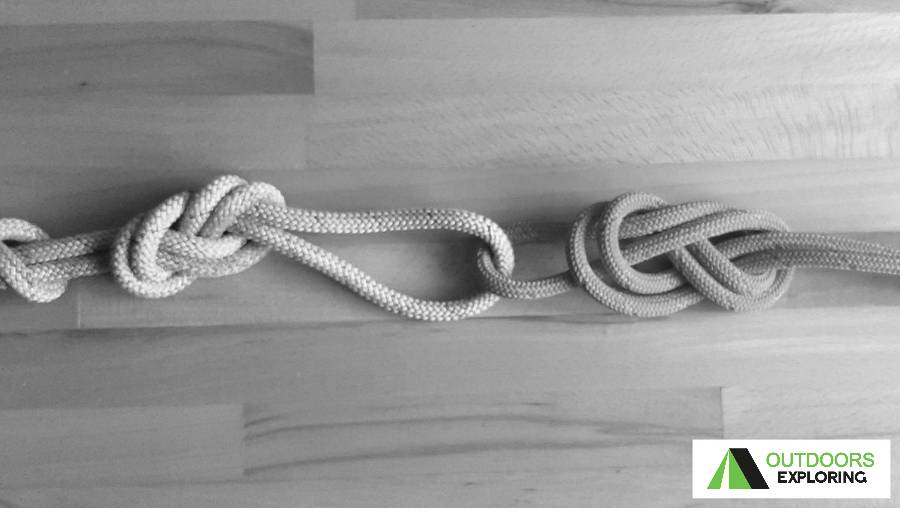
5. Securing the Knot: Equal Tension Pull
Tighten the knot by pulling on the loop and both ends of the rope at the same time.
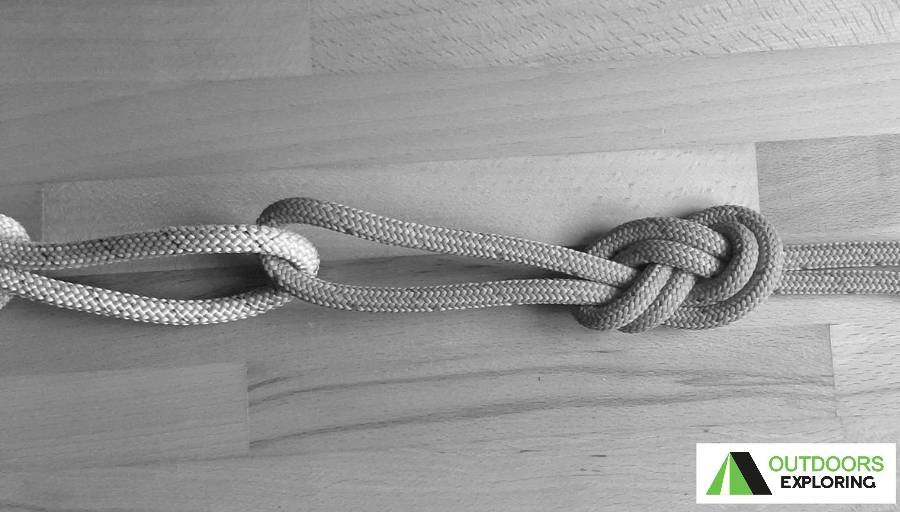
6. Optimizing Load Distribution: Strand Alignment
Now examine the knot and make sure all strands of the rope run parallel to each other. Only when they are properly aligned can the knot carry the load effectively. If you notice any crossings, gently straighten each strand until they run parallel (see picture).
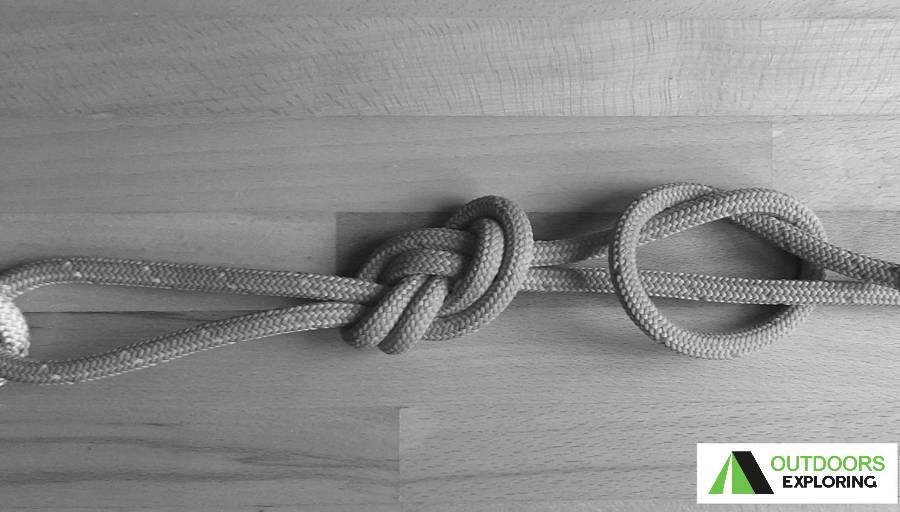
7. Optional Safety: Adding a Fisherman’s Stitch
Secure the “double figure eight knot” with a fisherman’s stitch. This step is optional because the figure-of-eight knot tightens itself and the rope itself cannot go through. But you know: safety first!
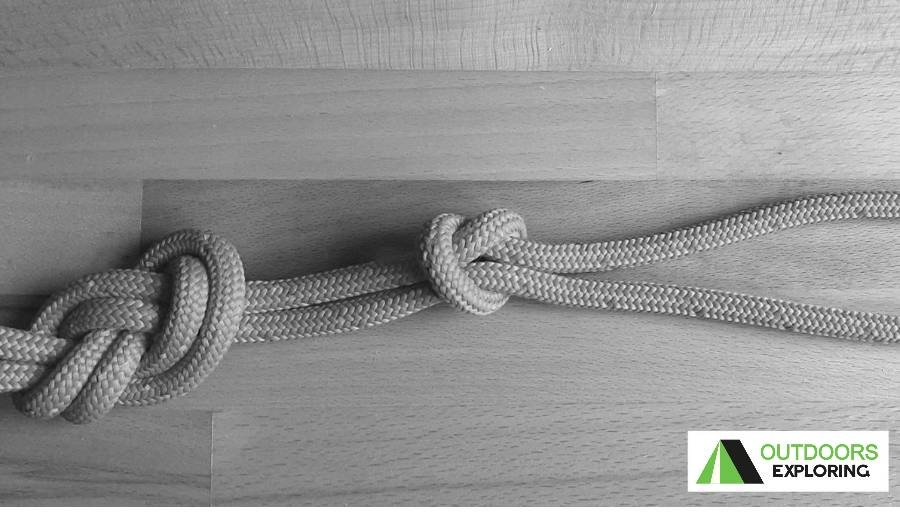
Why Figure Eight Knot and Not the Classic Hammock Knot?
The Double Figure Eight Knot offers several advantages over the Becket Hitch, making it a preferred choice in various scenarios. Here’s a breakdown of its merits:
- Strength and Resilience: The Double Figure Eight Knot is exceptionally robust because of the multiple strands of the rope creating necessary friction. This makes it suitable for applications where high resilience is crucial, such as climbing for safety knots or in height rescue and fall protection scenarios.
- Even Force Distribution: The straight course of the rope in the Double Figure Eight Knot ensures that the force from the loop is distributed relatively evenly through the knot to the long end of the rope. This characteristic is valuable in maintaining stability and strength under load.
- Avoidance of Crushing and Twisting: Compared to the Becket Hitch, which can result in multiple crushing and twisting of the hanging loop on the hammock, the Double Figure Eight Knot minimizes such issues. This is particularly advantageous when the hammock is dynamically loaded by a heavy person or multiple individuals.
- Simplicity and Intuitiveness: The Double Figure Eight Knot is praised for its simplicity and ease of tying. It doesn’t require memorizing multiple looping steps, making it intuitive to tie. This simplicity adds to the convenience, especially in scenarios where quick and efficient knot tying is essential.
- Compatibility with Carabiner: Once tied, the Double Figure Eight Knot can be easily used with a carabiner, adding to its versatility and convenience. This feature streamlines the setup and adjustment processes, enhancing the overall user experience.
“Choosing the correct knot is only part of a safe setup. Using the right hammock dimensions also improves comfort, so it’s worth understanding how to choose the right hammock size before heading outdoors.”
Right Knot for Fastening with a Carabiner
If you want to attach your hammock to a carabiner, you can also use the “double eight” as a hammock knot for the carabiner. When making the “double eight” you can make it even easier for yourself, since you can even tie the hammock knot for the carabiner used. And it works like this:
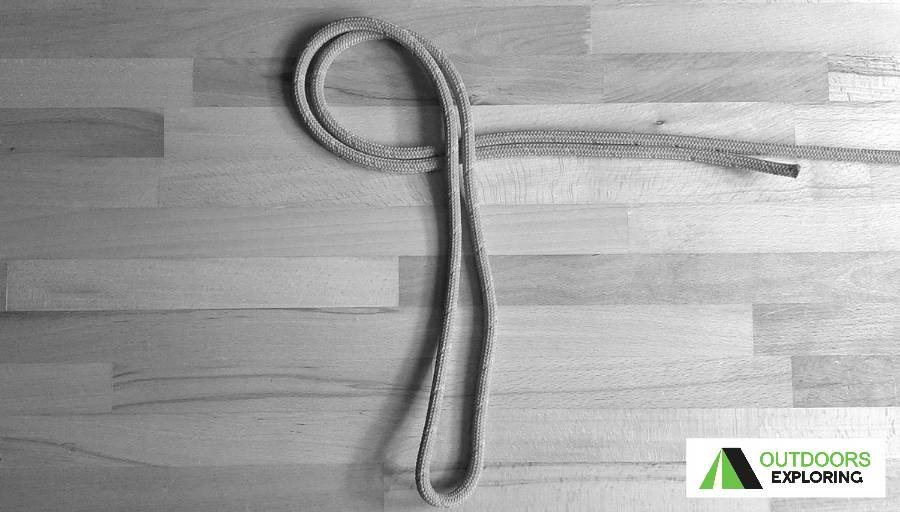
1. Preparing Fastening Rope
Take about 100 to 120 centimeters of your fastening rope twice, as shown in the picture.
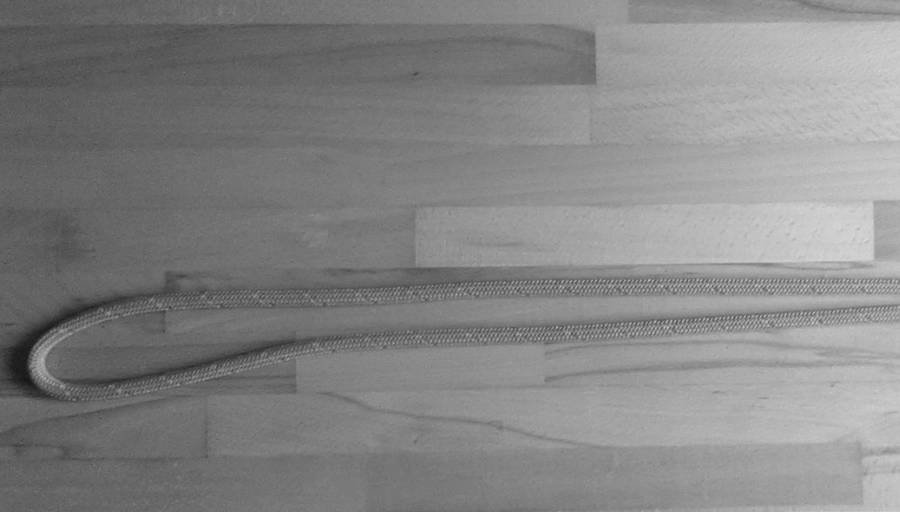
2. Creating a Rope Eye
Now make an eye with the double rope so that the rope looks like the number four.
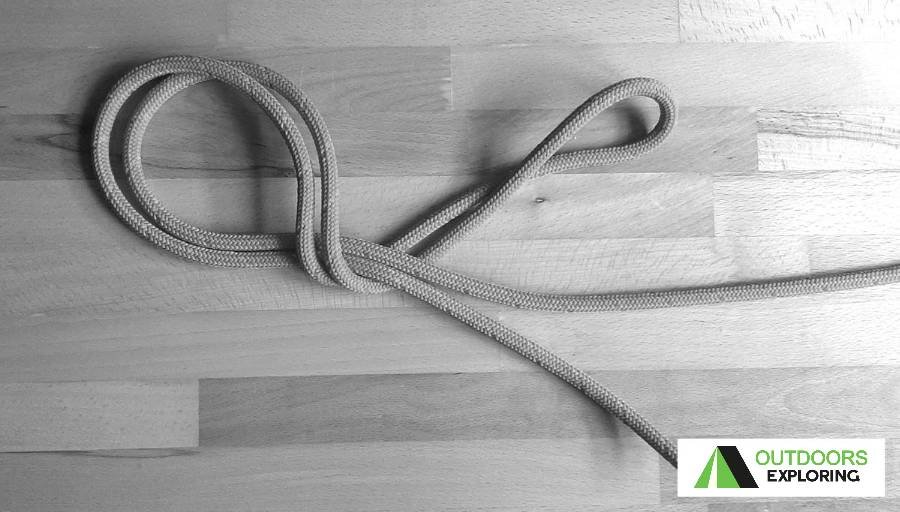
3. Looping the Long End
Now take the long end of the doubled rope and pass it through the loop you just created. Pull it through smoothly and keep the rope flat and untwisted, as this will make the knot easier to tighten and ensure it forms correctly in the next step.
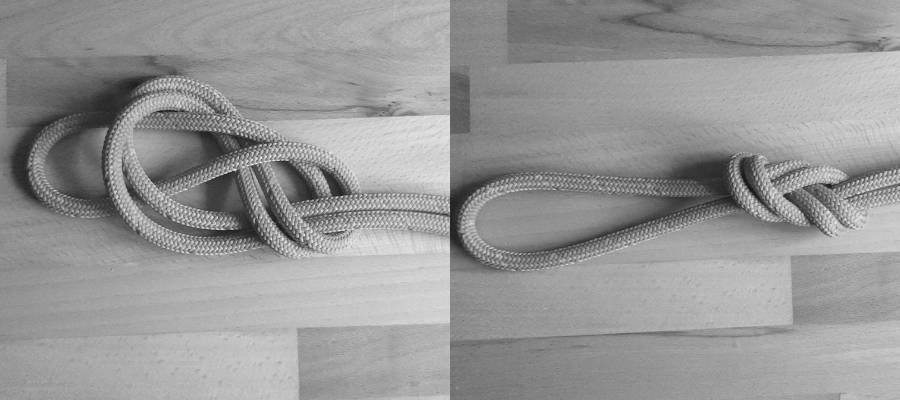
4. Completing the Knot
Now thread the loop through the eye from above and tighten the knot.
5. Optional Security
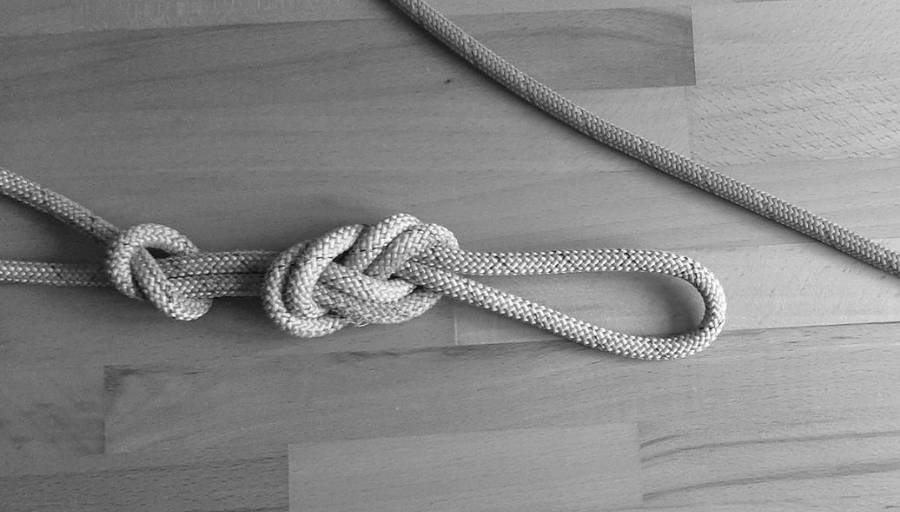
Finally, secure the short end with an optional fishtail stitch.

Now all you have to do is hook a carabiner into the loop of the “double eight” and attach it to the suspension eyelet on your hammock. In the last step, you now attach the loose end of the rope to your fixed point at the optimal distance. You can use different knots to attach it to the fixed point.
The Double Figure Eight Knot, paired with a carabiner, provides a notable advantage: the ability to swiftly assemble and disassemble your hammock in seconds, eliminating the need for re-knotting. At the same time, you can attach the hammock to the rope without having to fiddle with the optimal distance again and again.
More Hammock Knots
Hammock knots shown are not the only way you can tie your hammock to a rope. Alternatively, the already mentioned “Becket Hitch” can be used to attach it between the rope and the hammock. But the “Palstek” (pile) can also be used together with a carabiner. Our series of pictures shows you exactly how the knots work.
Becket Hitch Hammock Knots
Bowline Hammock Knots

Alternative: Attachment Sets for Hammocks
Are knots and rigging not your preference for securing your hammock? No worries! As an alternative to the trio of hammocks, knots, and carabiners, numerous manufacturers provide ready-made attachment sets for hammocks. With these, hammocks can be hung up easily, quickly, and even in a tree-friendly manner.
Indeed, certain fastening systems provide the flexibility to hang hammocks between fixed points with varying distances, thanks to integrated fastening loops. The beauty of these systems lies in their knot-free design, allowing you to achieve a secure and adjustable setup without the need for any knots.
“If you’re planning to camp in buggy environments, pairing a reliable suspension system with the best hammocks with mosquito nets can greatly improve your comfort and help keep insects out throughout the night.”

“Whether you’re relaxing in the backyard or using ultralight hammocks for backpacking, knowing how to secure your suspension properly is essential for comfort and safety.”
Common Mistakes When Tying Hammock Knots
- Using worn or damaged rope.
- Leaving too little tail after the knot.
- Hanging the hammock too high before testing.
- Attaching directly around tree bark without tree straps.
- Not checking the knot after applying weight.
“Once your hammock is securely suspended, proper sleeping technique can make an even bigger difference in comfort. Read our expert tips for sleeping in a hammock for a better night’s rest outdoors.”
FAQs About How to Tie Hammock Knots
Can I tie hammock knots on different types of rope?
Yes, but rope type affects knot security and ease of tying. Natural fibers like cotton or hemp offer good grip but may stretch over time. Synthetic ropes like polyester or nylon are stronger, more weather-resistant, and maintain knot integrity better. Avoid slippery ropes unless you plan to use additional securing knots or straps.
How do I prevent knots from slipping under load?
To avoid slipping, always leave a sufficient tail (loose end) after tying the knot and consider adding a backup knot like a half hitch or fisherman’s knot. Checking the knot under partial load before fully suspending your hammock ensures safety and stability.
Are knots better than straps for tree-friendly setups?
Although knots can be secure, wide tree straps are better for protecting bark and reducing environmental impact. Knots directly around trees can damage bark and cambium. If you must use rope, use a protective sleeve or padding to minimize harm to trees.
Can knots loosen over time while my hammock is in use?
Yes, some knots gradually tighten or loosen because of the hammock’s dynamic movement. Inspect and adjust knots before each use. The Double Figure Eight Knot and its variants hold up well, but adding a secondary securing knot is recommended for long-term setups.
Conclusion
Learning how to tie the basic hammock knots goes a long way toward your hammock camping success. We do not necessarily know how to tie a hammock without making a multitude of knots… Although there are countless nodes, our guide described above is the best of the best.
Don’t risk hanging your hammock in perilous places. Cold weather can also make hammock camping much less comfortable without the right gear. If you camp during colder months, consider the right cold weather hammocks for camping for better insulation and protection from the elements.
You can always opt for a pair of straps and carabiners, which are very easy to use. Regular maintenance is just as important as proper setup. After repeated outdoor use, follow our guide on how to wash and care for a hammock to extend the life of your gear.
References:
The recommendations in this guide are based on established knot-tying practices and outdoor safety guidance from recognized organizations and publications.
- UIAA (International Climbing and Mountaineering Federation) – Safety recommendations for climbing equipment, ropes, and knots.
- Leave No Trace Center for Outdoor Ethics – Best practices for responsible hammock camping and protecting trees while setting up outdoor shelters.
- The Ashley Book of Knots by Clifford W. Ashley – Widely regarded as one of the most authoritative references on knots and ropework.