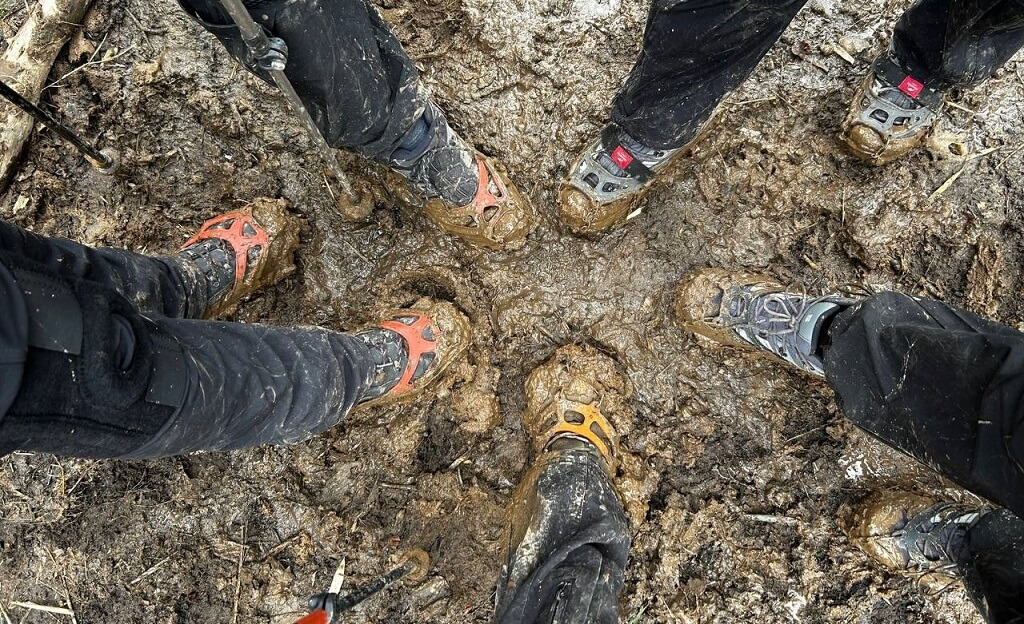
10 Best Microspikes for Hiking in 2026: Tested for Ice & Snow

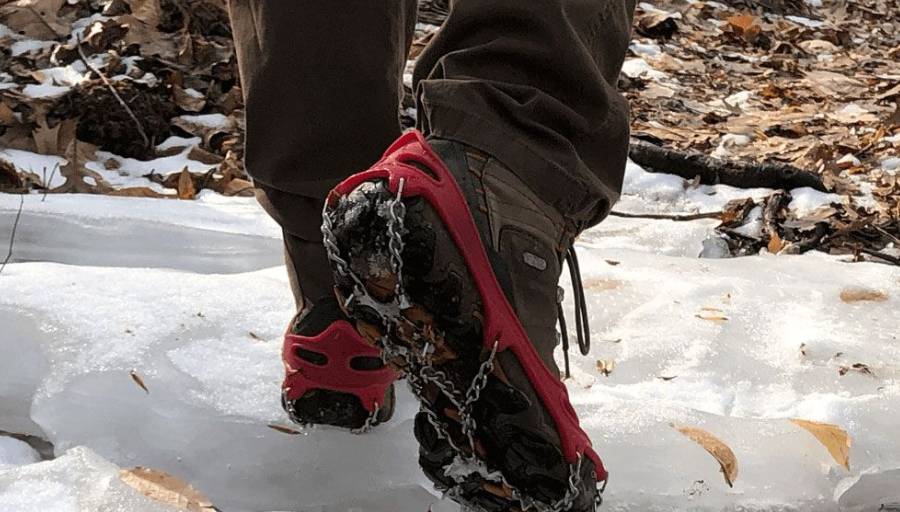
The best microspikes for hiking provide reliable traction on icy and snow-covered trails where standard hiking boots struggle. Designed to stretch over your footwear, they add grip and stability without the bulk of full crampons. With winter hiking growing in popularity, 2026 offers a wide range of microspike options that differ in spike design, durability, and fit. Choosing the right pair can improve confidence, reduce slips, and make cold-weather trails safer and more enjoyable.
This guide highlights ten reliable microspikes for hiking that deliver solid traction on icy and snow-covered trails. Each option is selected for grip, durability, and fit to help you stay stable and confident in winter conditions.
How We Chose the Best Microspikes for Hiking
We evaluated these microspikes using a combination of product specifications, manufacturer information, user feedback, and hands-on experience where available. We focused on the factors that matter most for winter hiking, including traction on ice and packed snow, fit over hiking footwear, durability, weight, ease of use, and packability.
- Traction: Spike design, placement, and grip on ice and packed snow.
- Fit: How securely the harness fits different hiking boots and trail shoes.
- Durability: Spike, chain, and harness construction and long-term wear considerations.
- Weight: Weight and packability for day hikes and backpacking.
- Ease of use: How easily the traction device can be put on and removed, including with cold hands.
- Available evidence: Manufacturer specifications, user feedback, and hands-on observations where applicable.
10 Best Microspikes For Hiking of 2026
Comparison Table of the Top 10 Microspikes for Hiking in 2026.
| Name | Material | Rating | Weight | Price |
| Kahtoola EXOspikes | Steel, TPE | 5.0 | 8 oz | Check |
| Yaktrax Diamond Grip | Composite | 5.0 | 0.7 lbs | Check |
| STABILicers Walk Traction Cleat | TPE | 5.0 | 0.7 lbs | Check |
| Yaktrax Ascent Traction Cleats | Steel, TPR | 5.0 | 0.5 kg | Check |
| Black Diamond Equipment LTD | Plastic | 5.0 | 0.2 kg | Check |
| Hillsound Trail Crampon I | Steel, TPE | 5.0 | 0.99 lbs | Check |
| Yukon Charlie’s Slip Nots Active | Steel, TPE | 4.0 | 0.1 kg | Check |
| Unigear Traction Cleats | Steel | 4.0 | 0.48 kg | Check |
| Kahtoola MICROspikes | Steel, TPE | 4.0 | 11 oz | Check |
| EnergeticSky Upgraded | Steel | 4.0 | 0.7 lbs | Check |
- Best Overall – Kahtoola EXOspikes
- Best Ultralight Microspikes For Hiking – Black Diamond Equipment LTD
- Best Value for the Money – Yaktrax Diamond Grip
1. Kahtoola MICROspikes Traction System – Best Overall for Winter Hiking
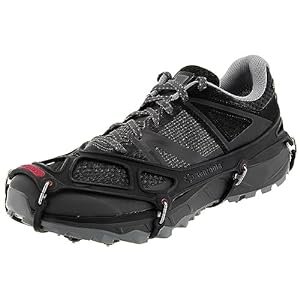
The Kahtoola MICROspikes are a strong choice for winter hiking on icy trails, packed snow, and other slippery conditions where dependable traction is important. The steel spikes provide firm grip underfoot, while the flexible elastomer harness is designed to fit securely over compatible hiking boots and trail footwear.
For general winter hiking, the MICROspikes offer a useful balance of traction, durability, fit, and ease of use. They are especially well suited to trails with frequent ice or packed snow, where a lightweight traction device may not provide enough grip.
Another advantage is their straightforward design. They can be put on over compatible footwear without the more involved setup associated with technical crampons, making them practical for winter day hikes and other non-technical terrain.
However, MICROspikes are not a replacement for technical mountaineering crampons. If your route involves steep technical ice, climbing, or terrain requiring front-pointing, use traction equipment specifically designed for those conditions.
Pros: | Cons: |
|
|
2. Yaktrax Diamond Grip Traction Cleats – Best Lightweight Microspikes
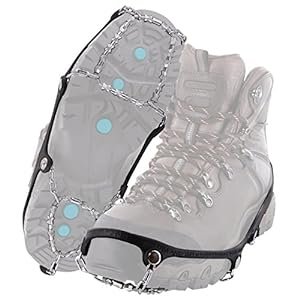
If you’re looking for extra grip and stability while walking on ice and snow, the Yaktrax Diamond Grip All-Surface Traction Cleats are a great option.These are made with 12 high-strength steel spikes that are arranged in a diamond pattern to ensure maximum grip on all types of terrain.
Spikes are coated with zinc to prevent rust and corrosion. The elastomer harness is stretchy and flexible, which allows for a comfortable fit over different types of hiking footwear. The microspike also stays in place during hiking and doesn’t shift or slide around.
The diamond pattern offers a secure and stable grip on slippery surfaces. Because its sturdy rubber sling bands hold Diamond Grips firmly in place over boots or shoes. With these traction cleats, you’re able to walk almost normally on most winter surfaces. This model also comes with a carry bag, so you don’t need to worry about storing it when not in use.
However, if the ice is super-hard, the cleats won’t work as well. So be extra careful in extra cold. Also, we don’t recommend wearing them indoors, especially with wet snow on them.
Pros: | Cons: |
|
|
3. STABILicers Walk Traction Cleats – Best Microspikes for Trail Running
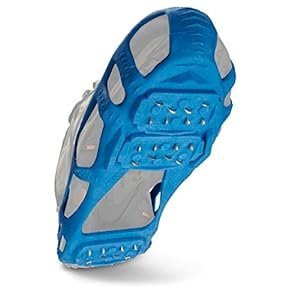
STABILicers multi-directional heat-treated steel traction plates are molded into the heel and forefoot of the stretch-to-fit thermoplastic elastomer binding for maximum surface contact. The 12 high-strength steel cleats ensure maximum traction and stability on different types of snow and ice.
Cleats are durable and long-lasting, with heat-treated steel to prevent rust and corrosion. The elastomer harness is made stretchy and resistant. The full-sole coverage provides 360 degrees of traction for everyday activities. Strategically placed cleats offer a secure and stable grip.
The material is heavier than the previous ones and has a greater grasping area at the toe and at the heel. They have large pull taps, which make them easy to put on and take off. You can easily fold them up and carry them in a pack or purse. However, they don’t hold quite as well as screw-in cleats.
STABILicers microspikes are made in the USA and come with 90 days manufacturer’s warranty. You can also use them for fly fishing or walking on wet and slick rocks.
Pros: | Cons: |
|
|
4. Yaktrax Ascent Traction Cleats – Best Microspikes for Hiking Boots
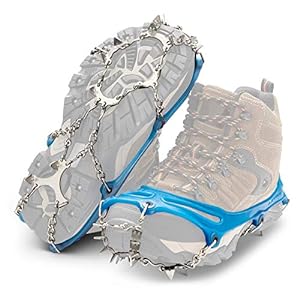
The Yaktrax Ascent Heavy Duty Traction Cleats are designed to provide excellent traction and grip in harsh winter conditions, such as ice, packed snow, and mixed terrain while hiking. You can easily put them on and take them off, and they fit comfortably over most footwear. The price is also reasonable.
The spikes are well-made and durable. We need to mention that Yaktrax Ascent Traction Cleats are very popular among outdoor enthusiasts, hikers, and runners who need reliable traction in harsh winter conditions. They are relatively heavy, but rock solid on ice. However, make sure to choose the right size.
Keep in mind that the cleats can be slippery on hard surfaces such as pavement and indoor floors, so it’s important to remove them before entering buildings. Also, the cleats become less effective over time with heavy use, so it’s important to follow the manufacturer’s recommendations for care and maintenance.
Pros: | Cons: |
|
|
5. Black Diamond LTD Access Spike Traction Device – Best Budget Microspikes

The Black Diamond Equipment LTD Access Spike is designed to fit men’s shoe sizes from 4 to 6.5 (US), while the large fits shoe sizes 10-12.5. The spike will ensure excellent traction and grip on ice and snow. It features eight stainless steel spikes that will provide reliable traction on icy and slippery surfaces. Although this model is pricier than most others on our list, it is designed for long-term use.
The spikes are placed in a horizontal pattern, which is intended to provide more stability and grip than vertical spike patterns. The traction device also fits comfortably over most footwear. Flexible crampon plates allow great freedom of movement for both walking and running on ice or snow.
However, they wear down over time with heavy use. And the device can be less effective on hard-packed snow and ice. We also have reported discomfort if wearing the device for extended periods. But it could be an effective solution for winter hiking.
Pros: | Cons: |
|
|
6. Hillsound Trail Crampon I – Best Microspikes for Winter Backpacking
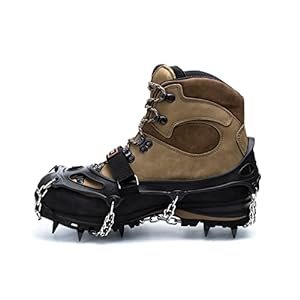
The Hillsound Trail Crampon I Ice Cleat Traction System provides excellent traction and stability on icy and snowy trails while reducing muscle fatigue. Thanks to its 11 stainless steel spikes and its ultra-flat harness that adapts comfortably to all shoes, it is the perfect ally for winter hikes.
The spikes are placed in a diamond pattern, which ensures more grip than other patterns. They are made of durable and corrosion-resistant stainless steel so that they will remain in good condition for many years.
The order also includes a convenient heavy-duty puncture-proof carry bag for quick and easy storage before and after your adventure. The chainlinks are welded very tautly, so you don’t feel like you’re spreading the spikes under your foot. They also handle dirt sections quite well.
However, the system will be less effective on hard-packed snow and ice, and the spikes may wear down over time with heavy use. Also, the rubber seems susceptible to tears and does not look replaceable.
Pros: | Cons: |
|
|
7. Yukon Charlie’s Slip Nots Active Traction
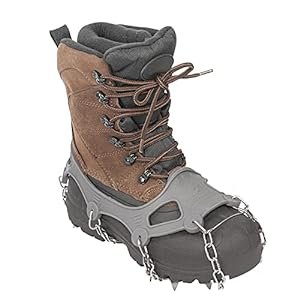
Are you looking for microspikes for your mountain hikes with snow and unevenness? This model is perfectly adapted. Yukon Charlie’s Slip Nots Traction is made of steel for superior grip on the ground for walking and short winter hiking. They are easy to get on / off and adjust according to different shoe sizes.
These microspikes have silicone rubber mounts that stretch over the top surface of your boots, reinforced with a thin steel band over the toe. Strong chains are attached to the silicone mounts in 8 places to create a chain network under your foot. They are light, flexible, and very practical. However, they are less durable than other brands and wear down over time with heavy use.
Yukon Charlie’s Slip Nots Traction features six stainless steel spikes. The spikes are placed in a V-shaped pattern, which is intended to provide maximum grip and stability. The product comes in a nylon zippered case with straps on the back that could be used for carrying the case on a belt or backpack strap.
Pros: | Cons: |
|
|
8. Unigear Traction Cleats Ice Snow Grips with 18 Spikes
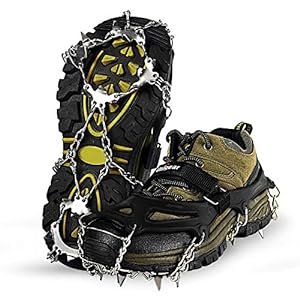
From mountain tops to the beaten path, the Unigear Traction Cleats are designed to provide excellent traction, making them a great choice for outdoor activities such as hiking, walking, jogging, and climbing. The 18 stainless steel strategically placed spikes provide maximum grip, especially in slippery conditions.
The cleats are made of a durable and stretchy rubber material that can fit a wide range of shoe sizes. They are also easy to use, thanks to the adjustable strap system. The stretchy silicone rubber is very durable. It’ll perform well under -45°C, so you’ll have more confidence on those icy slopes.
We have positive experiences with the Unigear Traction Cleats, praising their effectiveness in providing extra grip and stability in icy and snowy conditions. However, the cleats come loose or fall off if they are not properly secured. They are also very noisy to walk in.
Pros: | Cons: |
|
|
9. Kahtoola MICROspikes Traction System

The Kahtoola MICROspikes Traction System is designed to provide traction on snow and ice for a variety of outdoor activities such as hiking, running, and walking. The system features a flex chain system that allows for a snug, secure fit on a wide range of footwear. We also appreciate their durability and ease of use.
These are made of a durable elastomer material and come with a tote sack for easy storage and transportation. The spikes are also replaceable if they become worn or damaged.
However, these spikes can become clogged with snow or ice, which can reduce their effectiveness. They are suitable for use on very steep or technical terrain. It is also important to note that the Kahtoola MICROspikes should be used with caution and proper technique to ensure safety while on slippery surfaces.
You can’t say they’re a poor quality product, but simply a poor value. Because these performed exactly as well as the cheapest spikes we reviewed earlier. However, they can make a bit of noise if you don’t put them on correctly.
Some of the most challenging trails around the world involve icy terrain and steep mountain routes. If you enjoy extreme adventures, you may also want to read about the most dangerous hikes in the world and the gear hikers rely on for safety.
Pros: | Cons: |
|
|
10. EnergeticSky Upgraded Ice Cleat Spikes Crampons
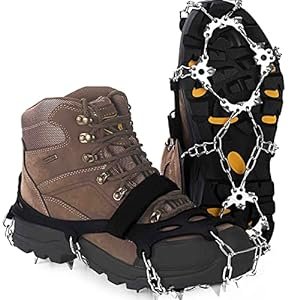
EnergeticSky upgraded flexible snow crampons, equipped with 19 steel spikes, are ideally suited to accompany you in complete safety during your mountain hikes on snowy terrain with a drop. These microspikes perform well even in -50°C temperatures.
The cover is made of silicone, not the general TPR rubber, which is highly elastic and won’t tear or snap. The durable silicone material can stretch to fit a range of footwear sizes. You can also use them for ice fishing. Keep in mind that they are made for 11-14 sizes of hiking boots.
Cleats are easy to put on and take off, thanks to their stretchy design and adjustable strap system. The package includes a small carrying bag, so you can easily store and transport in your pack. The link of this crampon uses welding chain, which is more stronger stainless steel chain.
Pros: | Cons: |
|
|
Microspikes Vs Crampons
Microspikes and crampons are both types of traction devices that can be attached to the soles of hiking boots for better grip and stability on slippery or icy terrain. However, there are some key differences between the two that are important to consider when choosing the right type of gear for your hiking needs.
Microspikes are typically made with a rubber or elastomer harness that fits snugly over the sole of your hiking boots, with metal spikes or chains on the bottom that provide extra traction. They are lightweight and easy to put on and take off, making them a good option for hikers who need occasional traction on icy or snowy trails. Microspikes are ideal for less technical terrain and can be worn on packed snow, ice, and slippery mud or rocks.
Crampons, on the other hand, are made with a metal frame that covers the entire bottom of your boot and includes sharp metal spikes or teeth that can dig into hard snow and ice. Crampons are heavier and more cumbersome than microspikes, but they are necessary for more technical terrain like steep ice climbs or mountaineering. However, crampons can provide better stability and grip on vertical ice or mixed snow and rock, but they require more skill to use safely and effectively.
Types of Microspikes and Traction Devices
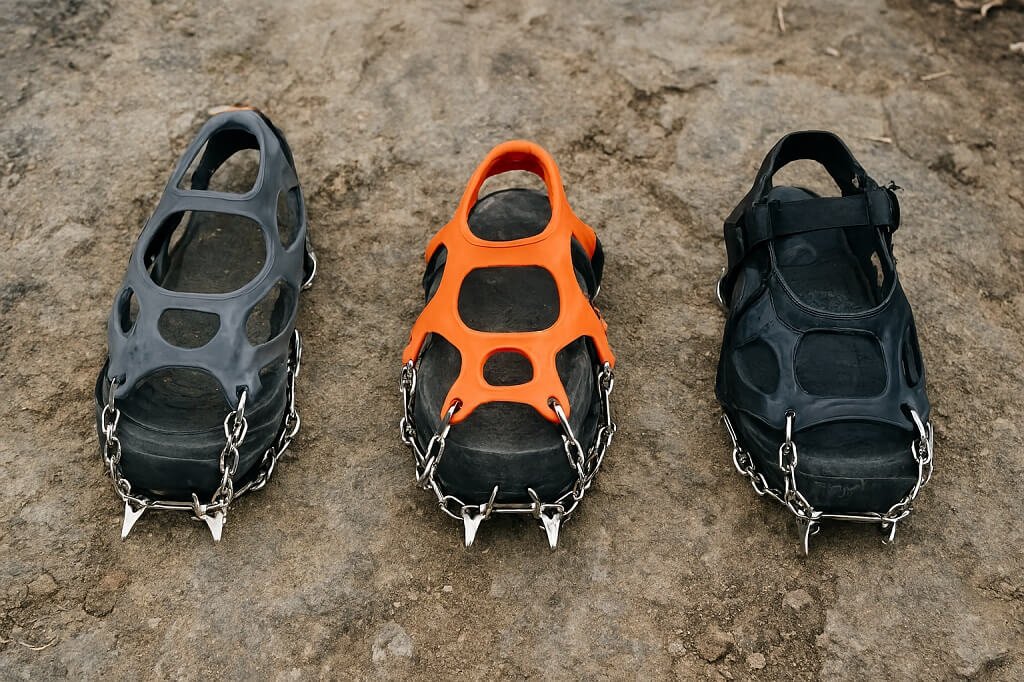
Not all winter traction devices provide the same level of grip. Some are designed for everyday walking on icy sidewalks, while others use longer steel spikes for packed snow and more demanding hiking trails. Choosing the right type depends on the terrain, amount of ice or snow, and how aggressively you need to move over it.
1. Lightweight Traction Devices
Lightweight traction devices use smaller spikes, coils, or compact traction elements to improve grip without adding much weight to your footwear. They are useful for short winter walks, easy trails, and conditions where you encounter occasional ice rather than continuous snow and ice.
Their main advantage is portability. They are easy to keep in a backpack and can be quickly added when trail conditions become slippery. However, they generally provide less aggressive traction than full microspikes and are not the best choice for sustained icy or steep terrain.
Best for: Light ice, easy winter trails, walking, and situations where low weight is a priority.
2. Standard Microspikes
Standard microspikes use multiple steel spikes connected to chains or another flexible traction system. The spikes penetrate ice and packed snow to provide substantially more grip than basic winter traction devices.
This is the most versatile option for many winter hikers. A model such as the Kahtoola MICROspikes is designed for hiking conditions where you need dependable traction but do not need technical mountaineering crampons.
Best for: Icy hiking trails, packed snow, winter day hikes, and general-purpose winter hiking.
3. Aggressive Traction Devices
Some traction devices use longer or more prominent spikes to provide additional grip on steeper or more consistently icy terrain. They can be useful when a standard lightweight traction device does not provide enough bite.
The trade-off is that aggressive traction can feel less natural on mixed terrain and may be less comfortable when walking over exposed rock or other hard surfaces. They should still be distinguished from technical crampons designed for climbing.
Best for: Steeper icy trails and winter terrain requiring more aggressive traction.
4. Coil-Based Traction Devices
Coil-based traction devices use metal coils rather than traditional pointed spikes. The coils provide additional grip on icy surfaces while remaining relatively flexible and easy to put on.
They can work well for everyday winter walking and moderate conditions, but they generally do not provide the same penetration into hard ice as steel-spiked microspikes. For hiking on sustained ice or packed snow, traditional microspikes are usually the more appropriate category.
Best for: Everyday winter walking, sidewalks, light trails, and moderate icy conditions.
5. Technical Crampons
Technical crampons are designed for terrain that goes beyond typical winter hiking. They use more substantial spikes and rigid or semi-rigid construction to provide secure footing on steep snow and ice, with some models designed specifically for climbing.
Technical crampons are more specialized than microspikes and are usually unnecessary for ordinary winter hiking. If your route involves technical climbing, steep alpine terrain, or front-pointing, choose crampons appropriate for the activity rather than relying on hiking microspikes.
Best for: Mountaineering, steep snow and ice, and technical climbing—not ordinary winter hiking.
Which Type Should You Choose?
For most winter hikers, standard microspikes are the most versatile option. They provide a useful balance of traction, weight, flexibility, and ease of use on icy and snow-covered hiking trails.
Choose lightweight traction when you mainly encounter occasional ice and want something easy to carry. Choose more aggressive traction when your route regularly involves steeper or harder-packed icy sections. If the terrain becomes technical or requires climbing-specific traction, step up to appropriate crampons instead.
When To Use Microspikes
Here are some situations when you should consider using microspikes:
- Snowy or Icy Trails: If you’re hiking on a trail that is covered in snow or ice, microspikes can provide extra grip and stability, reducing the risk of slips and falls.
- Steep Terrain: If you’ll be hiking on steep or rocky terrain, microspikes can help you maintain your footing and prevent slips or slides.
- Muddy Trails: Microspikes can also be useful on muddy or wet trails, where slippery surfaces can make it difficult to maintain traction.
- Winter Hiking: If you enjoy hiking in the winter, microspikes can help you navigate snowy and icy trails safely and comfortably. Cold weather hiking often requires reliable fire-starting tools for emergencies. Carrying one of the best windproof lighters ensures you can start a fire even in strong wind or freezing conditions.
- Trail Running: Microspikes can be a great option for trail runners who need extra traction on snowy or icy trails, providing added stability and preventing slips and falls.
Families heading to snowy mountain destinations often encounter icy walkways and packed snow around resorts. Along with traction devices for adults, proper winter footwear is essential for young riders.
Who Should Use Microspikes for Hiking?
Microspikes are useful for hikers, backpackers, trail runners, and winter outdoor enthusiasts who travel on icy or snow-covered trails. They are especially helpful for:
- Winter hikers exploring frozen trails
- Trail runners navigating icy terrain
- Backpackers crossing snow-covered passes
- Hunters and photographers moving quietly on icy ground
- Anyone walking on slippery winter paths
Winter sports enthusiasts often carry traction devices when navigating icy parking lots, resort access roads, and snowy trails. If you also spend time on the slopes, check out our guide to the top-rated snowboard boots for comfort, warmth, and performance.
Best Microspikes for Hiking – Buying Guide
When it comes to choosing the best microspikes for hiking, there are several factors to consider. Here’s a buying guide that will help you select the right pair for your needs:
Traction
The main reason to buy microspikes is to get better traction on snow and ice, so the traction performance of the spikes is a critical factor to consider. Look for microspikes with metal spikes or chains that are durable and can grip into icy terrain. The length and number of spikes are also important considerations.
Expert Tip
Microspikes are ideal for icy trails and packed snow, but they are not a replacement for mountaineering crampons. If you’re tackling steep alpine terrain or technical ice routes, choose equipment specifically designed for those conditions.
For most winter hiking trails, quality microspikes provide the best combination of traction, comfort, and portability.
Fit
The microspikes must fit your hiking boots properly to work effectively. Look for microspikes that have an adjustable harness or strap system that allows you to customize the fit for your boots. A good fit will ensure the microspikes stay in place on your boots and provide maximum traction.
Women’s hiking boots with a secure heel and supportive fit are especially important when using microspikes, since the traction device needs to stay firmly attached as you walk over uneven or icy terrain.
Durability
Microspikes are designed to be used in harsh winter conditions, so durability is an essential factor. Look for microspikes made from high-quality materials, including durable metal spikes and chains, and a robust harness system that can withstand frequent use.
Comfort
Since you’ll be wearing the microspikes for extended periods, it’s essential to choose a comfortable pair. Look for microspikes that have a cushioned or padded sole to provide additional comfort while walking.
Weight
The weight of the microspikes is an important consideration, especially for hikers who prefer lightweight gear. Look for microspikes that are lightweight and portable, so you don’t have to carry any extra weight on your hike.
Ease of Use
You don’t want to spend a lot of time trying to figure out how to put on your microspikes. Look for microspikes that are easy to put on and take off, with a simple harness or strap system that can be adjusted quickly.
For colder winter hikes, pairing microspikes with well-fitting hiking boots and merino wool hiking socks can help keep your feet warm and comfortable while you focus on traction and stability.
Price
Microspikes are available at various price points, with more expensive models offering more advanced features and better quality. Determine your budget and look for microspikes that provide the best value for money within your price range.
Why Trust This Guide?
Choosing winter traction is about more than comparing star ratings. A microspike that works well on packed snow may not provide the same grip on hard ice, while a more aggressive traction device can add unnecessary weight when you’re hiking on mostly snow-covered trails.
For this guide, we compared microspikes and traction devices using the factors that matter most for winter hiking: traction design, spike construction, footwear fit, weight, durability, ease of putting them on and taking them off, and the type of terrain they are designed to handle. We also reviewed manufacturer specifications and available user feedback to identify differences between models.
Where hands-on experience was available, we considered practical details such as how securely the traction device stays attached to footwear, how the spikes interact with snow and ice, and how easy the system is to manage when conditions change. For products we did not personally test, we rely on documented specifications and product information rather than presenting those observations as firsthand testing.
We also distinguish microspikes from technical crampons. Microspikes are generally intended for icy trails, packed snow, and non-technical winter hiking, while technical crampons are designed for steeper snow, ice climbing, and mountaineering applications. This distinction is important when choosing traction equipment for a specific route.
Our goal is to help hikers match the traction device to their actual winter conditions rather than simply choosing the product with the most aggressive spikes or the highest number of reviews.
FAQs About Best Microspikes for Hiking (2026)
Here are some frequently asked questions and answers about microspikes for hiking:
What are microspikes used for hiking?
Microspikes are traction devices that fit over hiking boots or other compatible footwear to improve grip on snow and ice. They are particularly useful on icy trails, packed snow, frozen paths, and other winter surfaces where ordinary boot soles may not provide enough traction. They are designed for non-technical winter hiking rather than technical climbing.
Are microspikes good for hiking boots?
Yes. Microspikes are commonly designed to fit over hiking boots, provided the boot falls within the manufacturer’s recommended size range. A proper fit is important because the traction device should stay centered under your foot without shifting while you walk. Check the manufacturer’s sizing information before purchasing.
How should microspikes fit?
Microspikes should fit snugly around your footwear without excessive movement. The toe and heel sections should sit correctly on the boot, while the spikes should remain positioned underneath the sole. If the harness twists, slips off the heel, or moves significantly while walking, check the sizing and installation before continuing your hike.
Are microspikes good for icy trails?
Yes. Icy trails are one of the main situations where microspikes are useful. Steel spikes can penetrate or grip icy surfaces and provide substantially more traction than ordinary hiking boot soles. For very steep or technical ice, however, use crampons designed for that type of terrain.
Can I use microspikes for trail running?
Some lightweight microspikes and traction devices are suitable for trail running on snowy or icy trails. Running-specific models generally prioritize low weight, flexibility, and a secure fit. Choose a model designed for running if you expect to maintain a faster pace, and avoid using traction devices on long sections of exposed pavement or rock.
Can I wear microspikes on pavement?
Microspikes are primarily designed for snow and ice rather than bare pavement. Walking on hard surfaces can increase wear on the spikes and may make walking less comfortable. If your route includes long sections of bare pavement, remove the microspikes when conditions allow and carry them until you reach the snow or ice again.
What is the difference between microspikes and crampons?
Microspikes are generally lighter and easier to use and are intended for icy trails and packed snow. Crampons use a more substantial construction and longer or more aggressive points and are designed for steeper snow, technical ice, mountaineering, or climbing. Choose traction equipment according to the terrain and conditions rather than treating microspikes and crampons as interchangeable.
Can I use microspikes for mountaineering?
Microspikes are not a substitute for technical mountaineering crampons. They can be appropriate for non-technical winter approaches and hiking trails, but steep alpine terrain, technical snow, and ice climbing require equipment specifically designed for those conditions.
How long do microspikes last?
The lifespan depends on how frequently you use them, the surfaces you walk on, and how well you maintain them. Frequent contact with bare rock and pavement can accelerate wear. Inspect the spikes, chains, and harness regularly, and replace or repair components when the manufacturer recommends doing so or when damage affects the traction system.
Are microspikes waterproof?
Microspikes do not make your footwear waterproof. Their metal traction components and flexible harnesses are designed to function in snowy and wet conditions but keeping your feet dry depends on the waterproofing of your hiking boots, shoes, and gaiters. If you hike in deep snow, gaiters can also help prevent snow from entering your footwear.
Conclusion
The primary purpose of microspikes is to provide additional traction on icy or slippery surfaces. Look for a model with aggressive and durable spikes that can grip well on various terrains. For selecting the best microspikes for hiking, consider other factors such as fit, comfort, weight, ease of use, and price. Do your research, read reviews, and choose the microspikes that best fit your specific needs and preferences.
Gear to Pair with Microspikes for Winter Hiking
For the best traction and safety on icy trails, microspikes work best when paired with the right winter hiking gear. Durable hiking boots provide a stable platform for traction devices, while protective hiking gaiters help keep snow, ice, and trail debris from getting inside your footwear.
Your footwear becomes even more important when you’re covering longer distances in winter. Look for supportive hiking boots for long-distance trails that provide a secure fit, enough cushioning for extended mileage, and a stable platform for microspikes. This combination can help reduce foot fatigue while maintaining traction on snowy and icy terrain.
For longer winter hikes, it’s also worth considering other essential gear, including GPS hiking watches for navigation and weather-resistant layers for changing conditions. Pairing microspikes with appropriate footwear, gaiters, navigation tools, and winter clothing helps create a more reliable setup for cold, slippery trails.
Sources:
We used the following sources to verify product specifications, sizing, intended use, care instructions, and winter traction information in this guide:
- Kahtoola — MICROspikes Footwear Traction: Official product page used to verify current features, spike specifications, footwear compatibility, sizing, and intended use on ice and snow.
- Kahtoola — MICROspikes User Manual: Original manufacturer manual covering fitting, inspection, acceptable temperatures, cleaning, storage, limitations, and safety information.
- Kahtoola — Product Manuals: Official collection of Kahtoola product manuals, including the MICROspikes footwear traction manual.
- Kahtoola — Footwear Traction: Official comparison of Kahtoola’s MICROspikes, EXOspikes, and NANOspikes, used to cross-check the intended applications of different traction systems.
Note: Product specifications, sizing information, availability, and manufacturer recommendations can change over time. Always check the current manufacturer’s information before purchasing or using traction equipment.