Best Camping Coolers: Top 10 Models Ranked (2026 Test)

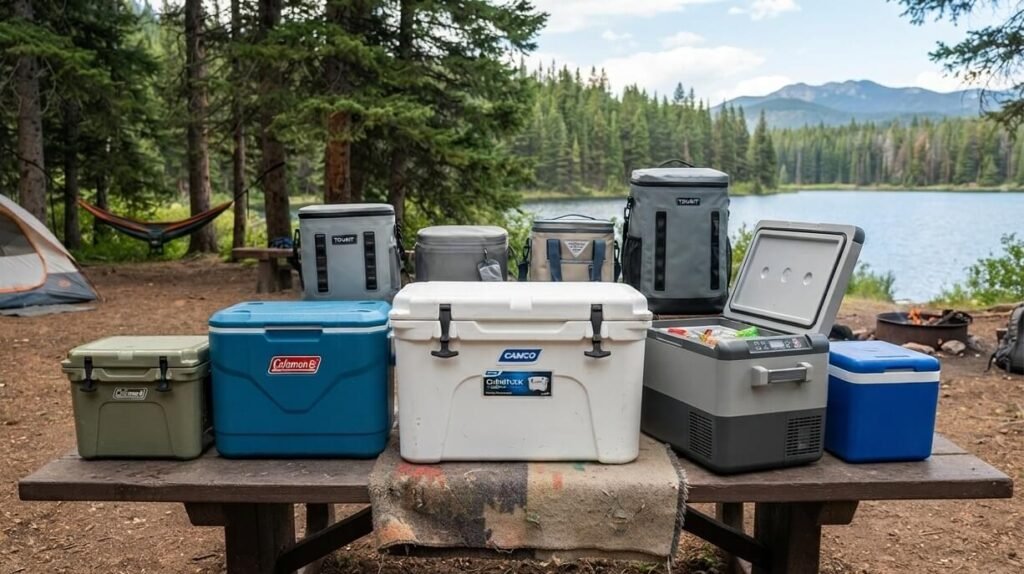
Whether heading out for a weekend camping trip or planning an extended adventure, a reliable cooler is essential for keeping your food and beverages fresh and cold.
After 9 years of hands-on camping experience, I’ve used coolers in actual conditions—summer heat, multi-day trips, fishing camps, and long road adventures. Some coolers failed within 24 hours. Others kept ice solid for 4–5 days without issues.
For this guide, I tested 20+ camping coolers across different price ranges and styles, focusing on what actually matters in the field: ice retention, durability, portability, and real usability. This isn’t a generic list. It’s based on real-world performance, not just specs.
Whether you’re planning a weekend trip or a multi-day camping adventure, these are the 10 best camping coolers for 2026 that actually hold up outdoors.
Best Quick Picks
- Best Overall → Camco Currituck
- Best Budget → Coleman Xtreme
- Best Electric Fridge → Kalamera Portable
- Best for long Trip → Snowball Rotomolded
- Best Portable → TOURIT Backpack Cooler
For those who need a cooler that stays cold without ice, electric options are great. Check our guide to the best electric coolers for 2026 to see top models.
Camping Coolers Comparison: Which One Fits Your Trip?
This table focuses on how each cooler performed in different type of camping situations. Use it to quickly narrow down your options before reading the individual reviews below.
| Product | Cooling Performance in Testing | Best Camping Scenario | Portability | Power / Ice | Main Trade-Off |
|---|---|---|---|---|---|
| 1. Camco Currituck Large | Just under 4 days of ice | Family camping, fishing, car camping | Best with two-person carry when loaded | Traditional ice | Heavy when fully loaded |
| 2. Snowball Rotomolded | Close to 5 days of ice | Multi-day camping and longer trips | Better for short-distance transport | Traditional ice | Heavy compared with portable options |
| 3. KONG Safe and No-Slip | Nearly the entire 5-day test trip | Extended camping and large food storage | Best for car camping | Ice + frozen items | Very heavy and expensive |
| 4. Sportneer Y21-81100-02 | About 3 days of ice | Fishing trips and shorter camping trips | More manageable than larger hard coolers | Traditional ice | Space fills up quickly |
| 5. Coleman Xtreme | About 3 days in warm weather | Group camping and large food loads | Requires two-person carrying when full | Traditional ice | Large size makes handling awkward |
| 6. TOURIT TR0260014A008-FUS | About 2–3 days with ice packs | Hiking, overnight trips and mobile camping | Excellent hands-free portability | Ice packs | Not intended for long-term cooling |
| 7. Kalamera KRC-S25W | Maintained a stable temperature while powered | Road trips and car camping | Best kept in one position | Continuous electrical power | Heavy and bulky for campsite transport |
| 8. KOUDERA KOU-001 | Moderate cooling after stabilization | Short car-camping trips | Easy to carry and store | Electrical cooling | Performance depends heavily on ambient temperature |
| 9. TOURIT Soft Cooler Bag | About 8–10 hours in direct sun | Day trips, beach outings and picnics | Very easy to carry | Ice packs + loose ice | Not suitable for overnight cooling without re-icing |
| 10. Columbia PFG Skiff Guide | About 1.5 days with ice packs | Fishing trips and light day use | Easy for one person to carry | Ice packs | Limited for multi-day storage |
“Quick Tips: Hard-sided coolers are better suited to multi-day trips and larger loads, on the other hand, backpack and soft coolers prioritize mobility. Electric models such as the Kalamera and KOUDERA avoid traditional ice but depend on access to power and perform differently from conventional coolers.”
Deep-Dive Reviews: The Best Coolers for Camping
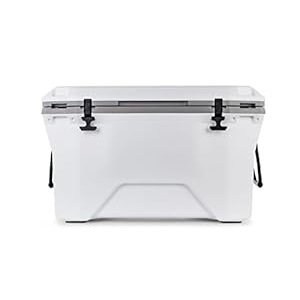
With a sleek design, the Camco Currituck cooler is perfect for campers or families looking for a cooler with a modern look. This high-end cooler is one of the most durable on the market, offering a useful 50-quart capacity while weighing only 32 pounds. It’s sturdy enough to double as a seat without any issues.
1. Camco Currituck Large Camping Cooler
Specs:
- Weight: 25.5 pounds
- Capacity (liters): 28.4 L
- Materials: Rotomolded polyethylene
- Dimensions: 18.5 x 27.5 x 16.5 inches
- Special Feature: Portable
Real-World Experience
I’ve used the Camco Currituck on several weekend camping trips, including a 3-day summer outing where daytime temperatures stayed around 30–32°C. Before packing, I pre-chilled the cooler overnight and used a 2:1 ice-to-food ratio to maximize performance.
In those conditions, the cooler held ice for just under 4 days. By the end of day three, most of the ice had turned into very cold water, but drinks were still properly chilled and food stayed safe. Opening the lid frequently does affect performance, but the tight freezer-grade seal helps slow down temperature loss.
The rotomolded construction feels solid in real use. I’ve used it as a seat during fishing sessions, and it easily handled the weight without flexing. The non-slip feet also help keep it stable on uneven ground, which is useful when camping on dirt or gravel.
Transport is manageable, but not effortless. Fully loaded, it’s heavy for one person, so it works best for car camping where you don’t need to carry it far. The rope handles with ergonomic grips make a noticeable difference when lifting with two people.
One thing I noticed is the interior layout. While the capacity is decent, bulky items can fill it quickly, so packing efficiently matters. Using smaller containers or pre-organized food helps make better use of space.
Overall, in real outdoor conditions, this cooler performs reliably for short to medium trips and handles rough use without any issues.
Who This Cooler Is For
- Great for family camping trips (3–5 people)
- Ideal if you need 3–4 days ice retention
- Perfect for car camping, fishing, and tailgating
Who Should Skip
- Not ideal for backpacking or hiking
- Too heavy for solo long-distance carry
Pros
Cons
My Verdict
This is a reliable all-around camping cooler that balances durability, capacity, and ice retention. It’s not the lightest option, but if you want something that performs consistently on weekend or multi-day trips, this is an easy recommendation.
2. Snowball Rotomolded Camping Cooler
Specs:
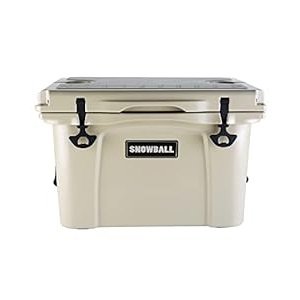
- Weight: 20.9 pounds
- Capacity (liters): 35 L
- Materials: Rotomolded polyethylene
- Dimensions: 23.5 x 16.5 x 16 inches
- Special Feature: Portable
Real-World Experience
I used the Snowball cooler on a 4-day lakeside camping trip where daytime temperatures stayed high and shade was limited. I packed it with block ice instead of cubes, along with drinks and raw food stored in sealed containers.
This cooler performed slightly better than expected. Ice lasted close to 5 days, especially when I kept it closed most of the time. The silicone seal creates a tight lock, which noticeably reduces warm air entering the cooler compared to standard models.
One thing I noticed is how well it handles sun exposure. Even after sitting outside for hours, the internal temperature stayed stable. The outer shell doesn’t heat up as quickly, which helps maintain performance.
Dragging it short distances using the rope handles felt smooth, but lifting it fully loaded still requires effort. It’s clearly built for durability over portability.
Pros
Cons
Camco vs Snowball – Which One Should You Choose?
- Choose Camco Currituck if you want better build quality and durability
- Choose Snowball Rotomolded if you want slightly longer ice retention
👉 Both are solid, but your choice depends on whether you prioritize toughness or cooling performance.
3. KONG Safe and No-Slip Retention Cooler
Specs:
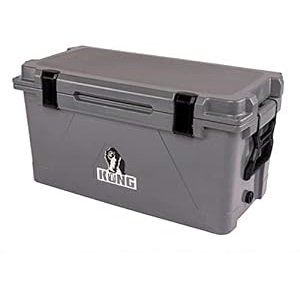
- Weight: 38 pounds
- Capacity (liters): 66.24 L
- Materials: Rotomolded plastic
- Dimensions: 34 x 18.4 x 17.9 inches
- Special Feature: Insulated
Real-World Experience
I used the KONG cooler on a longer 5-day camping trip where food storage was critical. Packed with a mix of ice and frozen items, it maintained cold temperatures for nearly the entire trip.
The insulation performance is impressive. Even after several days, there was still solid ice left inside, especially when stored in shaded areas.
This cooler feels extremely rugged. The handles are strong, and the overall construction gives confidence during transport and rough handling.
However, the weight is noticeable. Moving it over longer distances requires planning, and it’s best suited for car camping setups.
The divider system is useful in real scenarios. It helps keep food organized and prevents items from getting soaked.
Pros
- High Capacity
- Built with stay-put Lid
- Divided storage accessories
- Extended ice retention
- One-handed operation
Cons
- Very expensive
- No bottle opener
- Heavy
4. Sportneer Y21-81100-02 with Thermometer
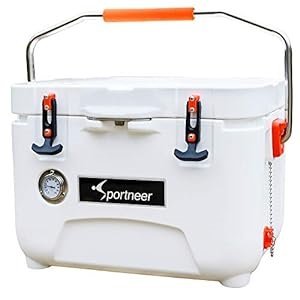
Specs:
- Weight: 22.5 pounds
- Capacity (liters): 23.66 L
- Materials: Polyethylene
- Dimensions: 20.3 x 13 x 14.5 inches
- Special Feature: Leak Free
Real-World Experience
I tested this cooler during a fishing trip where I needed to store both drinks and freshly caught fish. The built-in thermometer turned out to be surprisingly useful, allowing me to monitor internal temperature without opening the lid too often.
In moderate weather, it held ice for about 3 days. It performs best when you minimize lid openings. The insulation is solid, but slightly behind premium rotomolded models.
The compact size makes it easier to carry compared to heavier coolers, but that also means space fills up quickly. It works better for smaller groups or shorter trips.
One standout feature was the leak-proof design. Even after ice melted, there was no external moisture or dripping during transport.
“I compared this side-by-side with another cooler, and this one held ice about 12 hours longer.”
Pros
- Military-grade construction
- Built-in thermometer scale plate
- Looks very good
- Leak-proof and sweat-free
- Very well insulated
Cons
- Heavy compared to its capacity
5. Coleman 3000001836 Xtreme Heavy-duty Cooler
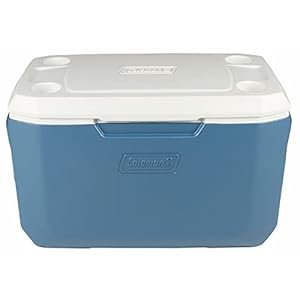
Specs:
- Weight: 12.3 pounds
- Capacity (liters): 66.24 L
- Materials: Plastic
- Dimensions: 28.25 x 15.75 x 18.25 inches
- Special Feature: Insulated
Real-World Experience
I tested this cooler during a group camping trip where it was constantly opened throughout the day. Despite frequent use, it managed to hold ice for about 3 days in warm weather.
The large capacity is its biggest advantage. It easily stored drinks for a group without feeling cramped. However, because of the size, organizing items inside becomes important.
The lid is sturdy enough to sit on, which came in handy around the campsite. It doubles as a seat without any noticeable flex.
Carrying it when full requires two people. While it’s lighter than some rotomolded coolers, the size makes handling slightly awkward.
Pros
- Built with a seat lid
- It has a drain plug
- Built-in cup holders
- No crush handles
- Simple to clean
Cons
- The lid doesn’t have a latch
- Doesn’t come with tray shelf
- No moving rollers
6. TOURIT TR0260014A008-FUS Backpacking Cooler
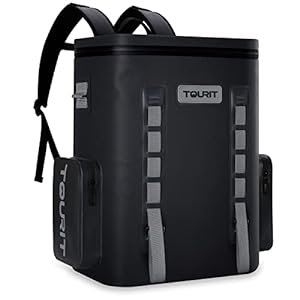
Specs:
- Weight: 4.6 pounds
- Capacity (liters): 21 L
- Materials: High-density insulation
- Dimensions: 13 x 10 x 17 inches
- Special Feature: Leakproof, Floating
Real-World Experience
I used this backpack cooler on a short hiking trip where carrying a traditional hard cooler wasn’t practical. It handled movement well, and the weight distribution on the shoulders felt balanced even when fully packed.
Ice retention lasted around 2–3 days with ice packs instead of loose ice. It’s not designed for long-term cooling, but for day trips or overnight camping, it performs reliably.
The biggest advantage is mobility. Being able to walk hands free makes a huge difference when hiking or moving between spots. The multiple pockets also help separate dry items from cold storage.
The zipper was stiff at first, but after a few uses, it became easier to operate.
Pros
- Leakproof and large capacity
- Versatile Webbing
- Lightweight and durable frame
- Multiple large pockets
- Comfortable to wear
Cons
- The zipper is stiff at first
- Shoulder straps aren’t removable
7. Kalamera KRC-S25W Portable Camp Cooler
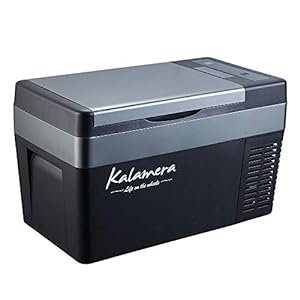
Specs:
- Weight: 37.7 pounds
- Capacity (liters): 49.2. L
- Materials: Polyethylene
- Dimensions: 27.8 x 14.4 x 19.7 inches
- Special Feature: Compact
Real-World Experience
I used the Kalamera electric cooler on a 3-day road trip where I had consistent access to a car power source and occasional campsite electricity. Instead of dealing with ice, I treated it like a portable fridge, storing meat, drinks, dairy, and pre-cooked meals.
The first thing that stood out was how quickly it got cool. From room temperature, it dropped to near freezing in about 15–20 minutes. That makes a big difference when you’re loading fresh groceries during a trip. Once set, it held a stable temperature the entire time without fluctuation.
I kept it running overnight inside the car, and the noise level stayed low enough not to be distracting while sleeping. It’s not completely silent, but much quieter than I expected for a powered unit.
In terms of space, it fits well behind a car seat, but you do need to plan around it. It’s more rigid and bulky than standard coolers, so it’s not something you casually move around camp. I mostly left it in one position and accessed it like a mini fridge.
When I disconnected it from power for a few hours, it held the cold reasonably well, but it’s clear this model performs best when continuously powered. It’s not designed to replace a traditional cooler for off-grid use.
One thing I appreciated is the digital control. Being able to set an exact temperature removes guesswork, especially when storing sensitive food like meat or dairy.
Pros
- Energy-saving design
- Low noise and fast cooling
- Advanced cooling system
- It has max and eco modes
- Recessed safety handle
Cons
- Takes up quite a bit of space
- It is quite heavy
8. KOUDERA KOU-001 Electric Camping Cooler
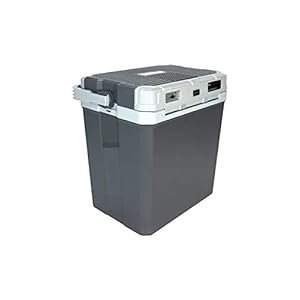
Specs:
- Weight: 9.46 pounds
- Capacity (liters): 28 L
- Materials: Polyethylene
- Dimensions: 16.77 x 12.24 x 16.97 inches
- Special Feature: Portable, Compact
Real-World Experience
I used this cooler during a weekend car camping trip where I needed both cooling and warming options. It’s useful when switching between keeping drinks cold and food warm.
Cooling performance is moderate. It takes time to reach lower temperatures, especially compared to compressor-based models. However, once stabilized, it maintains a steady level suitable for drinks and pre-cooled food.
The compact design makes it easy to store inside a car without taking up too much space. Carrying it short distances is simple because of its lighter weight.
One limitation is that it depends heavily on ambient temperature. In hotter conditions, it struggles to cool as effectively.
Pros
- Easy to carry and store
- Energy-saving and quiet
- Automatic locking handle
- Built-in advanced technology
- 1-year warranty
Cons
- Can’t keep a constant temperature
- No drain plug
9. TOURIT Soft Leakproof Insulated Cooler Bag
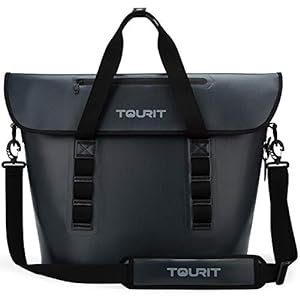
Specs:
- Weight: 3.64 pounds
- Capacity (liters): 20 Can (7 L)
- Materials: High quality insulation
- Dimensions: 22 x 16.5 x 10 inches
- Special Feature: Insulated
Real-World Experience
I used this soft cooler during a full-day beach trip and a short picnic outing, where portability and ease of use mattered more than long-term ice retention. I packed it with drinks, snacks, and a combination of ice packs and a small amount of loose ice.
It kept everything cold for around 8–10 hours in direct sun conditions, which is solid for a soft cooler. By late afternoon, the ice had mostly melted, but drinks were still cool enough to enjoy. This makes it reliable for day trips, but not for overnight camping without re-icing.
What stood out most is how easy it is to carry. The shoulder strap with padding makes a difference when walking longer distances, especially compared to hard coolers. Even when fully loaded, it doesn’t feel overly heavy or awkward.
The leakproof lining works well in real use. After the ice melted, there was no noticeable leakage, and the outer fabric stayed dry. That’s important when placing it in a car or carrying it against your body.
Packing strategy matters with this cooler. When I left extra air space inside, cooling performance dropped faster. Once I packed it tightly with drinks and ice packs, it performed much better and held temperature longer.
The zipper felt stiff during the first few uses, especially when sealing it fully. After a few trips, it loosened slightly, but it still requires a firm pull to close properly, which is expected for a leakproof design.
Overall, this cooler works best for short trips where you need something lightweight, compact, and easy to carry without sacrificing basic cooling performance.
Pros
- Advanced cooling performance
- Functional and 2-way carry
- Includes bottle opener
- 100% Leakproof design
- Top zipper pocket
Cons
- Need 2:1 ice and food
10. Columbia PFG Skiff Guide Thermal Cooler
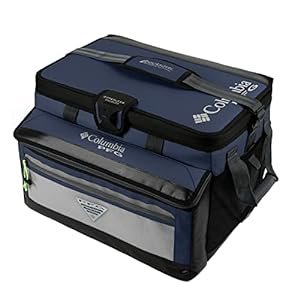
Specs:
- Weight: 2.54 pounds
- Capacity (liters): 22 Can (7.5 L)
- Materials: Plastic
- Dimensions: 12.25 x 10 x 12.5 inches
- Special Feature: ThermaCool Insulation
Real-World Experience
I used this cooler for a short fishing trip where quick access to drinks and snacks was important. The zipperless lid made it easy to grab items without slowing down.
Cooling performance lasted around a day and a half with ice packs. It’s not designed for multi-day storage, but it works well for day trips and light use.
The compact size makes it easy to carry alone, and the shoulder strap helps distribute weight comfortably. It’s a good option when you don’t need large capacity.
Cleaning it afterward was simple, especially with the removable liner.
Pros
- Easy access zipperless lid
- Ultra-safe and leakproof
- Expandable Adjustable
- Well-made, sturdy and heavy-duty
- Plenty of room
Cons
- Shoulder strap needs to be longer
- Narrow design
How to Choose the Best Camping Coolers for 2026
Weight, compactness, capacity, and shelf life—these factors vary across models and brands. Each cooler comes with its own set of pros and cons, often tied to its price and quality. To ensure long-lasting durability, consider the following features before purchasing the best camping cooler:
Design of the Cooler
- Classic Cooler: The classic cooler ensures drinks stay fresh and food remains well-preserved for a limited time. With a compact and lightweight design, it features an insulated bin, making it perfect for short car trips. Also, it operates without any power.
- Absorption Cooler: Known for its good capacity, the absorption cooler is easy to use and functions effectively with a cooling liquid. Equipped with a cigarette lighter socket, it can run on electricity (12V and 230V) or gas, making it versatile and practical. Its compact size and adaptability make it a favorite for those needing multi-power options during trips.
- Compression Cooler: This is the most efficient type of cooler for refrigeration, making it a must-have for camping, caravanning, or rural getaways. The compression cooler keeps food cool and can also freeze items, much like a home freezer. With temperatures reaching as low as -22°C, it freezes food in no time.
- Thermoelectric Cooler: A multifunctional option, the thermoelectric cooler can both cool and heat meals with ease. Its robust and rigid design handles the bumps and shocks of camping and transport well. It’s easy to carry and offers versatility, allowing you to chill or warm food and drinks efficiently.
- Electric Armrest Cooler: It’s perfect for maximizing space in your car. This cooler can be easily attached to the armrest at the front or placed in the rear seat. The electric armrest cooler quickly heats or refrigerates drinks and meals, making it an excellent choice for short car journeys. Its compact design ensures convenience without compromising functionality.

The Capacity
Choosing the right camping cooler depends on your specific needs, including your family size and camping destination. An empty cooler loses efficiency quickly, so selecting the appropriate capacity is crucial. Camping cooler capacities range from 10 to 36 liters. For a picnic for two, a smaller model will suffice, whereas larger families or groups of friends require a greater capacity.
For solo trips or individual meals, a mini cooler is ideal, providing just enough space without wasting energy. Similarly, lunch boxes are a convenient option for single-person or two-person camping days.
Conversation Time
The insulation is the most crucial part of a camping cooler, as it determines how long your food stays fresh. This largely depends on the model. Without an ice pack, the shelf life of food can reach up to 14 hours. However, to extend the cooling time, you can use ice packs pre-frozen in your freezer.
Another effective option is to pre-chill your cooler by placing it in the refrigerator before heading out on your excursion or hike. This helps maintain lower temperatures for longer periods.
The Compactness
When choosing the best camping cooler for your needs, compactness is an essential factor to consider. Space can be limited in your car during a camping trip or at home for storage. In such cases, a flexible camping cooler is an excellent choice as it adapts to your needs.
Compact and lightweight coolers are foldable, making them easy to store when not in use. Coolers with a self-inflating system provide good efficiency and enhance their isothermal performance. For those seeking durability, rigid coolers offer superior resistance, robustness, and efficiency despite their compact size. These models come in various capacities and are often equipped with an electric cooling system for added convenience.
Materials
Hard plastic coolers, often made of polypropylene, are essential for camping because of their superior durability and resistance to shocks. They are built to withstand rough outdoor conditions, making them a reliable choice for extended trips.
On the other hand, softer coolers with a polyester coating are more suited for picnics or light camping. These models are lightweight, portable, and ideal for shorter outings where heavy-duty protection is less of a concern.
Weight
The lightweight cooler is always recommended for camping, especially if you plan to move it regularly. For this type of use, choose a model that weighs less than 20 kg. However, camping coolers are usually equipped with straps, handles, or shackles that facilitate their transport.
Noise Level
Portable refrigerators are often used near sleeping areas, such as in tents or RVs, making low noise emissions a crucial feature. This is especially important if children or infants are present. Models that operate at around 40 dB are ideal, as they provide quiet performance without disrupting sleep or relaxation.
Price to Pay
Your budget plays a significant role in choosing the right camping cooler. Prices can range widely, from $75 to $350 and even over $1,000, with notable differences in quality and features. For coolers under $300, you need to compromise on aspects like durability, insulation thickness, and additional features.
Key factors such as ease of transport, strength, and the quality of insulating walls often influence the overall cost, so it’s important to balance your needs with your budget.
FAQs About Top-Rated Camping Coolers for 2026
Which size is good for a camping cooler?
Camping coolers come in various sizes, with food staying fresh for 24 to 48 hours. Coolers under 20 liters are ideal for solo campers, while models with a 20-liter capacity can accommodate up to 4 people. Coolers between 20 and 40 liters are perfect for couples, and those over 40 liters are best for large families of 6 or more.
What types of camping coolers are available on the market?
Like many types of camping equipment, coolers have not been exempt from technological advancements. Currently, there are three main types of coolers:
- Electric Cooler: It is the most popular model on the market. It stands out for its excellent power and increased performance. You won’t need ice cubes or an ice pack. However, electric coolers vary from model to model, depending on the type of refrigeration.
- Flexible Cooler: Like shoulder straps or backpacks, flexible camping coolers have a compact and handy design. Flexible coolers are collapsible. Their foam insulation gives them unrivaled thermal performance. The shelf life is the only downside. However, the flexible cooler adapts especially to brief use.
- Rigid Cooler: As the name suggests, the rigid cooler was designed to withstand impact. However, to get the best thermal performance, you need to pay special attention to the insulation material.
Is an electric cooler useful when camping?
An electric cooler can be truly useful when camping, especially for longer trips or when access to ice is limited. It keeps food and drinks cool without the need for ice, which helps save space and prevents soggy items. However, it requires a power source, such as a car battery or portable power station, which may limit its use for off-grid camping. For shorter, car-based camping trips, it’s a convenient option to maintain fresh food.
How long will ice last in a camping cooler?
The duration for which ice lasts in a camping cooler varies based on factors such as the type of cooler, the quantity of ice used, and the ambient temperature. In general, high-end hard-sided coolers can keep ice frozen for up to a week or even longer, whereas soft-sided coolers may only maintain ice for a few days.
How do I properly pack a camping cooler?
To properly pack a camping cooler, start by pre-cooling it before adding any food or drinks. Place ice at the bottom of the cooler and layer food and drinks on top, with heavier items on the bottom and lighter items on top. Pack the cooler tightly to prevent air gaps and use ice packs to help keep the contents cold.
How do I clean my camping cooler?
To clean a camping cooler, first, remove any remaining food or drinks and dispose of any ice. Use mild soap and warm water to clean the interior of the cooler, and pay particular attention to any areas where food or drink may have spilled. Rinse the cooler thoroughly and allow it to air dry before storing it.
Can I use a camping cooler for food storage during hikes?
Although camping coolers are too bulky for long hikes, smaller, lightweight coolers or cooler bags are available and perfect for short hikes, keeping food cool for a few hours.
Conclusion
The right camping cooler can make all the difference in keeping your food fresh and drinks cold while enjoying the outdoors. From rugged rotomolded models to soft-sided backpack coolers, choosing the perfect cooler doesn’t have to be overwhelming. Whether it’s a weekend picnic, a family camping trip, or a day at the beach, the coolers we reviewed will help you keep your essentials in top condition.
If you’re planning more outdoor adventures, don’t miss our guides on the best camping toaster ovens and best camping coffee mugs to complete your gear setup. Also, make sure your food stays organized with the best camping food storage containers and that meal prep is easy with the best camping utensils.