
9 Best Inflatable Tents in 2026 – Air Tents Tested & Reviewed

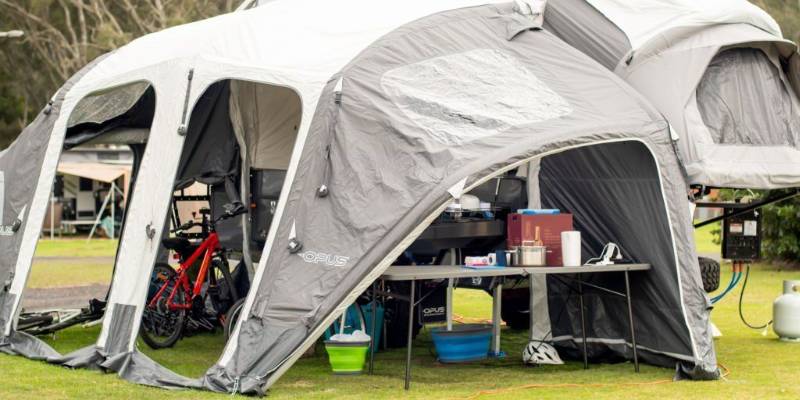
If you want faster setup without dealing with traditional tent poles, the best inflatable tents offer a practical alternative for camping. Also called air tents or air beam tents, these shelters use inflatable beams instead of conventional poles, making them especially appealing for family camping, weekend trips, and frequent setup and teardown.
But not every inflatable tent is suited to the same type of camping. Capacity, packed weight, weather protection, living space, ventilation, stability, and inflation time can make a big difference once you’re at the campsite.
In this guide, we compare 9 of the best inflatable tents in 2026, including lightweight options for couples, comfortable family tents, and larger models for groups. We look at setup, weather resistance, comfort, portability, stability, and overall value to help you find the best air tent for your camping needs.
Best Inflatable Tents in 2026: Quick Comparison
Compare our top inflatable and air tents at a glance. Click any product name to check the latest price, availability, and product details.
| Inflatable Tent | Best For | Capacity | Weight | Key Feature | Rating |
|---|---|---|---|---|---|
| Pavillo Bestway Sierra Ridge | Best Overall | 4 | 15.1 kg | 5,000 mm water resistance | 9.6/10 |
| Vango Ringstead Air Mixed | Family Camping | 4 | 17.3 kg | Spacious family design | 9.4/10 |
| HEIMPLANET Original Fistral | Lightweight Camping | 1–2 | 2.5 kg | Compact inflatable design | 9.5/10 |
| Portal Outdoor Alfa Air | Family Trips | 4 | 10.47 kg | Spacious interior | 9.2/10 |
| Vango Odyssey Air | Large Families | 6 | 17.5 kg | Large multi-room layout | 9.1/10 |
| HEIMPLANET The Cave | 2–3 Person Camping | 2–3 | 4.8 kg | Extremely fast setup | 9.4/10 |
| Berger Inflatable Van Awning | Van Camping | — | — | Inflatable awning design | — |
| Neptun Inflatable Tent | Budget Camping | — | — | Inflatable setup | — |
| Outwell Woodburg Air | Family Camping | 6 | 20 kg | Large family layout | — |
“Affiliate disclosure: We may earn a commission if you purchase through links on this page, at no additional cost to you.”
What Are Air Tents?
Air tents are camping tents that use inflatable air beams instead of traditional rigid poles to create their supporting structure. Once the beams are inflated, they form the tent’s frame and provide the structure needed to support the fabric.
Also commonly called inflatable tents or air beam tents, they are available in different designs and sizes, from compact shelters for one or two people to spacious family models. The main attraction is the simpler pitching process compared with assembling multiple conventional tent poles.
Air tents can be particularly useful for campers who regularly set up at established campsites and want a straightforward alternative to a traditional pole tent. However, the inflatable frame, pump requirements, packed size, and repair considerations are worth checking before choosing a model.
For this guide, we use the terms air tent and inflatable tent interchangeably because both describe tents that rely on inflatable beams as their primary structural support.
Inflatable Tent vs. Air Tent: What’s the Difference?
In most camping contexts, inflatable tent and air tent refer to the same type of shelter. The terminology can vary between manufacturers, retailers, and campers, but the underlying design is generally the same.
“Inflatable tent” describes the inflatable frame, while “air tent” is a shorter term commonly used for this design. You may also see related terms such as air beam tent and inflatable air tent when comparing products.
When shopping for one, the terminology matters less than the actual specifications. Pay attention to factors such as capacity, packed weight, weather protection, ventilation, inflation system, and repair options to determine whether a particular model suits your camping needs.
Best Inflatable Tents in 2026
Our ranking of the best inflatable tents for camping & hiking in 2026:
- Pavillo BW68078 Bestway Sierra Ridge Air Pro – Best Overall
- Vango Ringstead Air Mixed Inflatable Tent – Editor’s Preference
- HEIMPLANET Original Fistral Tent – Best Value for the Money
- Portal Outdoor Alfa Air – Best Inflatable Family Tent
- Berger Inflatable Van Awning – Lots of Windows for More Comfort
- HEIMPLANET Stylish Cave – Best Inflatable Dome Tent
- Vango Odyssey Air – Best Inflatable Tent for Six People
- Neptun Inflatable Tent – Best Inflatable Tunnel Tent for 3 People
- Outwell Woodburg Air Tent – Darkened Premier Bedrooms
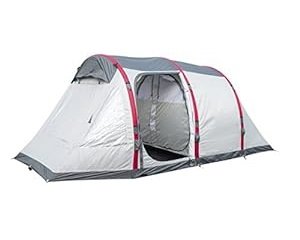
1. Pavillo Bestway Sierra Ridge Air Pro
Key Features:
- Capacity: 4 people
- Water column: 5000 mm
- Weight: 15.1 kg
- Pack size: 72 x 34 x 33 cm
⛺ Performance Rating
Sierra Ridge Air Pro tent can be set up quickly within 8 minutes. Inside the tent, there are two bedrooms available, making the tent perfect for 4 people. It has enough space in the living room of the awning to spend hours in the rain. With a water column of 5000 mm, bad weather doesn’t stand a chance in this tent.
Another massive advantage is that the Air Pro can be closed completely so insects cannot move inside the tent. Compared with many other inflatable tents on the market, the Sierra Ridge Air Pro stands out with additional slots on the outside. These slots allow for the feeding of cables for power supply.
Luminous tensioning ropes and practical inside pockets make your outing even more pleasant. With all the benefits, it’s easy to overlook the fact that the bedroom could be a bit bigger and darker. However, on the forest ground with roots, the material rubs against itself relatively badly.
It’s a practical inflatable tent that leaves nothing to be desired, particularly for families with small children. The tent comes with an air pump and a heavy-duty carrying bag, ensuring convenience and ease of transportation.
Pros:
- Fast and easy setup
- High water column rating
- Good ventilation
- Built with cable management
- Two large entrances
- Two separate sleeping cabins
Cons:
- Bright bedroom
- Small sleeping cabins
Tips: Those who like to travel in larger groups will also find the Sierra Ridge in a version for 6 people.
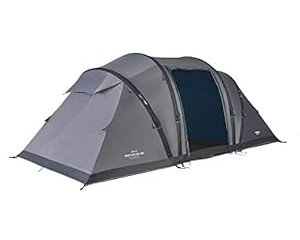
2. Vango Ringstead Air Adult Mixed Inflatable Tent
Key Features:
- Capacity: 4 people
- Water column: 3000 mm
- Weight: 17.3 kg
- Pack size: 49.8 x 41.8 x 41.4 cm
⛺ Performance Rating
The Ringstead inflatable tent from Vango is designed as a mirror image. It features sleeping cabins at both ends of the tent, providing privacy during outdoor holidays. With a 3,000 mm hydrostatic head (HH) rating, it offers strength and lightness, making it a reliable choice for camping adventures.
The sewn-in groundsheet ensures that no water enters the tent, even on rainy days. The darkened sleeping cabins guarantee a long and restful sleep, even after sunrise. Furthermore, its drop-down doors make this tent ideal for pram or wheelchair access.
However, the living area is a bit tight. Four people would find little space in the small anteroom in bad weather. At 17.3 kg, the tent is also comparatively heavy.
If you’re in need of a spacious and reliable retreat while camping, and don’t mind the relatively heavyweight, the Vango Ringstead Air is an excellent choice. It comes with a double-acting pump that enables both quick inflation and deflation.
Pros:
- Sewn-in groundsheet
- Two sleeping cabins
- Darkened sleeping cabins
- AirBeam Technology
- Good ventilation
- Excellent weather protection, especially on rainy days,
Cons:
- Small lounge area
- Difficult to set up
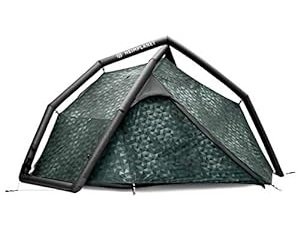
3. HEIMPLANET Original Fistral Tent
Key Features:
- Capacity: 1-2 people
- Water column: 5000 mm
- Weight: 2.5 kg
- Pack size: 34 x 20 x 20 cm
⛺ Performance Rating
The Heimplanet Fistral is among the few inflatable tents designed for 1-2 people. Its air linkage has been placed on the outside, giving it a distinctive and eye-catching appearance.
Compared to its larger counterpart, The Cave, the Heimplanet Fistral tent impresses with significantly less weight and a compact pack size. This makes it ideal for hiking tours or other outdoor activities where portability is key. With its smaller base, it’s perfect for solo camping or hiking adventures.
This tent is spacious enough to accommodate a queen air mattress, and the ground area measures 4.2 square meters (45 square feet). However, it’s important to note that the weight of an air pump must be added to your luggage, as it’s not included in the scope of delivery.
Thanks to the geodesic frame structure, this tent is extremely stable. It can withstand wind speeds up to 110mph. It is the ideal outdoor tent for extreme weather conditions. Anyone who accepts the high acquisition costs has made an excellent choice with this tent.
Pros:
- Stylish design
- Good workmanship and high stability
- Very compact and lightweight
- High water column
- Many storage options, including gear loft.
- Repair set included
- Two entrances
Cons:
- High acquisition costs
- Small area
- Without a pump
4. Portal Outdoor Alfa 4 for Families
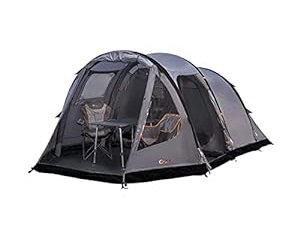
Key Features:
- Capacity: 4 people
- Water column: 4000 mm
- Weight: 10.47 kg
- Pack size: 23 x 23 x 68 cm
⛺ Performance Rating
Portal Outdoor Alfa 4 tent trumps with a large interior area and separate sleeping cabin. Thanks to the generous construction, there is enough space for luggage and outdoor equipment. The sewn-in base plate offers additional protection against insects and moisture.
The many practical pockets in the living room and the sleeping cabins allow you to stow away your belongings and keep things tidy. It is also easy to put up and take down.
However, the tent has one drawback: only the large entrance to the sleeping cabin is sewn shut. So, it can easily happen that the neighbors are woken up when you leave the tent at night or in the morning. A repair kit is also not included in the package. However, a transport bag, air pump, and pegs are supplied.
Additionally, it features window blinds that can be effortlessly rolled up and stowed away, providing you with the privacy you desire. This tent is ideal for couples and families willing to compromise their privacy. Portal also offers the same structure for five people with larger dimensions.
Pros:
- Large indoor area
- Sewn-in groundsheet
- Comparatively easy to set up
- Small pack size
- 4000 mm water column
- Lots of practical pockets
Cons:
- Just a sleeping cabin
- No mosquito net at the entrance
- 180cm high
- No repair kit is available
5. Berger Inflatable Van Awning
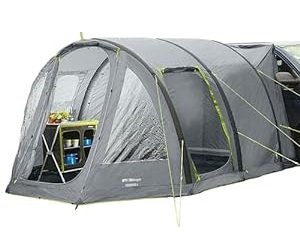
Key Features:
- Capacity: 2-4 people
- Water column: 3000 mm
- Weight: 14.3 kg
- Pack size: 70 x 36 x 29 cm
⛺ Performance Rating
The Berger motorhome awning extends the space of camper vans with a height of 180 to 220 cm. The quick set-up and dismantling are very practical for anyone who wants to travel frequently. So, it is a good choice when extra space is needed when traveling by minibus.
The sewn-in tent floor protects against wetness on the ground and protects the camping equipment from moisture. It is 320 cm wide at the bottom and 250 cm wide at the top (enough to cover a sliding door). The Berger van awning is also available in a larger version to offer additional sleeping space.
The tent features mosquito nets on both entrances, ensuring optimal ventilation while keeping bugs at bay. It can also be conveniently attached to a piping strip on the roof. This feature enhances its overall stability and structure.
The transparent film windows are designed to be opaque from the inside on the front wall and from the outside on the side walls, which offer undisturbed privacy without compromising natural light.
Pros:
- Fast cultivation
- Sewn-in tent floor
- Two entrances, including mosquito nets.
- Good air circulation
- Back panel can be rolled up
Cons:
- High acquisition costs
- Not recommended for solos or couples
6. Stylish tent The Cave by HEIMPLANET
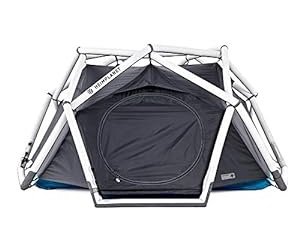
Key Features:
- Capacity: 2-3 people
- Water column: 5000 mm
- Weight: 4.8 kg
- Pack size: 40 x 32 x 23 cm
⛺ Performance Rating
The CAVE is an extremely strong and sophisticated air tent and offers weatherproofness and durability. The air tubes are located outside of the actual shape, giving The Cave its innovative design. Thanks to this unique construction, it can be set up in just a few seconds.
The robust material is ideal for adventuring in all seasons. The dome shape also makes it perfect for rough weather and gives it enormous stability during high winds. A pocket in the tent sky, the Gear Loft, helps to keep the tent tidy.
However, longer stays in the tent are not necessarily comfortable with the 102 cm inner tent height as there is only space when sitting. In addition, as an outdoor tent for 2-3 people, it is quite heavy and expensive compared to conventional tents.
However, for wilderness aficionados who prioritize performance and are willing to invest in both price and weight, The Cave is an excellent tent choice for year-round use. It’s worth noting that a pump must be purchased separately, although a pump adapter is included.
Pros:
- Set up in seconds
- Innovative design
- Weatherproof
- Extremely wind stable
- Many inside pockets, including gear loft.
- Good ventilation system
Cons:
- Little space for additional gear
- Doesn’t come with air pump
- Low height
- Price intensive
7. Vango Odyssey Air Tent for Six People
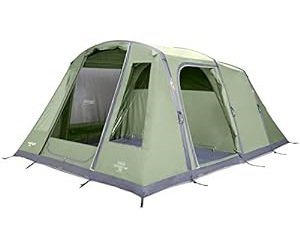
Key Features:
- Capacity: 6 people
- Water column: 4000 mm
- Weight: 17.5 kg
- Pack size: 71.4 x 42.6 x 39.2 cm
⛺ Performance Rating
The Vango Odyssey is a great inflatable tent for families with up to six members and for larger groups. It is a classic dual-entry tunnel tent that offers generous living space. With this model, nothing stands in the way of a camping holiday with children or other adults.
It has a spacious, light-out bedroom area with a toggled divider. In the large living area, there is even space for a table and chairs on rainy days. With a standing height of 190 cm, the tent is also suitable for taller people. The wall between the bedrooms can be removed to create one large space.
The side door can be closed completely. Linked-in groundsheet makes it easy to clean. You can also attach or detach it from the living area. Although the large windows in the lounge area provide plenty of light, they cannot be opened.
The sleeping area features a dual-layered material to ensure a darker and more secure environment while you rest. It can be set up by just one person within a few minutes, relieving the other holidaymakers.
Pros:
- Front and side entry
- Darkened sleeping cabin
- Standing height of 190 cm
- Many inside pockets in the sleeping cabin
- Light-flooded living room
- Sleeping cabins can be converted into one large room
Cons:
- Side entrance without mosquito net
- Windows cannot be opened
- Large pack size
- Groundsheet not sewn to the ground
8. Neptun Inflatable Tent for 3 People
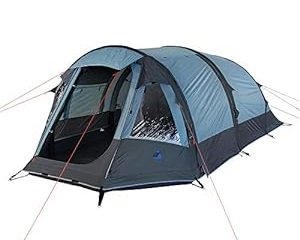
Key Features:
- Capacity: 3 people
- Water column: 5000 mm
- Weight: 15 kg
- Pack size: 69 x 35 x 35 cm
⛺ Performance Rating
The 10T Neptun 3 is extremely slim with its small pack size. The material and the workmanship are convincing. With a water column of 5000 mm, it can withstand even heavy rain. It is a good option for those who don’t have much space in their luggage and don’t mind fiddling around with additional attachments.
It has separate sleeping and living areas for 3 adults. The three ventilation sections ensure sufficient fresh air and a pleasant climate inside the tent. Also, the groundsheet is sewn in to offer excellent protection against insects and moisture.
10T Neptun 3 inflatable tent is made of durable polyester with UV-resistant and waterproof coating of 5000 mm. However, the tent must be fixed with pegs and guy ropes for a good stand. Two eyelets for pegs are missing at the entrance, which would further increase stability.
Pros:
- Small pack size
- Continuous floor pan
- Insect nets at the entrance
- Breathable material
- Good value for the money
- High water column rating
Cons:
- Low standing stability
- Not ideal for camping with kids
9. Outwell Woodburg Air Tent

Key Features:
- Capacity: 6 people
- Water column: 4000 mm
- Weight: 20 kg
- Pack size: 93 x 49 x 49 cm
⛺ Performance Rating
The Outwell Woodburg tunnel tent has four rooms with additional space for gear and luggage, making it suitable for families and large groups. If necessary, one of the sleeping cabins can be expanded to create even more space in the common area.
Darkened Premier Bedrooms feature a versatile 360° access system, providing convenient entry from all angles. An additional side door offers flexible access options.
Its seven-meter length can be both an advantage and a disadvantage. In strong winds, the tent can lose stability if it hits the wide tent wall head-on. While it provides ample space inside the tent, it also means that the tent tips the scales at just under 20 kg and is quite large when packed.
Overall, the Outwell Woodburg could be a good option, especially for large families who travel with their vehicles and like to vacation in warm areas with little wind. If you’re planning vehicle-based camping but want your sleeping area elevated above the ground, another option worth exploring is a rooftop tent.
Pros:
- Very spacious
- Simple construction despite large dimensions
- Well-divided and structured
- Practical room layout
Cons:
- Large pack size
- Unstable in strong winds
- No mosquito net
Pros and Cons of Inflatable Tents
Pros
- Fast setup: Air beams can make pitching an inflatable tent much quicker than assembling multiple rigid poles.
- Simple frame system: There are fewer traditional poles to connect and organize.
- Good family comfort: Many air tents offer large living areas and multiple sleeping compartments.
- Stable designs: Well-designed inflatable frames can provide strong structural support when properly inflated and pegged.
- Flexible options: Models range from compact 1–2 person tents to large family air tents.
Cons
- Heavier family models: Large inflatable tents can weigh considerably more than lightweight backpacking tents.
- Packed size: Family air tents can take up substantial storage space in a vehicle.
- Pump required: Some models include a pump, while others require one to be purchased separately.
- Air-beam maintenance: Punctures, valves, or damaged air tubes can require repair.
- Higher prices: Some premium inflatable tents cost considerably more than basic pole tents.
What You Need to Consider When Buying the Best Inflatable Tents for Camping
With the market overflowing with a diverse array of inflatable tents, navigating this bustling landscape can be challenging. To assist you in making an informed purchase decision, we’ve compiled a list of key factors that you should consider before diving in:
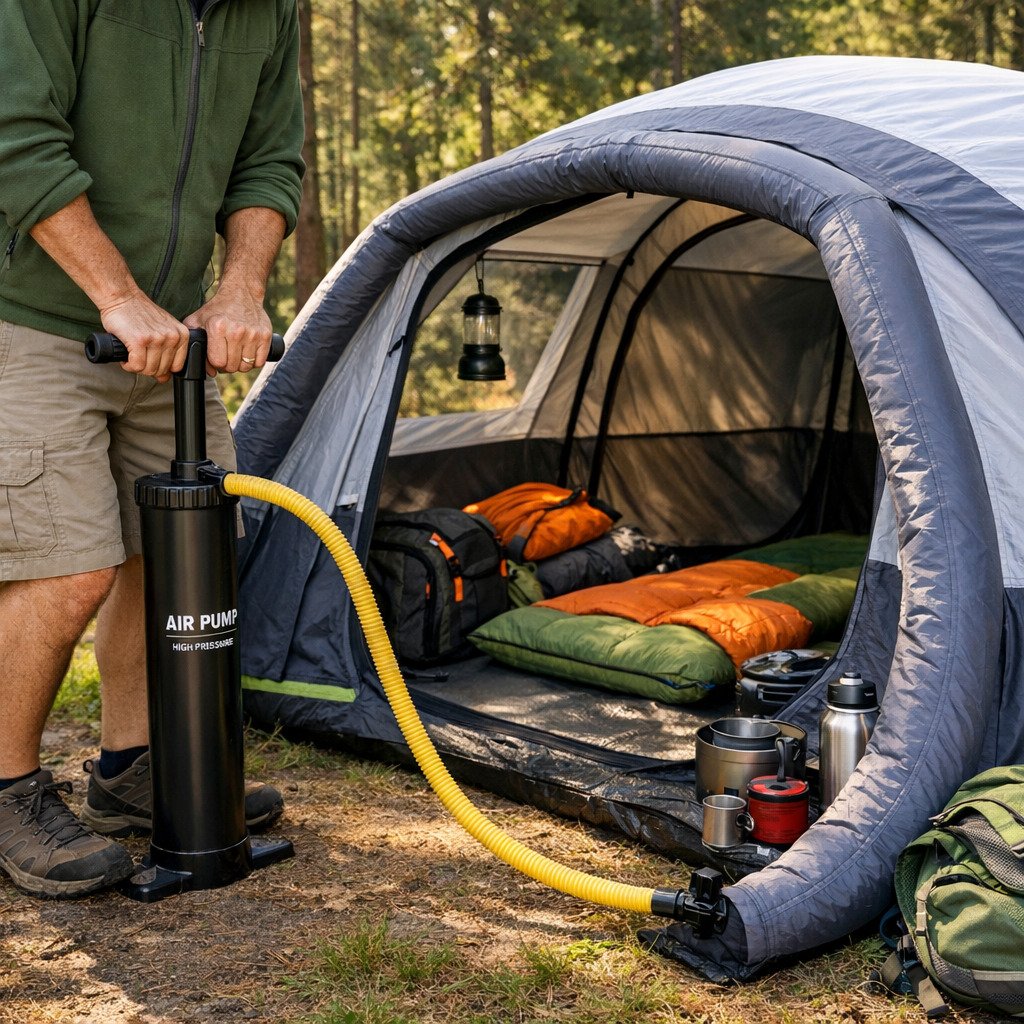
Type of Inflatable Tent
There are different types of inflatable tents, including traditional dome tents, tunnel tents, and geodesic tents. Each type has its own advantages in terms of space, stability, and ease of setup. Choose the type that best fits your needs and preferences.
Inflation System
Evaluate the inflation system used in the tent. Some tents come with built-in pumps, while others require separate pumps. Look for features like high-volume valves for quick inflation and deflation, as well as sturdy pump mechanisms.
If your main priority is the fastest possible setup and you don’t specifically need an inflatable frame, compare these options with our guide to the best pop-up tents.
Size and Capacity
Before choosing an inflatable tent, consider how many people will be using it and how much space you’ll need for sleeping, storing gear, and other activities. Pay attention to the tent’s dimensions, including floor area and peak height, to ensure it comfortably meets your needs and provides enough room for everyone and everything.
If you want additional sheltered space for relaxing, cooking, or keeping gear outside the main sleeping area, consider a tent with a screen room. Furthermore, if you’re planning a comfortable camp setup, explore the best inflatable camping chairs.
Fabric Quality and Construction
Look closely at the tent’s fabric and construction quality. Durable ripstop materials offer resistance to abrasions and daily wear. Check the stitching, seams, and reinforced points to guarantee long-lasting performance and dependable protection during your outdoor adventures.
Weather Resistance
Assess the tent’s ability to handle different weather conditions, including rain, winter heavy snow, wind, and UV exposure. Look for features such as waterproof coatings, taped seams, and wind-resistant designs to ensure reliable protection. If heavy rain is a major concern, you can also compare these models with our guide to the top-rated waterproof tents for heavy rain.
Setup and Ease of Use
Evaluate how easy the tent is to set up and pack away, especially considering the inflatable poles. Look for tents with intuitive designs, color-coded components, and quick-release valves for efficient inflation and deflation.
Weight and Portability
Weight becomes especially important if you need to carry your shelter any significant distance. For campers planning longer hikes or overnight trips on foot, compare inflatable models with our expert guide of the best backpacking tents of 2026.
Ventilation and Airflow
Check for ventilation features such as mesh windows, vents, and adjustable openings to help regulate temperature and reduce condensation inside the tent.
Interior Features and Organization
Evaluate the tent’s interior layout, including storage pockets, gear lofts, and hanging loops for lanterns or other accessories. Consider any additional features that enhance comfort and convenience during use.
Stability and Sturdiness
Assess the tent’s stability in windy conditions, considering factors like the design of the inflatable poles and the strength of the tent’s structure. Look for features like guy lines, stakes, and reinforced anchor points for added stability.
Price and Value
The price varies depending on size and quality. On average, an inflatable tent with a capacity of about 4-6 people costs between $300 and $500. In the meantime, you can find significantly cheaper models on our list. However, if you are looking for a high-quality tent, you should expect to spend over $500.
Compare the prices of different inflatable tents, considering their features, quality, and durability. Remember that investing in a higher-quality tent may offer better long-term value and performance.
Included accessories
Most inflatable tents come with an air pump. A bag for storing the tent is part of the basic equipment. An included repair kit also provides a quick remedy in the event of damage to the air hoses. Some manufacturers also offer individual parts that can be reordered.
Frequently Asked Questions About Inflatable Tents
Are inflatable tents suitable for regular camping?
Yes. Inflatable tents can work well for regular camping, particularly when you value relatively simple pitching and a spacious interior. Their suitability depends on the tent’s capacity, construction, weather resistance, and how often you plan to transport and set it up.
Can an inflatable tent be left pitched for several days?
Many inflatable tents can remain pitched for extended camping trips, provided the manufacturer allows it and the campsite conditions are suitable. Before leaving a tent unattended, check the weather forecast, secure all guy lines and anchor points, and follow the manufacturer’s recommendations for prolonged use.
For longer camping trips, privacy can be just as important as sleeping space. A dedicated camping shower tent can provide a separate space for changing or showering.
How durable are inflatable tent air beams?
Air beams are designed to withstand normal camping use, but they are not immune to punctures or valve problems. Keeping sharp objects away from the tent and handling the inflation system carefully can reduce the chance of damage. The repair kit supplied with the tent can also be useful for minor problems.
What happens if an inflatable tent gets a small puncture?
A small puncture does not necessarily mean the entire tent becomes unusable. If you notice an air beam losing pressure, locate the leak and use the manufacturer’s recommended repair method. Most repairs should be carried out with the appropriate patch or replacement component rather than an improvised material.
Do inflatable tents need electricity at the campsite?
Not necessarily. The answer depends on the inflation system included with the tent. Some models can be inflated using a manual or rechargeable pump, while others may benefit from a powered pump. Check the manufacturer’s instructions and the pump requirements before your trip.
Are inflatable tents practical for festivals?
They can be. The quick pitching process and spacious designs of some inflatable tents can make them convenient for festivals. However, packed size, weight, security, and the amount of equipment you need to carry from the vehicle to the campsite are important considerations.
Can inflatable tents be used on hard or rocky ground?
An inflatable tent still needs a suitable pitching surface and secure anchoring points. Rocky or very hard ground can make it difficult to position tent pegs correctly, while uneven ground can affect comfort and stability. Choose a campsite that matches the tent’s recommended pitching conditions.
How should I store an inflatable tent after a trip?
Allow the tent to dry completely before packing it away for storage. Clean off dirt and debris, inspect the fabric and air system for damage, and store it according to the manufacturer’s instructions. Packing a damp tent for long-term storage can lead to unwanted moisture-related problems.
Are inflatable tents worth buying?
For campers who prioritize straightforward pitching, generous living space, or the convenience of air-beam construction, an inflatable tent can be a useful investment. Whether it is worthwhile depends on your camping style, budget, transport needs, and how frequently you use a tent.
Do best inflatable tents work well with camping lanterns and batter-powered fans?
Absolutely! Many of the best inflatable tents are designed with interior hooks, loops, and pockets to accommodate accessories like lanterns, portable fans, and small storage items. This makes your camping experience more comfortable, especially in warmer weather or when lighting is needed at night.
Conclusion
Choosing the right inflatable tent can transform your camping experience, making setup fast, easy, and stress-free—especially for families or groups traveling with children. Inflatable tents combine comfort, durability, and convenience, eliminating the need for complex poles and heavy packing. When you plan your space and weight for both the tent and its air pump, you’re making a smart investment in hassle-free camping.
In this guide, we’ve compared the top inflatable tents of 2026, highlighting key features such as setup speed, weather resistance, material quality, and overall durability. With this information, you can confidently select a model that matches your camping style and outdoor needs.
If you have any questions about choosing the best inflatable tent, or need advice on a specific model, leave a comment below. Our team of camping enthusiasts and outdoor gear experts is here to help you make the most informed choice for your next adventure.


One Comment