Best Tree Tents for Camping: 6 Top Picks for 2026

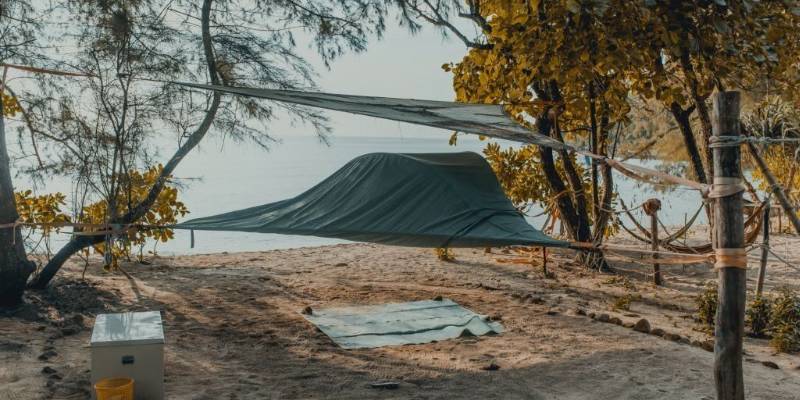
Choosing the right tree tent can make a big difference in how comfortable, stable, and practical your next elevated camping trip feels. Unlike traditional ground tents, tree tents suspend you above the ground, creating a unique sleeping setup that can help keep you away from wet or uneven terrain while adding a different level of adventure to camping.
But tree tents vary considerably in weight, sleeping capacity, suspension design, headroom, weather protection, and setup requirements. A lightweight two-person model may be better suited to backpacking, while a larger three-person design can provide more interior space for extended camping trips. Some models are also designed to work as hammocks or ground shelters, giving you more flexibility depending on the conditions.
In this guide, we compare some of the best tree tents for camping and backpacking, looking closely at the features that matter most when choosing one. We consider factors such as overall design, weight, usable space, load capacity, portability, weather protection, suspension system, and ease of setup so you can determine which type of tree tent fits your needs.
Whether you’re planning a weekend camping trip, looking for a lightweight shelter for backpacking, or simply want to experience sleeping above the ground, this guide can help you narrow down your options and choose a tree tent that matches your camping style.
Best Tree Tents – Comparison & Ranking of 2026
| Tree Tent | Image | Weight | Load Capacity | Head Height | Season | Price |
|---|---|---|---|---|---|---|
| Tentsile Stingray 3P Top Pick | 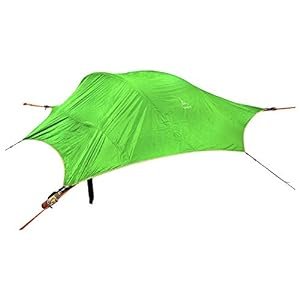 | 24.4 lbs | 880 lbs | 48 in | 4-season | Check |
| Tentsile Flite Plus 2P Best Backpacking | 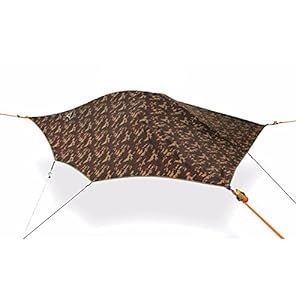 | 8.42 lbs | 485 lbs | 31 in | 4-season | Check |
| LAWSON Blueridge Hammock Tent Best Hanging Tent | 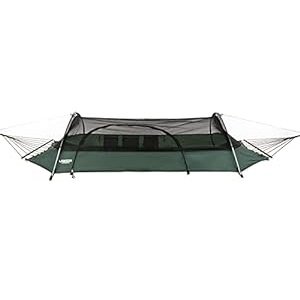 | 4.25 lbs | 275 lbs | 42 in | 4-season | Check |
| Geertop Hammock Tent 2P 3 in 1 Design | 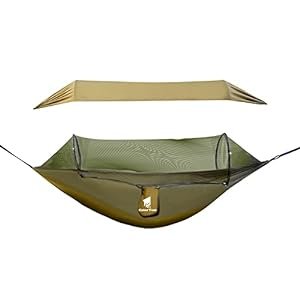 | 2.2 lbs | 440 lbs | 54 in | 4-season | Check |
| Treez Aelph Omega Editor’s Choice | 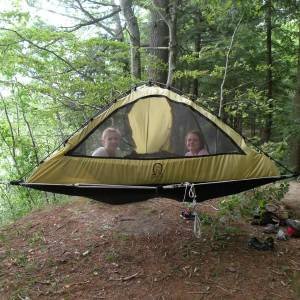 | 12 lbs | 840 lbs | 51 in | 4-season | Check |
| Uboway Quadrangle Hanging Tent Best Value | 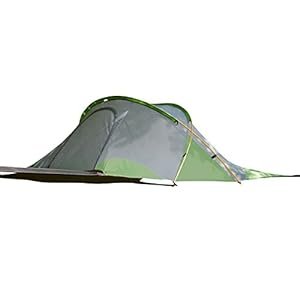 | 8.38 lbs | 882 lbs | 32 in | 4-season | Check |
How We Tested and Evaluated These Tree Tents
We evaluated these tree tents using a combination of hands-on field testing and product research. Our hands-on testing took place during a 4-day camping trip at Eagle Bluff Resort, where we assessed four of the featured models in real outdoor conditions.
Our Hands-On Tested Models
We personally tested:
- Tentsile Stingray 3P — Top Pick
- Tentsile Flite Plus 2P — Best Backpacking
- Geertop Hammock Tent 2P — 3-in-1 Design
- Uboway Quadrangle Hanging Tent — Best Value
During the 4-day camping trip, we focused on the practical aspects of using a suspended shelter rather than relying only on manufacturer specifications. We looked at how each tested model handled setup, sleeping comfort, available space, portability, weather protection, and everyday campsite use.
What We Evaluated
- Setup and suspension: We considered how straightforward each tested tree tent was to assemble, suspend, adjust, and prepare for overnight use.
- Sleeping comfort: We evaluated the usable sleeping area, headroom, stability, and how comfortable the shelter felt during normal camping use.
- Portability: Weight and packed size were considered alongside the practical experience of transporting the shelters and camping gear to the site.
- Weather protection: We assessed the shelter’s rainfly or overhead protection, enclosed design, ventilation, and ability to provide protection from outdoor conditions.
- Space and capacity: We compared the usable interior space with the manufacturer’s stated capacity to determine how practical each model was for its intended number of occupants.
- Ease of use: We considered entry and exit, organization of gear, ventilation, adjustments, and other details that become noticeable during an actual camping trip.
- Construction and materials: We also examined the overall construction, suspension components, fabric, poles, straps, and other important components where accessible during testing.
How We Selected the Remaining Models
Not every tree tent in this guide was personally field-tested. For models we did not test hands-on, we relied on manufacturer specifications, product information, available documentation, and our comparison criteria rather than presenting those observations as firsthand experience.
This distinction is important: the four models listed above received hands-on evaluation during our 4-day camping trip, while the remaining products were assessed through product research and specification comparison.
- Testing location: Eagle Bluff Resort
- Field-testing duration: 4 days
- Hands-on tested models: 4
- Evaluation focus: Setup, comfort, portability, weather protection, capacity, construction, and everyday campsite usability
Best Tree Tents: Top 6 Picks for 2026
Let’s explore our ranking of the top-tier tree tents! This list is regularly updated to keep you informed of the latest options.
| Tree Tent | Award | Hands-On Tested |
|---|---|---|
| Tentsile Stingray 3P | Top Pick | ✓ Yes |
| Tentsile Flite Plus 2P | Best Backpacking | ✓ Yes |
| Geertop Hammock 2P | 3-in-1 Design | ✓ Yes |
| Uboway Quadrangle | Best Value | ✓ Yes |
| LAWSON Blueridge | Best Hanging Tent | — |
| Treez Aelph Omega | Editor’s Choice | — |
Let’s explore our ranking of the top-tier tree tents! This list is regularly updated to keep you informed of the latest options.
1. Tentsile Stingray 3 People Tree Tent
Key Specs:
- Pack size: 25.5 x 8.6 x 11.8 inches
- Weight: 24.4 pounds
- Head Height: 48 inches
- Season: 4-season
- Load capacity: 880 pounds
Tentsile is the world’s leading Tree Tent company, and their flagship Stingray model delivers a unique and comfortable way of enjoying time in the trees. It has enough space for sleeping 3 adults or 2 adults and 2 kids in absolute comfort! However, it can be quite tight for the big three.
This hanging tree tent features a classic design with tent poles, along with both an inner and outer tent. This model comes closest to a classic tent. The big difference is that it is spanned between three trees using ratchets, allowing for a better sleeping experience in the air.
Thanks to the ratchets, high tension is applied to the tent, which creates a level surface and therefore increases comfort when sleeping. This also creates enough space to take your luggage and gear inside the tent. Tentsile Stingray tree tent has doors on all sides.
The waterproof material offers sufficient protection in the rain. The included 5,000HH rainfly can be removed easily for fantastic views and the summer breeze. Once properly secured, the tent can be completely enclosed, providing reliable protection from harsh weather and ensuring you stay dry even during the heaviest rainstorms.
Overall, the Stingray is a real miracle of space and comfort among the best hanging tree tents in 2024. It comes in a single bag, so you can easily pack and carry it. However, if you prefer a light hammock tent, you should skip this model and choose the next one.
Pros
- Heavy duty construction
- Suitable for 3 people
- Lots of space for gear
- Waterproof
- Good ventilation
- High payload
Cons
- Takes up to 30 minutes to set up properly
2. Tentsile Flite Plus 2P Backpacking Tree Tent
Key Specs:
- Pack size: 17.7 x 8.6 x 8.6 inches
- Weight: 8.42 pounds
- Head Height: 31 inches
- Season: 4-season
- Load capacity: 485 pounds
Tentsile convinces us with their Flite Plus Tree Tent. It has an ultralight design and many additional features. You can easily pitch it between two trees, even on a slope, or stretched across a river. It will protect against storms, sunlight, wind, and rain with fully enclosed water and UV-resistant removable rainfly. You can also create a covered porch and generate a windbreaking thermal buffer.
The tent material is tough but lightweight, making it ideal for those looking to take their wild camping to the next level. Thanks to the central crossbar, it offers an enormous sense of space without feeling cramped. The width of the tent allows you to lie diagonally in the tent, which is easy on your posture.
Like all high-quality tree tents from Tentsile, this model comes with ratchet straps for setup. You can reduce the weight by not using the ratchet. Small hooks are used to store and attach your belongings. The included tarp protects against rain and rounds off the offer. However, it does not come with a ladder.
With 485 lbs of load capacity, two adults can sleep comfortably with a double sleeping bag. However, individual bags probably work best. With this tree tent, safety combined with freedom in the middle of nature is guaranteed. Large and heavy people can also consider this model.
Pros
- Posture-friendly lying possible
- Double layer tensioned floor
- Waterproof and breathable
- Convenient for any terrain camping
- Good quality materials
- Pleasant sense of space
Cons
- Difficult to get it set up correctly
- Rainfly is a little on the small side
- Not suitable for very tall people
3. Blueridge Camping Hammock Tent by LAWSON
Key Specs:
- Pack size: 24.5 x 6.25 x 6 inches
- Weight: 4.25 pounds
- Head Height: 42 inches
- Season: 4-season
- Load capacity: 275 pounds
Lawson has designed a crystal-clear combination of hammock and tent with particular emphasis on sufficient space. Thanks to a spreader bar, there is enough space near the head and feet, and the user only sinks slightly into the mat. With the Lawson Blueridge, nothing stands in the way of a restful night in nature.
This unique construction enables a high level of lying comfort and allows you to stow some luggage in the tent if necessary. The mosquito net and the rain tarpaulin protect against unpleasant and unwanted surprises.
The rain fly is incredibly easy to set up as it simply clips in underneath. It’s quite compact, rolling up to the size of a small sleeping bag. When set up on the ground, all components come together to create a compact bivy tent. However, it’s worth noting that this model is designed for one person.
The spreader bars can be divided in the middle to reduce the pack size of the tent. Additional eyelets are integrated on the side walls. These allow you to attach the tent securely to the ground in windy conditions, which helps prevent it from swinging. It is completely waterproof.
This is the most versatile tent hammock in the world, suitable for all types of camping adventures, including car camping, backpacking, bike camping, scouting, and kayak/canoe camping.
Pros
- Lots of space
- Freedom of movement
- With mosquito protection
- Include rain cover
- Easy assembly and disassembly
- Additional eyelets
Cons
- Criticism of the processing
- Designed for 1 person
4. Geertop Hammock Tent for 2 People
Key Specs:
- Pack size: 15 x 11 x 3.15 inches
- Weight: 2.2 pounds
- Head Height: 54 inches
- Season: 4-season
- Load capacity: 440 pounds
Geertop hammock tent is even more fun with the latest model for one to two people. This tree tent can be loaded up to 440 pounds and hung up in just a few seconds, so camping begins in no time.
It is made of 70D breathable taffeta parachute nylon fabric and polyester hexagonal mesh. These materials are robust and durable. The close-meshed mosquito net protects against small animals and insects and can also be removed when not needed.
This model is also equipped with shade cloth as a sun shelter tarp and protects you from the strong sunshine. It can be packed down to a compact size, similar to a book, making it easy for users to carry anywhere.
Thanks to the waterproof rain tarpaulin, wet nights are also a thing of the past. You can stay dry even when it rains. It has a storage pocket where you can put your mobile phone, water, cold drinks, or other small items.
If you want to spend the night in the hanging tent together and are not afraid of physical contact, the Geertop tree tent is an excellent choice. You can also use it for backpacking, hiking, climbing, or trekking. However, it consists of only one layer of material and has not been additionally insulated or padded.
Pros
- Comes with rain cover
- Removable mosquito net
- High load capacity
- Easy assembly
- Waterproof materials
- Robust suspension straps
Cons
- Quite small for two adults
5. Treez Tree Tents Aelph Omega
Key Specs:
- Pack size: 25.5 x 10 x 12 inches
- Weight: 12 pounds
- Head Height: 51 inches
- Season: 4-season
- Load capacity: 840 pounds
Treez Tree Tent is convincing with its small pack size. At only 12 pounds, this tent is not very lightweight, but not heavy. It can be stowed in almost any backpack, making it the perfect travel companion. It offers comfortable lying comfort. This is how the tent keeps its shape and allows you to lie comfortably with a flat back.
It does not rest on the user’s face and allows freedom of movement. The robust material and the triple-processed seams ensure a long service life for the tree tent. It has two large sets of double doors for easy access; each equipped with full screens and zippered closure panels. You can enter and exit the tent without disturbing anyone else.
The Aelph Omega tree tent can comfortably fit up to three adults during camping trips. With the straps, attention was paid to tree-friendly use. However, the package doesn’t include a rain cover. To stay dry during inclement weather, a rain cover or tarp must be purchased separately for additional protection.
Rugged shock-corded aluminum poles provide sturdy support for the tent. For those who wish to forgo traditional tents and sleeping pads when traveling, it offers a significant solution.
Pros
- Suitable for 2-3 people
- Triple stitched for better support
- Fast and easy setup
- Travel size makes it easy to carry
- Tree-friendly straps
Cons
- No rain cover
6. Uboway Quadrangle Hanging Tree Tent
Key Specs:
- Pack size: 19.4 x 8.11 x 8 inches
- Weight: 8.38 pounds
- Head Height: 32 inches
- Season: 4-season
- Load capacity: 882 pounds
This ultralight hanging tree tent from Uboway shines with its robust materials and high load capacity. It is very spacious and offers enough height for comfort, even for tall people. At only 3.8 kg, the tent is ideal for travel fans.
Uboway tree tent comes with an insect-repellant mesh room that lets you enjoy nighttime sounds and cool airflow without tolerating bugs, ticks, mosquitos, or other creepy crawlies.
Despite the lightweight design, it can withstand a lot. The tent carries a maximum load of 882 pounds. An interesting feature is that you can secure the tree tent to the ground using pegs. Also, you can create a roof for other trekking accessories by utilizing the tent.
If you are out and about in rainy weather, you don’t have to buy a tarp to avoid getting wet because the package included it. The mosquito net also protects against larger mosquitoes and insects. However, it is not good enough to keep small mosquitoes away.
For all travelers who carry their luggage on their backs, the Uboway tree tent is a real treat. On the other hand, if you want adequate rain protection, we don’t recommend this model. Yet, you can shield yourself from the rain by draping the provided waterproof top over the mesh roof.
Pros
- Built with mosquito net
- Robust materials
- Spacious and has high load capacity
- Easy to set up
- Small pack size
Cons
- No interior pockets to hold any gear
- Poor instruction
What Is a Tree Tent?
A tree tent is a suspended camping shelter that is attached to suitable trees rather than placed directly on the ground. The sleeping platform is elevated, which can be useful when camping on wet, rocky, uneven, or otherwise difficult terrain. The term “tree tent” can describe several related shelter designs, but they are not all constructed in the same way.
Tree Tent
A traditional tree tent uses a suspended platform and a tent-like shelter above it. The floor is generally designed to provide a relatively flat sleeping surface while the suspension system supports the shelter between trees.
Hammock Tent
A hammock tent combines features of a hammock and a tent. Instead of providing a rigid or relatively flat suspended floor, the sleeping area may have more of the curved or flexible feel associated with a hammock.
Some models can also be configured in different ways depending on the design. Many hammock-style shelters also incorporate insect protection, which can be useful when camping in areas with mosquitoes and other biting insects.
Suspended Tent
Suspended tent is a broader term for a shelter that hangs above the ground using straps, ropes, or other suspension hardware. Tree tents and hammock tents can both fall into this category, so the terms are sometimes used interchangeably.
Platform Tree Tent
A platform tree tent uses a suspended floor designed to create a more stable, tent-like sleeping platform between the trees. This configuration can provide a different feel from a hammock-style shelter, particularly for campers who prefer a flatter sleeping surface.
“Because manufacturers use these terms differently, it’s important to look beyond the product name. Pay attention to the actual floor design, suspension system, sleeping position, dimensions, and intended setup when comparing tree tents.”
Tree Tent vs. Hammock Tent
Although tree tents and hammock tents can both suspend you above the ground, their designs can feel noticeably different in actual use.
| Feature | Tree Tent | Hammock Tent |
|---|---|---|
| Sleeping position | Usually provides a flatter or more structured sleeping area | Often has a more hammock-like sleeping position with a curved or flexible surface |
| Stability | A platform-style floor can feel more stable for moving around or sitting up | The flexible suspension can create more movement, depending on the design |
| Weather protection | Tent-style construction and a rainfly can provide enclosed protection from rain and wind | Protection varies by model and may combine hammock construction with a rainfly or integrated shelter |
| Weight | Varies widely; larger platform designs can be relatively heavy | Often designed around a lighter hammock-style construction, although some models can still be substantial |
| Setup | Requires suitable trees and careful tensioning of the suspension system | Also requires suitable anchor points, with setup depending on the hammock and suspension design |
| Comfort | Better suited to campers who prefer a more conventional sleeping platform | Can appeal to campers who like the flexible feel of a hammock |
“The distinction is particularly useful when comparing the products in this guide because not every suspended shelter provides the same sleeping experience. A camper who prefers a flatter sleeping surface want to focus on platform-style designs, on the hand, someone who enjoys the feel of a hammock may prefer a hammock-style model.”
“If low pack weight is a priority, you may also want to compare tree tents with ultralight hammocks for backpacking, which can offer a simpler option for lightweight trips.”
Are Tree Tents Good for Camping?
Yes, tree tents can be a practical option for camping when your campsite has suitable trees and you want to sleep above the ground. They can be particularly useful on terrain where finding a comfortable, level area for a conventional tent is difficult.
An elevated shelter can also appeal to campers who want a different camping experience or prefer not to sleep directly on the ground. Depending on the model, a tree tent can provide useful sleeping space while keeping the shelter elevated between its anchor points.
When Does a Tree Tent Make Sense?
A tree tent can make sense when:
- Your campsite has strong, appropriately spaced trees suitable for the shelter’s suspension system.
- You regularly camp on uneven, rocky, or wet ground.
- You prefer sleeping above the ground rather than directly on a tent floor.
- You want to experiment with a different type of camping shelter.
- You are comfortable learning how to install and tension a suspended shelter correctly.
- The tent’s packed weight and suspension equipment fit your transportation method.
When Is a Conventional Tent Better?
A conventional ground tent may be more practical when:
- Your campsite has few or no suitable trees.
- You frequently camp in open areas, alpine environments, beaches, or other locations without appropriate anchor points.
- You want a shelter that can be placed on almost any suitable piece of ground.
- You prioritize a straightforward setup without a suspension system.
- You need a shelter that accommodates several people on a shared ground-level floor.
The choice ultimately depends on the campsite and the type of camping you do. Tree tents are specialized shelters rather than a universal replacement for conventional tents, so the availability of suitable trees, shelter weight, sleeping design, and setup requirements should all be considered before buying.
“If you’re planning alpine or high-altitude environments trip, compare tents for mountaineering to understand the features typically needed for alpine and severe-weather camping.”
What You Need to Consider When Buying a Tree Tent
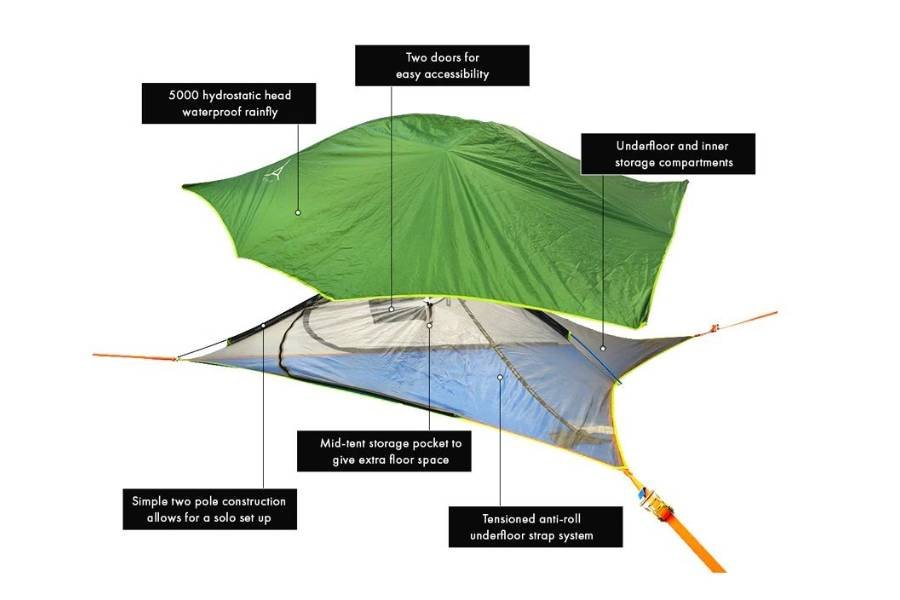
When looking for the best tree tent, you should pay attention to the following features and properties:
Type of Tree Tent
- Platform Tents: These offer a more spacious and comfortable sleeping experience, similar to ground tents but suspended in the air.
- Hammock tents: These combine the comfort of a hammock with the protection of a tent, offering a lightweight and portable option.
- Tree houses: These are more permanent structures built around trees and provide a unique and luxurious camping experience.
Sleeping Comfort
Considering your sleeping comfort is crucial before purchasing a tree tent. The quality of your rest depends on factors such as the size and shape of the sleeping area, the presence of insulation and padding, and the ease of entry into the hammock. Furthermore, having extra space to store luggage can enhance the coziness and comfort of the tent.
Size
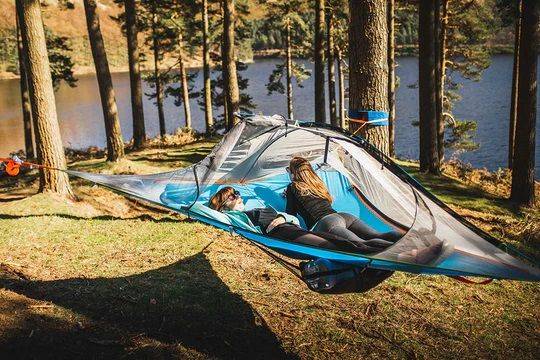
Tree tents primarily come in single models designed for solo travelers. However, there are larger options available for those seeking more space. Some models can accommodate two people, while others are suitable for a couple with one or two children.
Weight
If you plan on backpacking or carrying your tent for long distances, weight is a crucial factor. Lighter tents are easier to transport, but they might compromise on features or durability.
Rain and Insect Protection
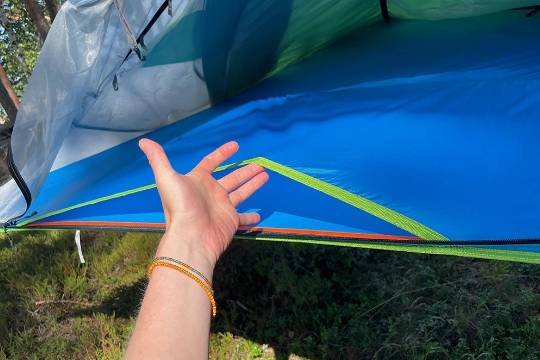
For anyone who enjoys spending nights in nature, dealing with pesky insects during twilight and nighttime can be bothersome. Therefore, having an insect screen is essential for a hanging tent. The mosquito net should cover the entire body without restricting freedom of movement, providing protection from insects while allowing you to enjoy your surroundings comfortably.
In order to stay protected and dry even in the rain, you should pay attention to waterproof materials and rain protection above the tent. Tree or hanging tents are often offered with a tarp – a simple tarpaulin to hang up. In some cases, however, this must be purchased separately.
Ease of Setup
- Consider your experience level: Some tents are easier to set up than others, and some require specialized equipment. Choose a tent that you feel comfortable setting up, especially if you’re new to tree camping.
- Number of straps and suspension points: More complex tents might offer more features but can also involve more setup time and require additional straps and suspension points.
The suspension system is another important consideration because the straps and anchor points determine how the shelter is installed and tensioned.
Material
Choosing the right material for a tree tent involves considering factors such as durability, weight, weather resistance, and comfort. Here are some common materials used in tree tents and their characteristics:
- Nylon: Nylon is a popular choice of tree tent materials because of its lightweight and durable nature. It is also water-resistant, making it suitable for various weather conditions. Look for ripstop nylon, which has reinforced threads woven into the fabric to prevent tears from spreading.
- Polyester: Polyester is another common material used in tree tents. It is durable and offers good resistance to UV rays and moisture. However, it tends to be heavier than nylon.
- Canvas: Canvas is a heavy-duty material known for its durability and weather resistance. It provides excellent protection against rain and wind but is heavier and bulkier compared to nylon or polyester.
- Mesh: Mesh panels are often incorporated into tree tents for ventilation and to prevent insects from entering. Look for high-quality mesh that is durable and tightly woven to keep bugs out.
- Aluminum or Carbon Fiber Poles: The poles of a tree tent are generally made of aluminum or carbon fiber. Aluminum poles are strong, lightweight, and affordable, while carbon fiber poles are even lighter but tend to be more expensive.
- Ropes and Straps: The ropes and straps used to secure the tree tent to the trees should be strong and durable. Look for high-quality materials like nylon webbing or polyester straps with reinforced stitching.
Frequently Asked Questions About Tree Tents
Are tree tents safe to sleep in?
Tree tents can be safe when they are properly installed and used within the manufacturer’s weight and setup requirements. Before using one, inspect the suspension system, straps, buckles, and attachment points, and make sure the supporting trees are healthy and strong enough for the intended load. Always follow the manufacturer’s installation and weight-limit instructions.
Are tree tents comfortable for sleeping?
A well-designed tree tent can be comfortable for sleeping, but comfort depends on the tent’s floor design, available sleeping space, headroom, suspension system, and how well you distribute your weight. Models with more interior space and greater headroom generally provide more room to sit up and move around.
What is the best tree tent for backpacking?
For backpacking, weight and packed size are especially important because you have to carry the shelter with the rest of your gear. A lightweight tree tent such as the Tentsile Flite Plus 2P is designed with portability in mind. However, the right choice depends on your required sleeping capacity, gear load, and the type of terrain where you plan to camp.
Can you use a tree tent in the rain?
Many tree tents are designed to provide protection from rain, but performance depends on the shelter’s construction, rainfly, seams, and setup. Proper installation is important because poor positioning or inadequate tension can allow water to enter. Check the manufacturer’s weather and waterproofing specifications before using a tree tent in severe conditions.
How much weight can a tree tent hold?
Load capacity varies significantly between models. The tree tents in this guide have different manufacturer-listed weight limits, so you should check the specifications of the specific model before purchasing or using it. The stated capacity should include the combined weight of occupants and any gear stored inside the tent.
How many people can sleep in a tree tent?
Tree tents are available in different capacities, including models designed for one, two, or more occupants. A two-person tree tent is generally intended for two campers, while larger models provide additional sleeping and living space. Consider both the advertised capacity and the actual usable interior space when choosing a tent.
Can tree tents be used without trees?
Most tree tents are specifically designed to be suspended between suitable trees, so they require appropriate anchor points for their intended setup. Some multi-use hammock-style shelters may offer alternative configurations, but you should only use a tree tent in ways specifically supported by the manufacturer.
How do you choose the right tree tent?
Start with the factors that will affect your camping experience most: weight, sleeping capacity, load limit, headroom, suspension system, weather protection, packed size, and intended use. Backpackers may prioritize low weight and portability, while car campers or groups may prefer more interior space and a higher load capacity.
Are tree tents good for backpacking?
They can be, particularly when you choose a lightweight model and have suitable trees at your destination. However, a tree tent can be heavier and more complex to carry and install than some conventional backpacking shelters. Before choosing one for a backpacking trip, consider the packed weight, suspension equipment, terrain, and availability of suitable trees.
What should you bring when camping in a tree tent?
Essential equipment depends on the trip, but you should consider bringing a suitable sleeping bag or quilt, sleeping pad, headlamp, weather-appropriate clothing, food and water, navigation equipment, first-aid supplies, and any manufacturer-recommended suspension or setup equipment.
For colder or wet conditions, additional insulation and weather protection may be necessary. Campers considering a hammock-based setup can also compare cold-weather hammocks before choosing between a suspended shelter and a conventional tent.
Can you leave a tree tent set up overnight?
A tree tent can generally remain suspended overnight when it has been properly installed and the manufacturer permits that type of use. Before sleeping in it, inspect the suspension and attachment points and check the weather conditions. If severe weather is expected, follow the manufacturer’s recommendations for securing or taking down the shelter.
Are tree tents better than traditional tents?
Tree tents and traditional tents are designed for different camping situations. A tree tent elevates the sleeping area above the ground and can be useful where the terrain is wet, rocky, uneven, or otherwise difficult for a conventional tent. Traditional tents are generally more flexible because they do not require suitable trees. The better option depends on your campsite, transportation method, comfort preferences, and intended use.
Conclusion
Tree tents are perfect for relaxing and letting your soul dangle on holiday. However, finding a safe and suitable model is not always easy. The spectrum ranges from simple tree tents with the appropriate equipment for overnight stays to more complex, extremely robust tree tents.
Whether you’re an experienced canopy-dweller or a curious novice, you can rely on our recommendation for your next outdoor escapade. You can also follow our buying advice to find a suitable model.
Thanks for reading! If you have any questions, leave a comment below.