What Is a Softshell Jacket? Pros, Cons & Uses

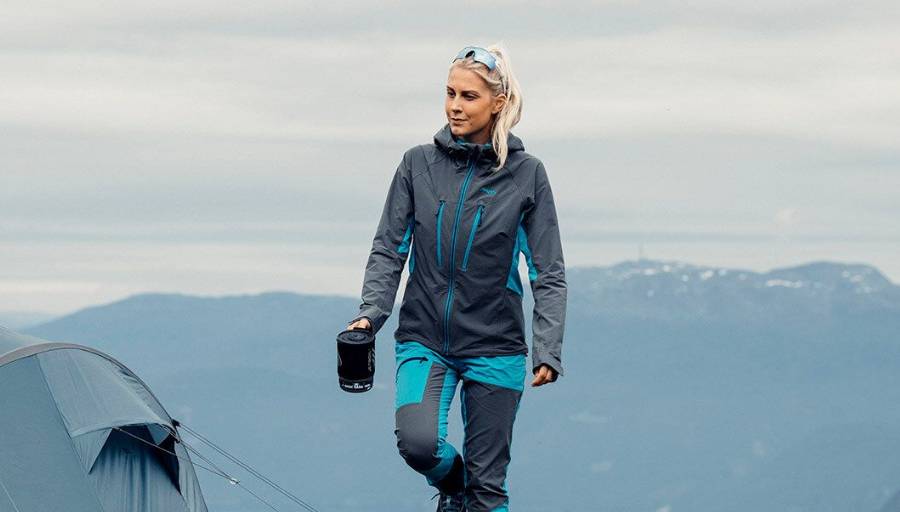
In recent years, the availability of hiking apparel integrating softshell technology has made it effortless for enthusiasts to find suitable clothing. Frequently recommended for outdoor activities, these jackets have even become synonymous with garments that seamlessly blend water-repellent, windproof, and breathable features.
Softshell jackets are popular for hiking, trekking, and other outdoor activities because they balance breathability, stretch, wind resistance, and everyday comfort. However, not every softshell offers the same level of warmth or weather protection. Some prioritize lightweight movement, while others use fleece backing or a membrane for added insulation and wind resistance.
Understanding what a softshell jacket can—and cannot—do will help you decide when to wear one, how to layer it, and when a waterproof hardshell is the better option. However, when preparing for a hike, choosing appropriate clothing is only part of the process; it’s also worth considering whether a hiking GPS watch is necessary for your planned route.
What is A Softshell Jacket?
To understand everything about softshell jackets, we need to look at their etymology. The term “softshell” is derived from the combination of two words: “soft,” indicating a quality of being soft or light, and “shell,” connoting a protective outer layer.
This terminology encapsulates the dual concepts of protection through the outer layer and lightness conveyed by the adjective “soft.” The softshell jacket, therefore, represents more than just a garment; it forms a distinctive technological approach that seamlessly integrates lightweight design with protective features.
Composition of the Softshell Material
Softshell jackets are made from different fabric constructions, depending on their intended use. Many use tightly woven stretch fabrics with a durable water-repellent (DWR) finish, while others incorporate a wind-resistant or waterproof-breathable membrane, a fleece backing, or additional insulation.
Common components include:
- Outer fabric: Often treated with a DWR finish to help water bead and roll off the surface.
- Optional membrane: Some jackets use a membrane to improve wind resistance or provide waterproof protection.
- Inner backing: Depending on the model, the inside may be smooth, lightly brushed, or fleece-lined for added comfort and warmth.

Not every softshell contains all three components. Check the manufacturer’s fabric specifications to understand the protection and insulation a particular jacket offers.
For hiking, softshells often combine the comfort of a midlayer with the weather resistance of an outer layer, making them useful in cool, changeable conditions.
The Advantages of the Softshell Jacket
Thanks to its revolutionary design, the softshell jacket has several advantages for hikers of all experiences:
- The diversity of softshell clothing: in specialist stores, you will find different shapes and designs of jackets, pants, and even gloves that use softshell technology.
- The protective effect: a softshell jacket combines the effect of a windbreaker, a rain jacket, and a fleece. A softshell jacket has a significant 3-in-1 function.
- The versatility of use: in the context of hiking, a softshell jacket is extremely versatile. They are especially useful in winter, spring, and fall. Also, their triple protection allows you to use it in case of strong wind, light rain, or dry but cold weather.
- The lightness of wearing: softshell jackets offer a weight between 400g and 600g. Despite their protective triple layer, they are no heavier than a simple demi-season coat.
- The flexibility of the jacket: softshell jackets have the advantage of being practical for carrying out movements. It is designed using a stretch-type fabric and elastic. These jackets are then very popular with hikers but also joggers. Softshell technology is even used for physical outdoor trades such as construction because it offers good protection while remaining comfortable.

Some Disadvantages of the Softshell Jacket
Despite its numerous advantageous technical aspects, the softshell jacket, like all highly versatile materials, is not without its drawbacks.
- Softshell jackets are not waterproof: they are often water-repellent and hold up very well to short or low-intensity downpours, but generally offer less protection against prolonged heavy rain than a fully waterproof hardshell. If you need more dependable wet-weather protection, compare the best GORE-TEX jackets for hiking and other outdoor activities.
- They are sometimes devoid of hoods: some softshell jackets do not have a hood, which can be an inconvenience for hikes in uncertain weather.
- They have difficulty withstanding strong winds: although equipped with a windproof effect, the softshell jacket is not very protective against strong winds.
- They are heavy in a backpack: with an average weight of 500g, softshell jackets offer a lightweight feel when worn, but this advantage can turn into a drawback when packed in a hiking backpack.
To sum up the disadvantages of the softshell jacket, they are the counterpart of its advantages. Versatility of the material, with the combination of warmth, windproofness, and water-repellent effect, creates a weakness among all these aspects. The heat effect will be less if you are wearing a real fleece.
The windbreaker alone will be much more effective than the softshell. As for heavy rain, it is better not to wear a soft-shell jacket when you are under it! It is therefore to be avoided in extreme conditions but a real blessing for mid-season periods.
When planning a wet-weather camping trip, remember that tent waterproofing is another consideration; our guide to understanding tent waterproof ratings explains what those ratings mean for camping shelters.
Softshell vs. Hardshell Jackets: Key Differences
The table below compares their key characteristics such as fabric construction, weather protection, and intended use.
| Feature | Softshell jacket | Hardshell jacket |
| Breathability | Often very good | Varies by fabric and membrane |
| Stretch and mobility | Usually excellent | Depends on construction |
| Rain protection | Usually water-resistant | Typically designed for waterproof protection |
| Warmth | Varies; some have fleece lining | Often relies on layers underneath |
| Best use | Active hiking, cool weather, light precipitation | Heavy rain, wet mountain conditions, severe weather |
Neither jacket type is automatically best for every trip. Choose based on expected weather, activity intensity, and the protection your particular jacket provides.
Different Criteria for Choosing a Softshell Jacket
If you’re still hesitating about buying a softshell jacket, it’s because you’re not quite sure what criteria to base your judgment on. It has both advantages and disadvantages, and you don’t know if your sports practice lends itself well to wearing a softshell jacket.
Don’t panic! Let’s see the main criteria to check before making your choice:
- Your outdoor sports practice: as we have seen, the softshell jacket supports movement very well but not in extreme weather situations. For climbing, mountaineering, and snowboarding, choose your outerwear according to the conditions and activity. Snowboarders who need insulation and protection from snow prefer a purpose-built jacket.
- The duration of your hikes: it fits very poorly in a backpack and can quickly become cumbersome. This is why it can be perfect for a day hike but useless for multi-day hikes, such as the Long Trail.
- The climate: very versatile, the softshell jacket is therefore very practical in changing and temperate climates where the weather is variable but where the weather events are not extreme. It can then be your favorite clothes in the oceanic climate. Conversely, it is not well suited to mountain climates, which are more humid and windy, or to the Mediterranean climate.
- Protection: the variety of softshell jackets is virtually endless. Depending on the model, some are more water-repellent while others emphasize the fleece lining. Choose it according to your preferences. In wet, muddy, or snow-covered terrain, snake gaiters can also help keep debris and moisture out of your boots. Learn more in our guide to hiking gaiters and when you need them.
- Your budget: you will find softshell jackets for the whole family at affordable prices (around $40) as well as high-quality jackets that are much more expensive. It’s up to you to see according to your financial possibilities!
Some Reputable Softshell Jacket Manufacturers
Many hiking clothing manufacturers offer softshell technology. Here are some well-known brands to discover near you that offer models of good quality.
Columbia
Columbia has the advantage of presenting softshell jackets of several types: both very light and heavy, which can be worn on cool summer mornings, but also the warmest to wear in winter. They can be light without a hood, such as the Heather Canyon models. Or with greater protection as the Gate Racer softshell jacket. Note that for women, the models of softshell jackets are less numerous but of just as good quality!

The North Face
Combining both lightness and quality, the North Face also offers interesting soft-shell jackets for both women and men. For men, we find the very light Apex Bionic 2 jacket. However, there are more versatile jackets for women than for men, including the Arrowood Triclimate model.
Black Diamond
Black Diamond offers very interesting softshell jackets for the hiker, such as the Alpine Start model, which has the advantage of lightness! This jacket is one of the cheapest models on the market.
Arc’teryx
Few people know Arc’teryx. However, it is one of the leaders in clothing for outdoor sports and hiking. It is certainly the brand that offers the best quality, but this is necessarily reflected in the price of the jackets, which is slightly higher than other brands.
Discover the Gamma LT jacket, which is very light. Or the Gamma MX jackets, much more protective and even recommended for climbing! Also for women, Arc’teryx offers a wide variety of softshell clothing, ranging from simple sleeveless jackets to rainproof anoraks that are breathable. The prices are also very varied: from $150 to more than $300 for semi-professional quality.
What Our 2026 Softshell Jacket Testing Revealed
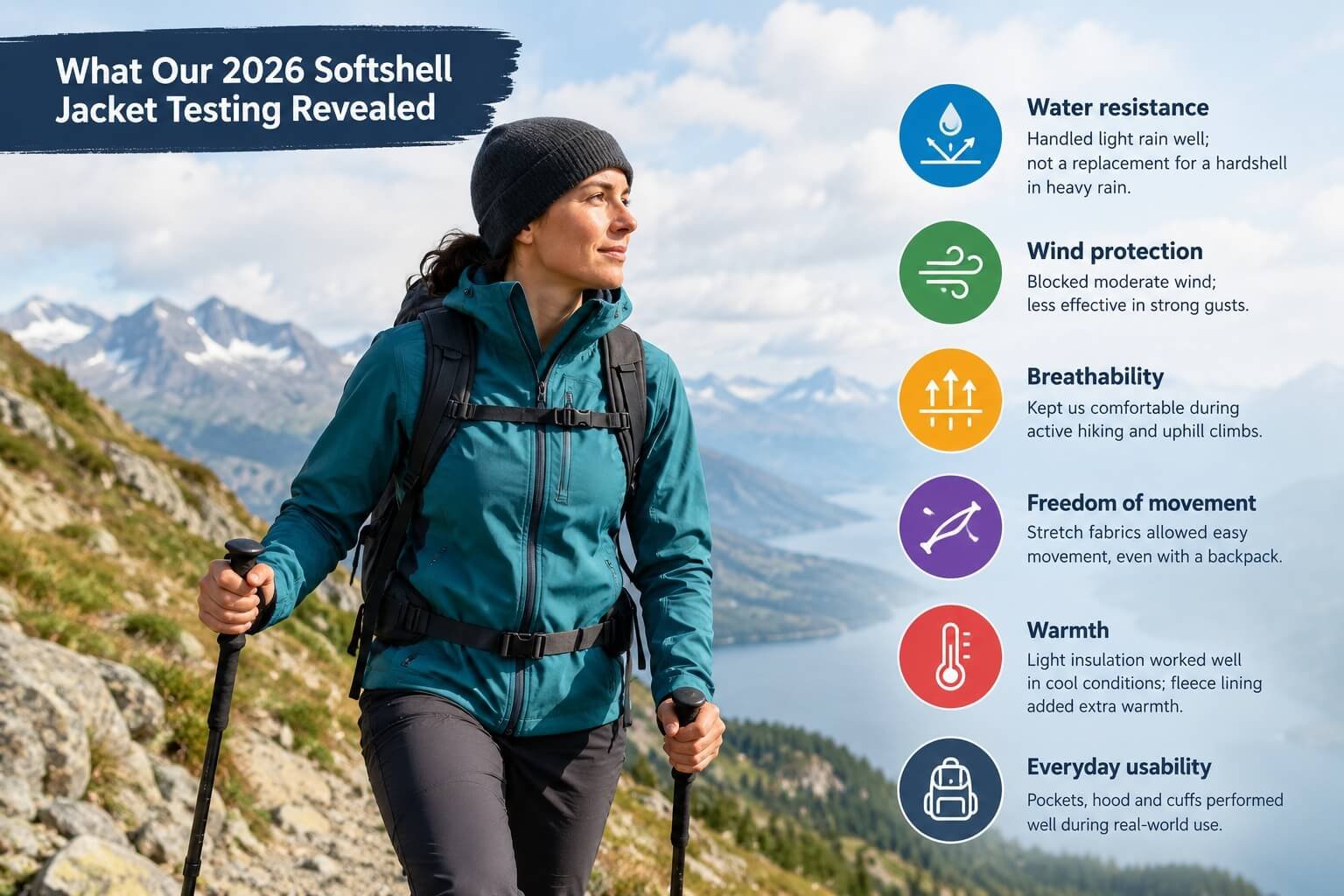
Our 2026 practical testing focused on how softshell jackets perform in real outdoor use, beyond their advertised features. We considered comfort during movement, breathability during activity, and the level of protection offered in changing weather conditions.
These practical considerations help put manufacturer specifications into context. A jacket may offer good stretch and ventilation for active hiking, while another may prioritize warmth or wind resistance. Performance also depends on the fabric construction and the conditions in which the jacket is used.
Our takeaway is to evaluate a softshell as a complete garment rather than judging it by a single feature. Its suitability depends on how well its construction, comfort, and weather protection match the intended activity.
FAQs About Softshell Jacket
How does a softshell jacket differ from a hardshell jacket?
While both softshell and hardshell jackets offer protection against extreme weather, the main difference lies in their construction and purpose. Softshells prioritize breathability, flexibility, and water resistance, making them ideal for aerobic activities. On the other hand, hardshell focus on complete waterproofing, often sacrificing breathability for total weather protection.
How does the weight of a softshell jacket impact its performance?
The weight of a softshell jacket can affect its versatility. Lighter softshells are often more breathable and suitable for high-intensity activities, while heavier ones may provide more insulation and be better suited for colder conditions. Consider the specific needs of your outdoor activity when choosing the weight of a softshell jacket.
Can I wear a softshell jacket for casual, everyday use?
Absolutely. Many softshell jackets are designed with a stylish and casual look, making them suitable for everyday wear. The versatility of softshells extends beyond outdoor activities. This allows them to seamlessly transition into urban or casual settings.
Can a softshell jacket be used as part of a layering system?
Yes, a softshell jacket works well as a mid-layer or outer layer depending on the weather. In cool, dry, or mildly windy conditions, it performs best as the outer layer. In colder or wetter weather, many hikers pair a softshell under a hardshell jacket for extra warmth and protection. Its stretch and breathability make it ideal for flexible layering during active outdoor use.
What jacket should I wear hiking when heavy rain is forecast?
When prolonged or heavy rain is expected, a waterproof hiking jacket is generally a better choice than a standard water-resistant softshell. Look for sealed seams, an adjustable hood, and ventilation features suited to your activity. In changeable weather, carrying a waterproof shell over your softshell can provide additional protection when conditions deteriorate.
Conclusion
The term softshell does not designate a particular garment but a 3-in-1 technology combining the effect of a fleece, a windbreaker, and water repellent. This ultimately results in warm, protective jackets or pants against light to moderate wind and light rain.
But be careful, because these advantages and this versatility also lead to making these softshell clothes very unsuitable for difficult or extreme conditions. Although perfect for changeable, windy and rainy weather, these jackets do not support driving rain, snow, or even strong winds. Although very impractical for hikes lasting several days, the softshell is nevertheless ideal for family day hikes in an oceanic climate.