13 Hiking with Kids Tips for Fun, Safe Family Adventures

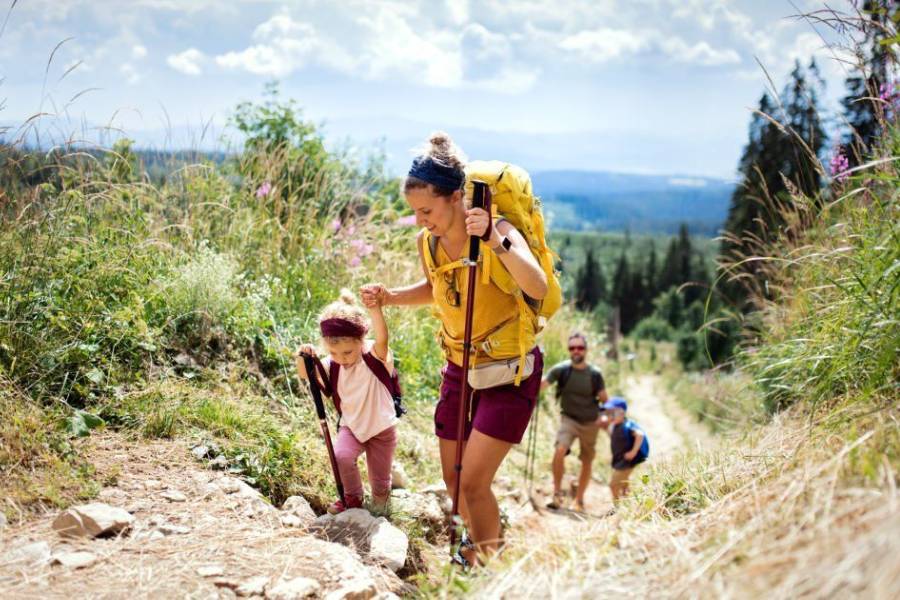
When you say, “Go on the trail, we’re going for a hike!” your kids suddenly turn into expert negotiators, coming up with a thousand and one excuses to avoid it. Hiking isn’t exactly their favorite activity, and we’ve all heard at least once that it’s “useless.” But don’t worry! With the right tips for hiking with kids, you can turn this challenge into an adventure that everyone enjoys.
If your kids aren’t interested in going for a walk or hike, that’s often the root of the problem. You’d like them to enjoy hiking as much as you do, so the big question is: How can you encourage them to join you for a nature walk?
We are going to give you some tips for hiking with kids so that the hike is no longer a burden for them. Open your eyes, this article could revolutionize your weekends and save you a lot of inconveniences when it comes to going for a walk with your family.
When hiking with children, we’ve found that shorter routes, frequent breaks, simple goals, and letting kids participate in navigation can make a much bigger difference than simply choosing an easier trail.
13 Expert Tips for Hiking with Kids for Enjoyable Adventures
Of course, there’s no one-size-fits-all solution, especially considering the unique nature of each child. However, here are some tips and tricks to help you have successful and enjoyable hikes with your children, fostering a love for the experience!
1. Consider the Age of Your Kids
For a successful hike, it is imperative to take into account the age of the kids. Children have different abilities and energy levels, so it’s important to adapt the hike to their age, experience, and comfort level.
Up to 3 years:
Even if a kid knows how to walk, he is not able to take a long walk. If you’re planning your first outings with a toddler, our expert guide to hiking with toddlers offers additional tips for making short family adventures safer and more enjoyable. But that does not prevent you from going on hikes, thanks to the essential baby carrier.
When our kids were small, we used a classic back carrier with protection against the sun. It is a very nice little extra that does not prevent us from putting a hat on the child. The cuddly toy has always been part of the hikes, attached to the baby carrier to avoid losing it or constantly picking it up…
Today there are many models, as well as other carrying solutions. Whatever system is chosen, do not hesitate to invest in quality equipment. Choose a quality carrier that keeps your child comfortable and well supported while also providing a comfortable fit for the person carrying them.
To be used until the age of about 3 years, the baby carrier is for me a really very precious ally for all parents of young children!
From 4 to 7 years old:
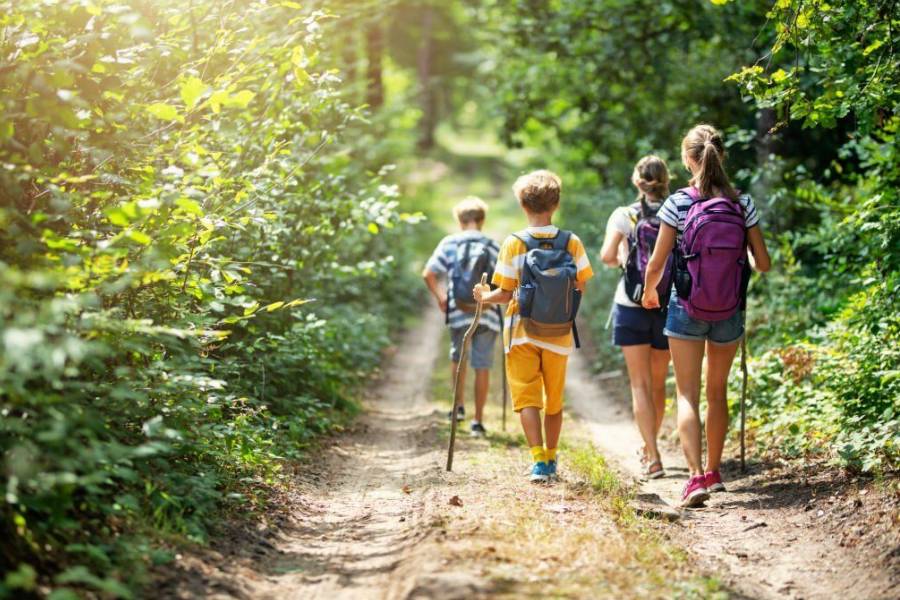
From around age 4, many children can begin with short hikes, but their comfortable pace and endurance can vary considerably. Start with shorter distances and adjust the hike based on your child’s energy and experience. It’s advisable not to exceed 4 hours of walking to ensure a comfortable and enjoyable experience for the child.
From 8 years old:
From this age, you can lengthen the steps and consider a hike of 10 to 15 kilometers. This estimate is especially valid for the plain. Because in the mountains, more than the distance, it is above all necessary to take into account the total duration of the walk, its difficulty, and the difference in altitude.
2. Choose a Rather Easy Route
Do your kids have bad memories of the hike? There’s no need to make things harder with a long or difficult route. Start with a shorter walk and gradually increase the distance as your children become more comfortable. Prepare your route in advance and check the elevation, difficulty, weather, and trail conditions so you aren’t surprised by conditions on the trail.
The National Park Service’s hiking safety guidance also recommends planning ahead and being prepared for changing trail conditions.
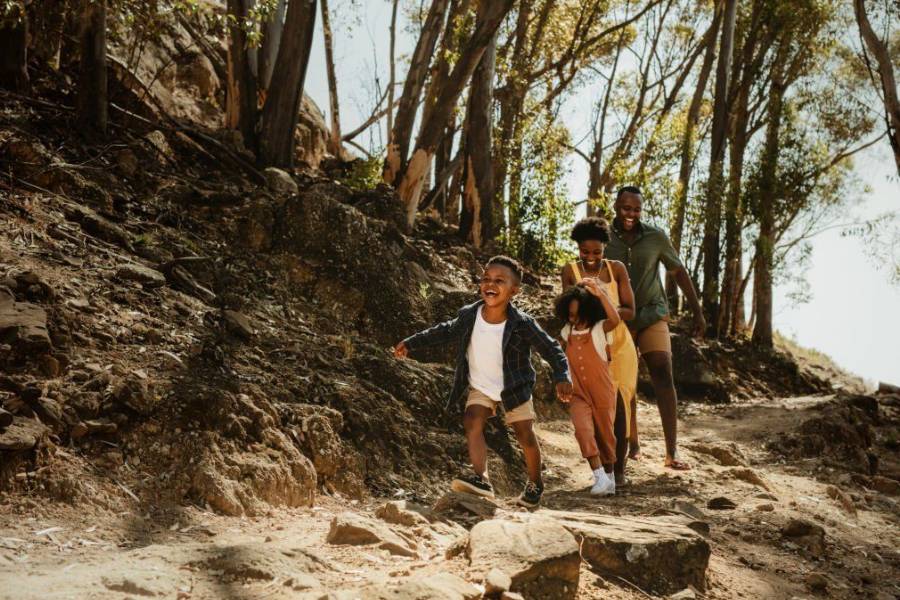
Don’t forget the caps and sunscreen! Believe us, they won’t be able to resist a nice walk under the sun for long!
3. Choose the Ideal Time for the Hike
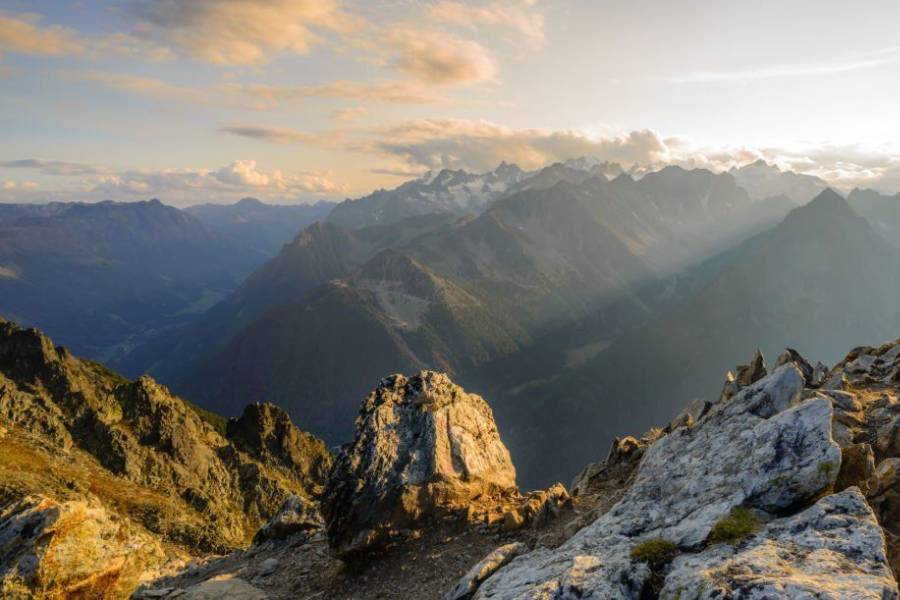
To keep everyone motivated and maintain a positive atmosphere, avoid hiking during the hottest part of a summer day or in severe cold and poor weather. Check the forecast before leaving and be prepared to change your plans if conditions become unsafe.
The National Weather Service’s heat safety guidance provides useful information for recognizing and reducing heat-related risks during outdoor activities.
4. Gradually Build Up to Longer Hikes
Introduce young legs to long-distance hiking with first an extended walk (up to 2 hours) in a natural setting near you. Then move on to a half-day trail hike. If you’re preparing your family for a longer outing, see full guide on how to prepare for a long hike, which covers training, packing, and trail preparation in more detail.
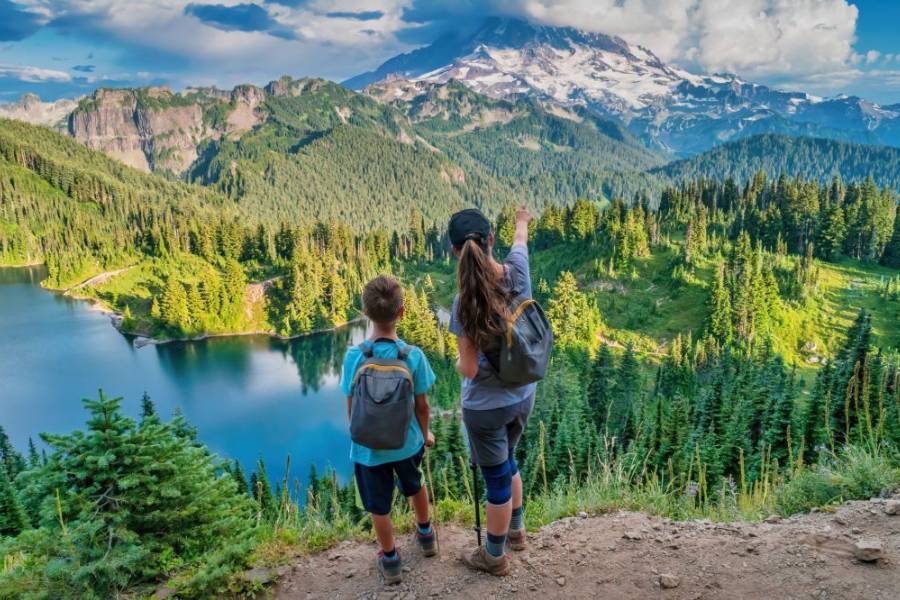
To motivate them, offer them their own backpack (be careful that it remains light). On subsequent rides, let them carry a little more weight.
5. Choose Playful and Fun Places
Kids are naturally curious, so why not use that curiosity to make hiking more exciting? Show them that hiking isn’t just about walking. It’s also about having fun and discovering. Encourage them to think of hiking as an adventure or game. So, choose routes where they can discover things that interest them and where the adventure is exciting.

Children are often fascinated by castles, waterways, and gazebos. By weaving in the historical significance of the paths, you’re sure to capture their attention. They’ll likely embark on the journey armed with imaginary swords, ready to conquer nature!
Our Tips: use the landscape to launch games such as jumping on rocks or racing up a tree, favoring places where they can find beacons themselves, they love that the initiative comes from them!
6. Make Snacks Part of the Adventure
Ah the snack! How could we do without it? A snack helps satisfy hunger and gives kids a welcome energy boost during the hike. But above all, he has the superpower to motivate your kids. It will then be your best ally to go hiking with them.
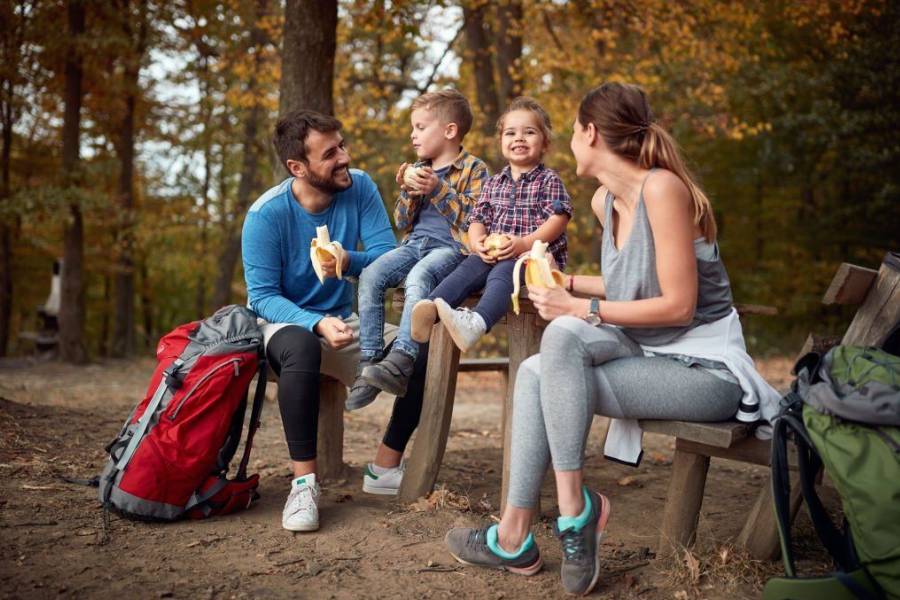
Are we going to have a snack in the forest?!” is infallible. You can prepare a snack with the help of your kids before going on a walk. Or, find a route on which you can find a small cafe where a glacier will border your route. In addition, we know that kids are not the only ones who love ice cream… What happiness!
7. Provide Them with the Hiker’s Outfit
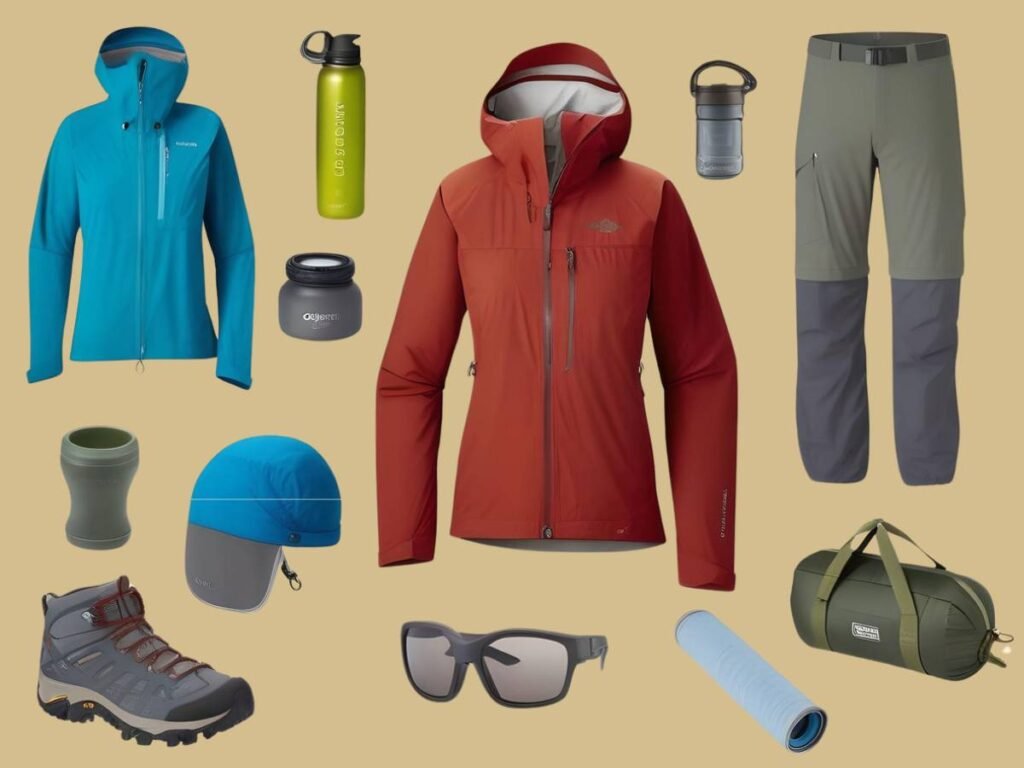
Children love to play roles, and getting into the character of the perfect hiker is sure to please them! Sticks, good hiking shoes, a map, a small backpack, a camera, and a great picnic will do.
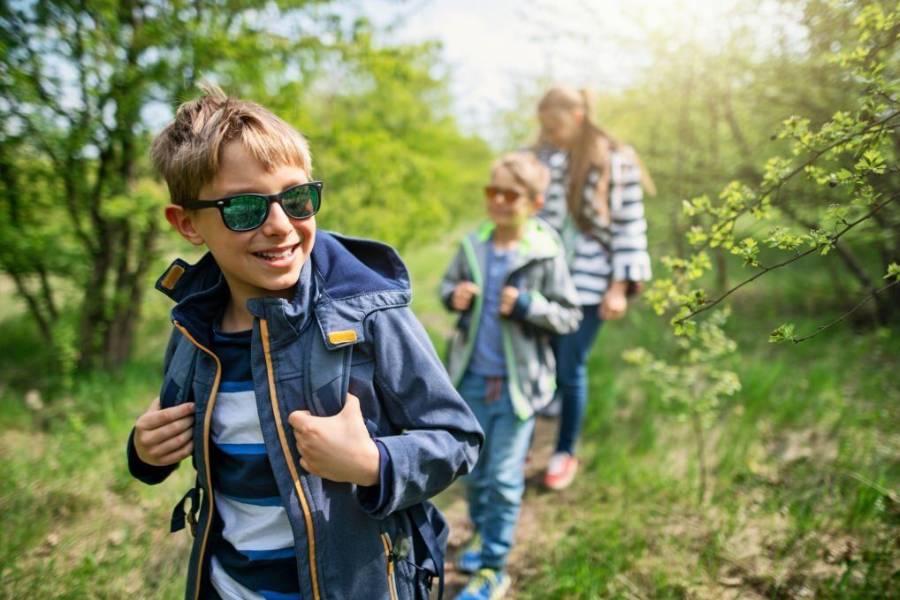
For babies and toddlers, remember to pack extra diapers and clothing. A technical, breathable first layer that dries quickly so you don’t get cold after sweating, a sweater, and a more or less warm windbreaker (down jacket) if you’re going to altitude! A cap, or neckerchief.
8. Involve Them in the Preparations
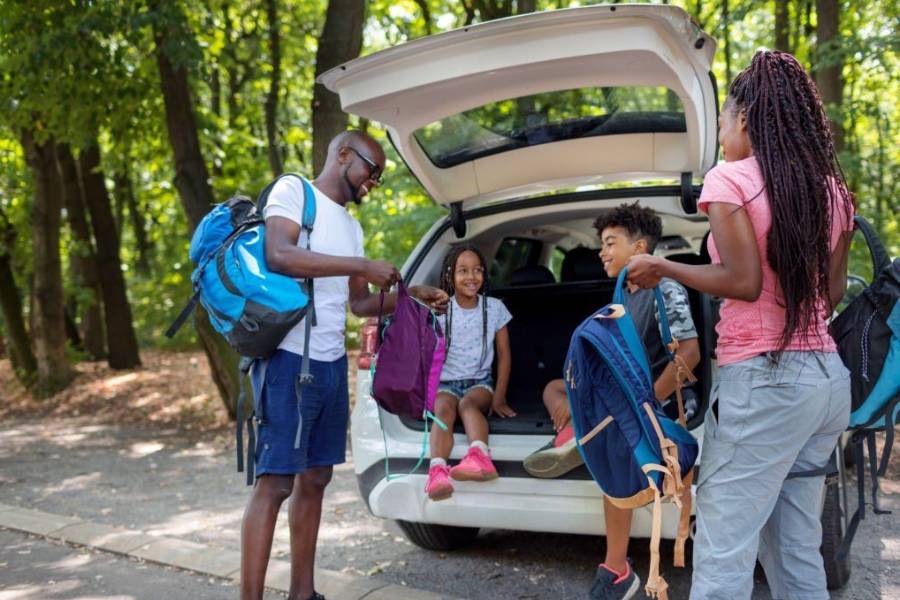
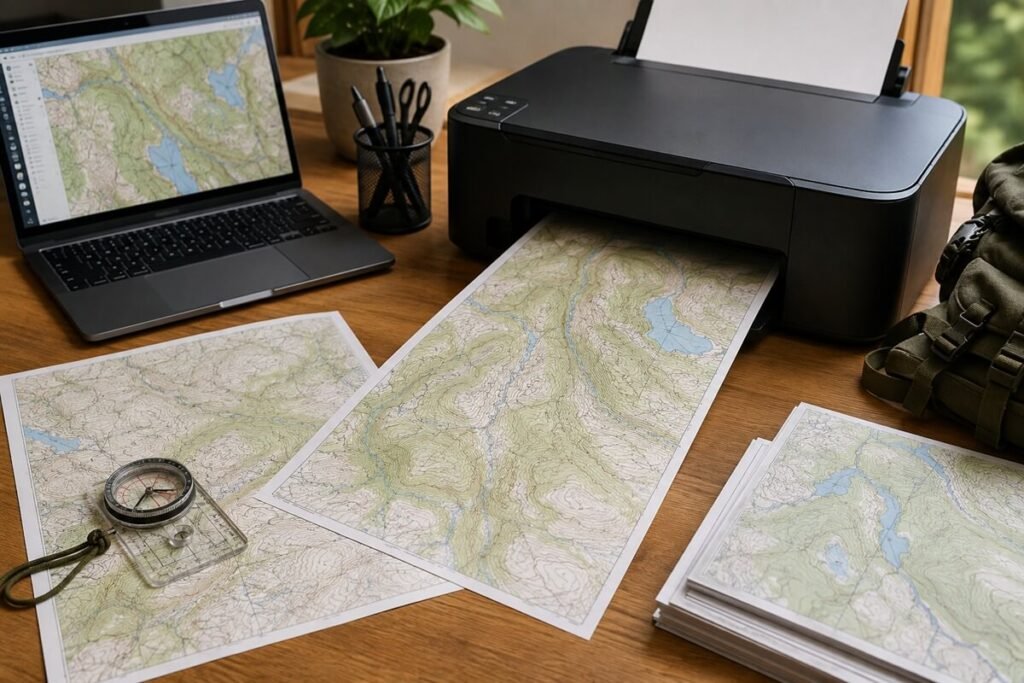
Do not hesitate to involve them in the preparations for the hike: find together the route you are going to follow, have them follow the markers, and above all show them the map of the route so that they learn to find their way around! This game will stimulate them, and you will have good surprises!
9. Encourage Them in the Effort by Setting Goals with a Reward
A challenging hill or rocky section can feel much easier when you encourage your child and break the goal into smaller steps.
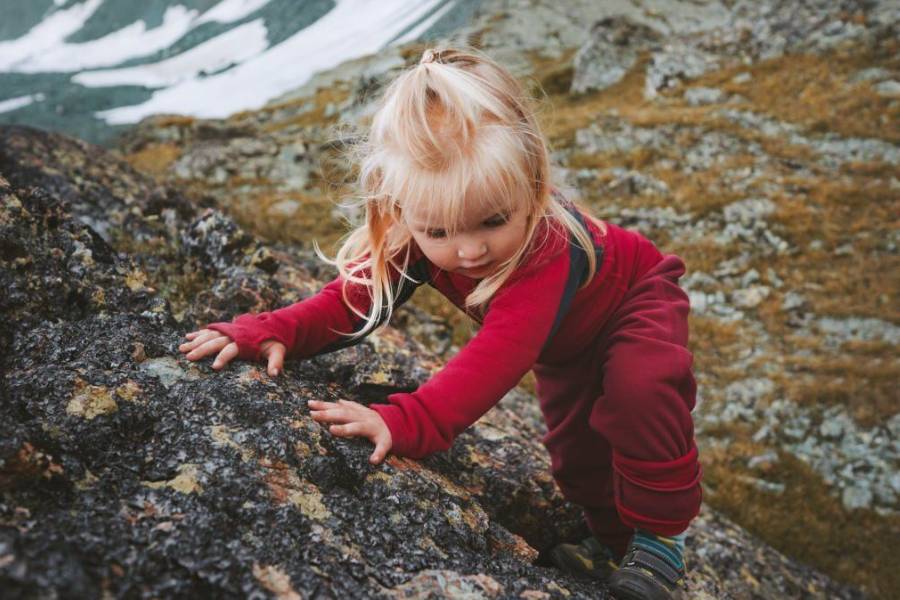
Little Tip: plan a picnic at the top, or explain to them that from above we will have a beautiful panorama, a lake, a valley, a historical site, and marmots. Everything is good to take! And above all, tell them how proud you will be of them when they have done it, and so are they!
Equip the kids with appropriately sized and shaped backpacks, allowing them to carry a few lightweight essentials like a water bottle, snack, and perhaps a sleeping bag or rain jacket. Adults should carry the heavier or essential equipment, so children don’t become unnecessarily tired, ensuring that the younger ones don’t become fatigued or discouraged along the way.
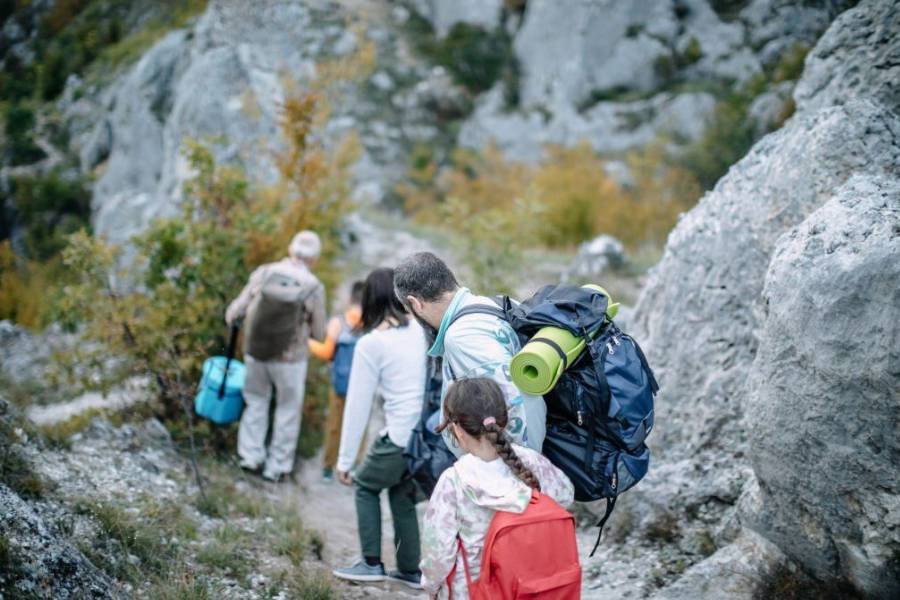
Share The Tasks: involve your child in setting up the shelter, and preparing the campfire (they are often very good at finding branches bigger than them!). Children seem to grasp the concept of taking care of nature more intuitively than adults, so it is usually very natural for them to clean up any traces of their passage.
11. Motivate Your Child While Hiking
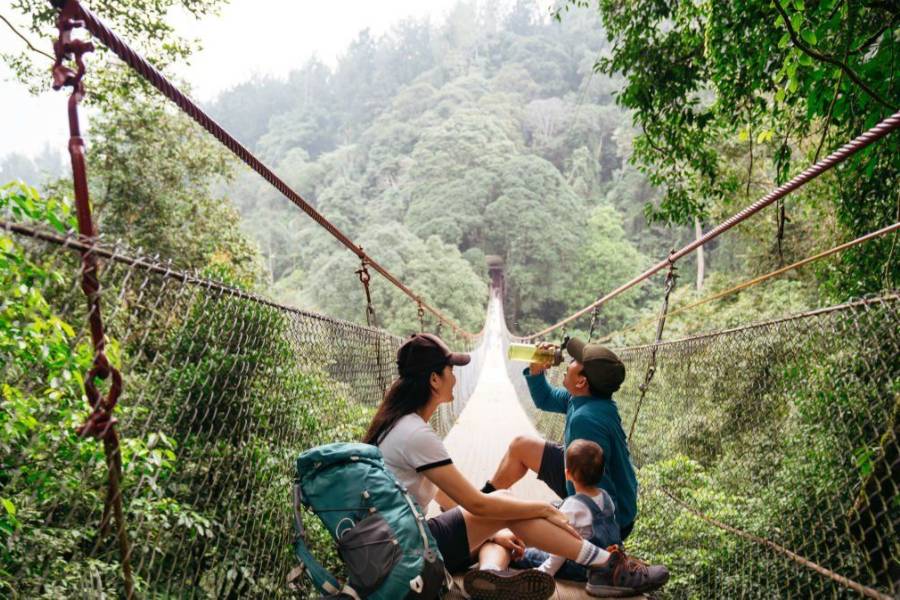
To motivate your child as much as possible and make the ride a pleasant one, here are some simple tips:
- Establish intermediate objectives before reaching the final destination, such as reaching a specific hill or exploring what’s beyond it.
- Engage your child by telling stories or providing commentary on interesting sights along the way.
- Brush up on a repertoire of songs and rhymes to keep spirits high and add a playful element to the journey.
12. Download Fun Apps
Do your children ask you questions about a pretty flower, a strange plant, or a century-old tree? We have the solution for you: an application that will allow you to identify everything that grows in nature!
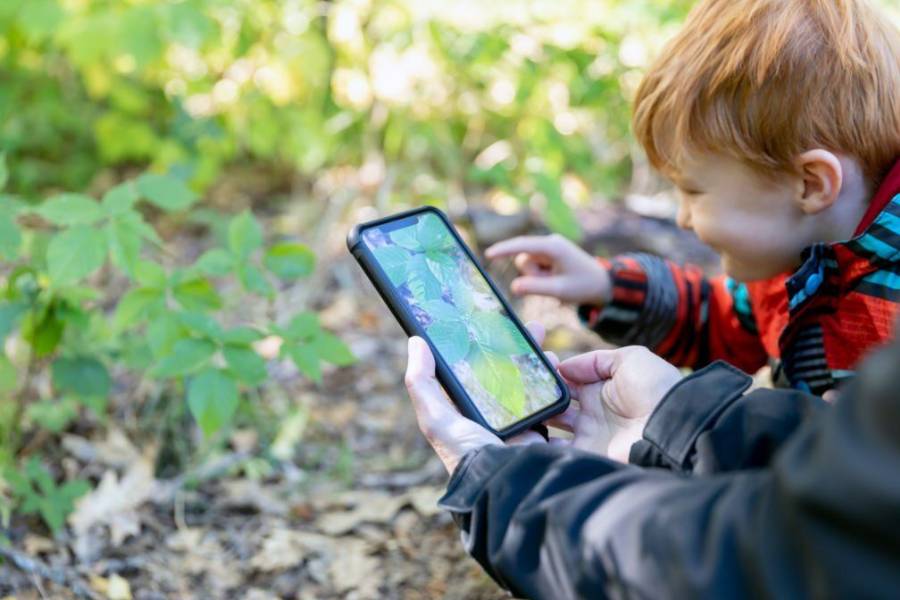
To your delight, your kids will go on a plant hunt armed with your smartphone. They will be happy to discover nature and will not see the hike pass, and you will be in heaven!
13. Take Photos
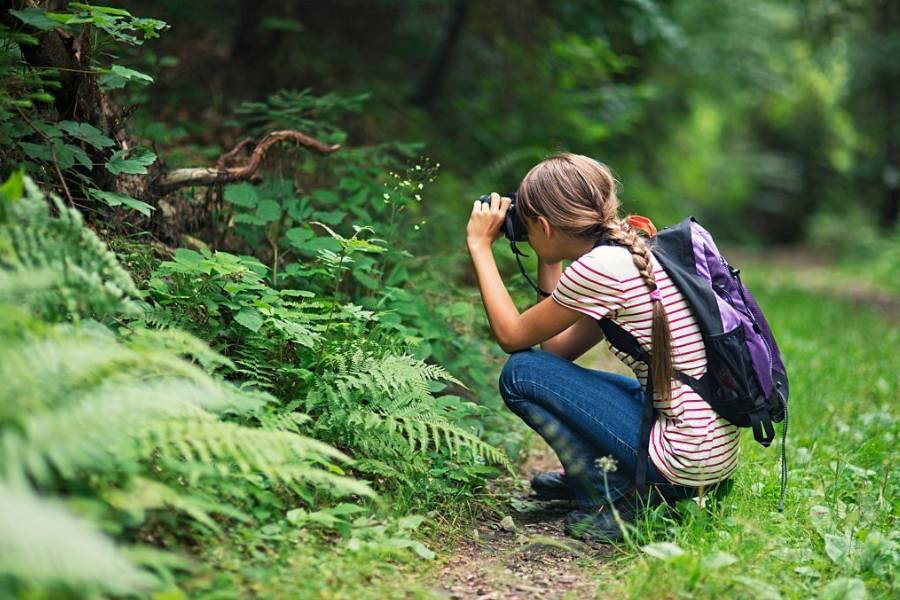
Kids often love looking back at their adventures. Taking photos gives them a fun way to remember the places they explored and the experiences they shared with the family. So why not do it? During the hike, let them do it, they will love collecting their own memories and immortalizing what will mark them during the walk.
Safety Tips for Hiking With Kids
Before heading out, check the weather forecast and trail conditions, choose a route that matches your child’s age and experience, and pack enough water, food, appropriate clothing, and basic first-aid supplies. Keep children within sight and establish simple trail-safety rules before starting. The American Hiking Society’s hiking safety guidance also recommends preparing appropriately for the trail and understanding potential hazards before setting out.
What to Pack for Hiking With Kids
- Water bottle or hydration system
- Kid-friendly snacks
- Weather-appropriate layers
- Sun hat and sunscreen
- Rain jacket
- Comfortable hiking shoes
- Small first-aid kit
- Map/GPS or navigation device
- Child carrier for younger children
- Emergency communication device or charged phone
- Small comfort item for younger children
Frequently Asked Questions About Hiking with Kids
What should kids do if they need to use the bathroom on a hike?
Before starting, use the restroom at the trailhead or another designated facility when available. On longer hikes, research whether restrooms exist along the route. If there are no facilities, parents should know the local rules for disposing of human waste and choose an appropriate location away from trails, campsites, and water sources.
How do you prevent kids from getting lost while hiking?
Teach children to stay within sight and establish a simple rule such as stopping immediately if they cannot see a parent. Bright clothing can improve visibility, while older children can learn basic trail-marking and navigation skills. For larger or unfamiliar trails, consider carrying a map, GPS device, or charged phone rather than relying solely on a child’s ability to follow the route.
Should kids wear hiking boots or regular shoes on a trail?
The best footwear depends on the terrain and weather. Comfortable athletic shoes are sufficient for short, well-maintained trails, on the other hand, hiking shoes or boots can provide better protection and traction on rocky, muddy, steep, or uneven terrain. The most important factors are a secure fit, comfortable socks, and footwear that the child has already worn before the hike.
How can you keep kids from getting bored on a familiar hiking trail?
Change the purpose of the hike rather than always changing the trail. Give children a different challenge each time, such as identifying animal tracks, spotting different types of trees, counting birds, drawing something they see, or looking for changes in the landscape. This can make a familiar route feel like a new adventure without requiring a longer or more difficult hike.
What should parents do if a child gets a blister while hiking?
Stop and inspect the affected area as soon as the child reports pain or rubbing. Clean and protect the area with appropriate blister or wound-care supplies, then reassess whether the child can comfortably continue. Continuing to walk on a painful blister can make the injury worse, so parents should be prepared to shorten or end the hike when necessary.
How can parents make hiking easier for a child with different energy levels from their siblings?
Plan the outing around the child who is likely to need the most support rather than expecting every child to maintain the same pace. Use flexible stopping points and allow children to move at their own comfortable speed. On family hikes with a wide range of abilities, choosing a route with natural turnaround points can also make it easier to shorten the outing without abandoning the entire plan.
Conclusion
Helping children build a connection with the outdoors through hiking can create positive family experiences, encourage curiosity, and help them become more comfortable spending time in nature. Nature provides an enriching environment that stimulates curiosity, fosters a sense of adventure, and creates lasting family memories. With these tips, we hope your family hiking experiences will be filled with joy, learning, and a deep appreciation for the wonders of the natural world.
So, lace up those hiking boots, pack your essentials, and start on a journey of exploration and bonding with your children.