10 Best 1-Person Tents of 2026 for Backpacking & Camping

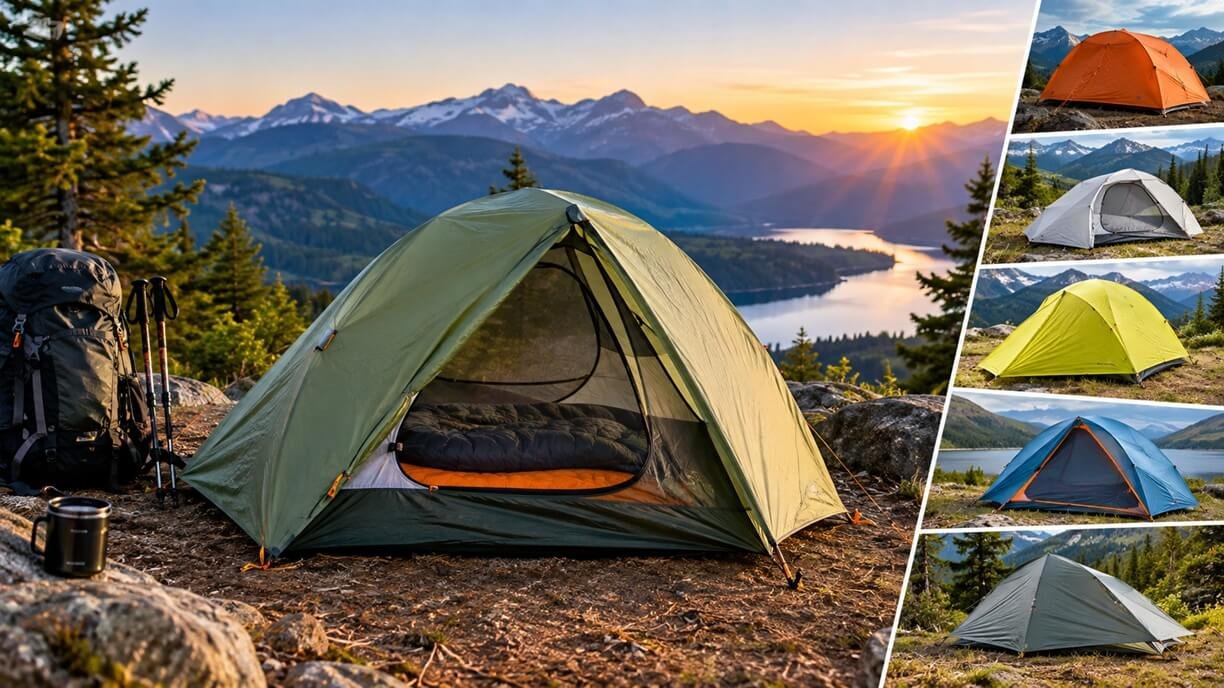
Finding the right 1-person tent is about more than choosing the lightest shelter you can find. For solo backpacking and camping, you need a tent that balances weight, packed size, interior space, weather protection, ventilation, and ease of setup. A tent that works well for a summer backpacking trip may not be the best choice for cold-weather camping or frequent rainy conditions.
In this guide, we’ve compared 10 of the best 1-person tents for 2026, including lightweight backpacking tents, freestanding models, easy-setup designs, and options suited to different weather conditions. We look at the features that matter most when choosing a solo shelter, including weight, season rating, waterproofing, ventilation, livability, and setup.
Whether you’re looking for a lightweight 1-person tent for backpacking, a dependable shelter for camping, or a compact tent that is easy to carry and pitch, the recommendations below will help you narrow down your options and choose a model that fits the way you camp.
Quick Comparison: Best 1-Person Tents of 2026
Not sure which solo tent fits your trip? Use this comparison to quickly narrow down the options based on camping style, tent design, and the features that matter most for backpacking.
| Product | Weight | Season | Waterproof Rating | Best For |
|---|---|---|---|---|
| TETON Sports Ultralight | 4.6 lbs | All Weather | 3000mm | Solo Backpacking |
| MIS MOUNTAIN INN SPORTS | 3.96 lbs | 4-Season | 4000mm | 1-Man Dome Camping |
| Featherstone UL Obsidian | 3.75 lbs | 3-Season | 5000mm | 3-Season Backpacking |
| FLYTOP Solo Backpacking | 5.9 lbs | 4-Season | Waterproof | Easy Setup |
| MIER Lanshan Ultralight | 2.2 lbs | 3-Season | 5000mm | Ultralight Backpacking |
| Bessport Freestanding Tent | 4.4 lbs | 3-Season | Water Resistant | Freestanding Solo Camping |
| KAZOO Backpacking Tent | 3.3 lbs | 3-Season | 3000mm | Budget Backpacking |
| ALPS Mountaineering Lynx | 4 lbs 1 oz | 3-Season | Waterproof | Ventilation |
| Clostnature ZP-001 | 3.7 lbs | 4-Season | 5000mm | Compact Backpacking |
| Camppal Solo Backpacking Tent | 2.71 lbs | 4-Season | 3500mm | Value & Lightweight Camping |
Quick tip: If you’re carrying your tent for miles, prioritize packed weight and size. For frequent rain or changing weather, pay closer attention to the rainfly, floor construction, ventilation, and overall weather protection. If easy setup is your priority, a freestanding design is usually simpler to manage than a trekking-pole shelter.
Top 10 1-Person Tents of 2026 – Ranking
- TETON Sports Instant Tent – Best Overall
- MIS MOUNTAIN INN SPORTS – Best 1-Man Dome Tent
- Featherstone Ul Obsidian – Best 3-Season 1P Tent
- FLYTOP Orange-Single – Easy to Set Up
- MIER Lanshan Ultralight – Versatile Design
- Bessport Camping Tent – Best Free-standing Solo Tent
- KAZOO Eco-Friendly – Best 1-man Tent for Backpacking
- ALPS Mountaineering Lynx – Great Ventilation
- Clostnature ZP-001 – Compact & Lightweight
- Camppal 1-Person Tent – Good Value
1. TETON Sports Mountain Ultra 1-Person Tent
Specs:
- Capacity: 1 Person
- Seasons: 3 Season
- Design: Backpacking Tent
- Setup: Freestanding
Check on Amazon
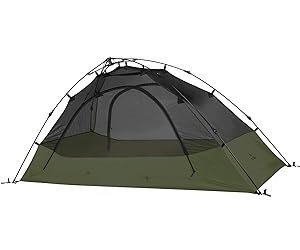
The TETON Sports Mountain Ultra 1-Person Tent is designed for solo backpackers who want a compact shelter without giving up the convenience of a freestanding setup. Its 1-person design makes it suitable for hiking, backpacking, and other trips where keeping your shelter compact is important.
The tent uses a double-wall design to provide separation between the sleeping area and the outer shelter. This helps improve protection from rain and wind while also allowing airflow around the interior. The design is particularly useful for solo campers who want a balance between weather protection and ventilation.
Another advantage is the freestanding construction, which makes setup more straightforward than tents that depend entirely on trekking poles or specific stake placement. This can be useful when camping on ground where getting perfect stake placement is difficult.
For solo backpackers, the Mountain Ultra is worth considering when you want a dedicated 1-person shelter from an established outdoor gear brand. Before purchasing, check the current manufacturer’s specifications and the available model configuration because product details and included components can change.
Pros
- Designed specifically for solo backpacking
- Freestanding tent design
- Double-wall construction
- Good balance of protection and ventilation
- Compact option for solo trips
Cons
- Less interior space
- Not intended for winter mountaineering
2. MIS MOUNTAIN INN SPORTS Dome Tent
Specs:
- Pack Size: 80.7” x 39.4” x 39.4”
- Seasons: 4 Season
- Weight: 3.96 lbs.
- Waterproof: Yes
Check on Amazon
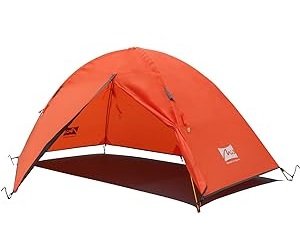
The MOUNTAIN INN SPORTS is a top choice for a lightweight and durable one-person backpacking tent. It features both an inner and outer tent, offering versatility. The inner tent, made of breathable mesh, can be used on its own, while the outer tent is constructed from 100% polyester with a PU coating for added durability. The T6 aluminum 700 poles are lightweight yet sturdy. This model also includes pegs and guy ropes for secure setup.
This tent boasts a water column rating of 4000mm. The floor’s made from double-layer polyester, offering exceptional abrasion resistance and a waterproof coating with a 10,000mm water column. Assembly and dismantling are quick and straightforward, with clear and easy-to-follow instructions included.
The inner tent’s made with Mosquito Mesh 40D, a fine and lightweight mosquito net for added comfort. Weighing just 4 pounds, the MOUNTAIN INN SPORTS tent is perfect for solo camping and hiking adventures. Its compact pack size ensures easy transportation.
If the weather allows, we recommend leaving the outer tent behind. The inner tent will still protect you from mosquitoes while you relax and enjoy the outdoors. Keep in mind that there is only one entrance available.
Pros
- Stable connection
- Practical design
- Multi-function footprint
- Lightweight and portable
- Convenient and quick installation
- Large rainfly to store items outside the doors
Cons
- It’s a bit short to fit a standard-sized sleeping cot inside
- Zipper sometimes sticks
3. Featherstone Ul Obsidian Tent
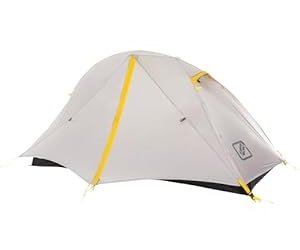
The Ul Obsidian one-person backpacking tent from Featherstone is an ideal solution for solo tours. It is a high-quality 3-season tent; very stable in windy situations. The inside and outside are both white. It is designed to maximize comfort and living space for solo backpackers.
The vestibule offers a significant amount of space for storing camping gear like your snowboard, backpack, or hiking boots. Featherstone Ul Obsidian tent also consists of an outer and an inner tent. It can be used individually without a roof, which we recommend on clear nights.
The inner tent is crafted from 20-denier Sil-nylon with a 5000mm polyurethane hydrostatic-rated coating, making it both water-repellent and breathable. Nylon No-see-um Mesh floor is PU-coated for added durability. This hiking tent is also well-equipped to protect against snow deposits.
It’s formed with a single aluminum pole structure, which makes the tent easy to set up and pack into one’s backpack. With this model, you are not dependent on the surrounding soil conditions.
Pros
- Breathable and lightweight
- Very stable in the wind
- Relatively spacious
- Weather protected
- Affordable
- Lifetime warranty
Cons
- Vestibules are not very large
- Storage bag is maddeningly small
4. FLYTOP Solo Backpacking Tent
Specs:
- Pack Size: 83″ x 45.28″ x 82.6″
- Seasons: 4 Season
- Weight: 5.9 lbs.
- Waterproof: Yes
Check on Amazon
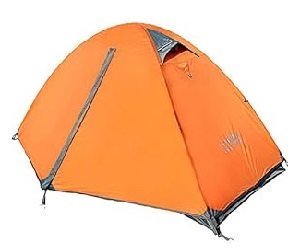
With the FLYTOP Double Layer backpacking tent, you will be always safe in hiking, climbing, and camping in spring, summer, fall, and winter. It is very stable because it is anti-wind, anti-rainstorm, anti-snow and anti-sediment. This model is available in six different colors.
FLYTOP hiking tent is one of the very solid and durable single-person 4-season tents on the market. As you would expect for a 1-person tent, it is light and compact. At 5.9 lbs, it is not a heavy tent, so you can transport it easily.
The outer and inner tents are made from lightweight 210T polyester fabric, which is PU-coated for enhanced protection against UV radiation. The taped seams ensure water resistance, and they have been sewn twice for additional durability.
This tent is easy to set up and take down for newcomer campers. You are also well protected against flies and mosquitoes. It has two doors for superior airflow. There are a lot of storage pockets inside to store smaller items. You can store cell phones or keys that can be stowed away.
The order includes everything you need to set up and carry. However, additional pegs are necessary in the case of continuous rain to ensure keeping dry. Because the included pegs are not enough to fix the tent on the hardest terrains.
Pros
- Excellent 4-season tent for the price
- Weatherproof
- Easy setup and takedown
- Portable but stable
- Simple structure
- Two doors are nice for summer camping
Cons
- Very low durability
- Stakes are poor quality
5. MIER Lanshan Ultralight Tent
Specs:
- Pack Size: 86.6″ x 49.2″ x 43.2″
- Seasons: 3 Season
- Weight: 2.2 lbs.
- Waterproof: Yes
Check on Amazon
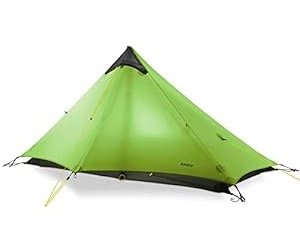
MIER is a super-light mountaineering tent for weight-conscious backpackers, peak-baggers, and bike tourers from fall to spring. It is a good 1-man tent that can be used for two people. The space of 220 x 125 x 110 cm is slightly enlarged by appropriate webbings.
This tent is green and is therefore hardly noticeable in green surroundings. The assembly is very easy and quick, thanks to the fix-up system. Laborious and tiring installation is no longer necessary here. With included guy ropes and pegs, you can secure the tent precisely.
The water column of the tent is 5000 mm. When set up, it protects against rain. This tent also provides excellent protection against the wind. In addition, MIER Lanshan’s one-man tent has a double-walled construction so that you can avoid the formation of condensation.
As with some tents in our recommendations, you can set up the inner tent separately. This comprises a mosquito net and therefore protects against mosquitoes and flies. The ventilation is better in this case. We recommend this model, especially if you need a lot of space. However, if it rains, the inner tent can get wet when getting in and out.
Pros
- Ultralight and portable
- Factory-sealed seams
- Good ventilation
- Easy to set up
- Well designed
- Versatile choice for outdoor enthusiasts
Cons
- It is not easy to pitch in tight space
- A bit hard to store
6. Bessport Freestanding Camp Tent
Specs:
- Pack Size: 87.8″ x 42.1″ x 33.5″
- Seasons: 3 Season
- Weight: 4.4 lbs.
- Waterproof: Yes
Check on Amazon
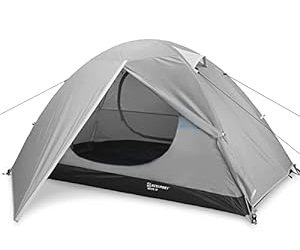
Here, we would like to introduce the Bessport, which is one of the best fast-pitch one-man tents on the market. This model is relatively inexpensive and available in 3 colors – light gray, orange, and green. It is specious for solo camping. So, if you want more space and comfort, then choose one of these variants.
Bessport camping tent features both an inner and outer tent. The inner tent doubles as a mosquito net, thanks to mesh inserts that promote good ventilation. Ripstop panels are positioned low to provide privacy and protection from the wind.
It’s crafted from 68D polyester fabric with a welded floor, making it water-resistant. Seams are thermally sealed for added protection. The frame’s made from durable 7001 aluminum, ensuring stability. For extra security in strong winds, use the included wind ropes.
There are two entrances and two ventilation openings that provide additional air circulation. The installation process is also very easy and can be done in a few minutes. There is no heavy work involved here. And what stands out positively is that the tent fits well into the supplied cover even after it has been dismantled. This is not always the case with some tents, and it can be quite tedious to stow the tent properly again.
Pros
- Easy to set up
- Freestanding design
- Built-in water/wind block technology
- Excellent ventilation system
- Durable and breathable
- Very roomy for solo backpacking
Cons
- Relatively thin bottom
- Ill-fitting rain fly
7. KAZOO Eco-Friendly Backpacking Tent
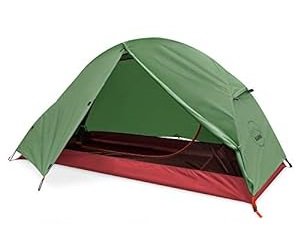
After setting it up in the yard for inspection, I confidently say that this could be a good for solo campers. With the KAZOO eco-friendly tent, we would like to introduce you to a tent that can be assigned to a lower price level. This model is available in two colors.
It is a double-walled tent, featuring two layers for extra protection against cold and wind. The outer tent surrounding the inner tent helps reduce condensation inside. Also, you can fully close the door for extra comfort and protection.
The liner is made from B3 mesh and 190T breathable polyester, which is PU-coated for durability. With a water column rating of 3000mm, this tent is waterproof. The full-coverage rainfly is crafted from 210T Ripstop fabric, and all joints are coated with waterproof material to prevent leaks.
It’s portable, and the packed-down dimensions make it comfortable to carry on your backpack. The total weight is approx. 3.3 pounds, well suited for long transport. If you are forced to use a cheap tent, you can use this model. However, the bottom wall is relatively low; heavy rain could be a problem.
Pros
- Durable and Breathable
- Easy to assemble
- Freestanding design
- One integrated aluminum pole
- Two vents designed to offer better ventilation
- Cheap price
Cons
- Aluminum poles are a tad small
- Luck of waterproofness
8. ALPS Clay/Rust Mountaineering Lynx
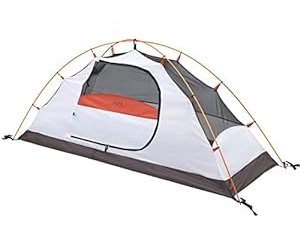
ALPS Outdoorz Mountaineering Lynx 1-person tent is not only a visual standout but also provides a safe, comfortable retreat. It’s lightweight and easy to transport, making it perfect for outdoor adventures. With its free-standing design and two aluminum poles, setup is quick and hassle-free.
The high-quality inner and outer tents combine to create a lightweight design, weighing just 1.8 kilograms. Made from durable polyester, it’s easy to carry on your adventures. You have the option of using the outer and inner tents separately or together.
You can also look forward to the tent’s waterproof nature, ensuring you stay dry even in wet conditions, and its integrated insect protection, keeping annoying bugs out of the interior. Once the tent is set up, you’ll appreciate its special design and vibrant colors.
ALPS Mountaineering Lynx one-person tent has two large doors, which make it easier for you to enter. Also, the two ventilation windows provide you with sufficient oxygen and airflow. In this way, the air circulates well and comfortably inside the tent even on boiling days.
Pros
- Weatherproof fly buckles
- Free-standing, 2-pole design.
- Great vestibule for gear storage
- Excellent ventilation
- Factory sealed seams
Cons
- Low bottom wall
9. Clostnature ZP-001 Hiking Tent
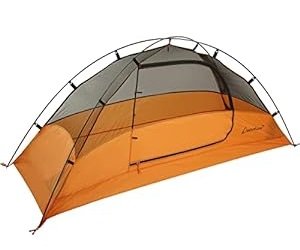
As a seasoned camper constantly seeking gear that balances weight and functionality, this lightweight tent has truly revolutionized my outdoor adventures. You can easily carry this high-quality one-person tunnel tent with a pack size of only 15″ x5″ x 5″ and a low weight of only 3.7 lbs.
You’ll quickly reap the benefits of plentiful, high-quality and exciting features once you’ve set up the Clostnature ZP-001 tent, making it a visually striking and secure shelter. This versatile tent could be an excellent choice for camping, hiking, bikepacking, kayaking, mountaineering, fishing, or even car camping.
The inner tent can be set up separately when the weather is nice and enjoy the view of the starry sky. And you can use the outer tent in bad weather and/or low outside temperatures. You can secure the tent as you need with the reflective tension ropes. This will ensure that you can find your tent quickly and easily, even in the dark and in poor light conditions.
With the Clostnature backpacking tent, you will benefit from the 5000 mm water column and the PU coating in the tarpaulin and the floor so that water does not penetrate the inside of the tent at any point. This is ensured by the side apse, so the interior of the tent is always dry even in wind and rain.
Pros
- Extraordinary design
- Reflective tension cords
- Inner tent can be set up separately
- 5000 mm water column and PU coating
- Quick and easy to set up
- Lifetime warranty
Cons
- Not good for people over 6’6″
- Stakes are cheaply made
10. Camppal Solo Backpacking Tent
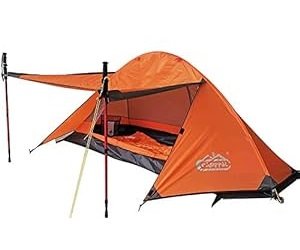
Camppal 1-person backpacking tent offers extra space, making it suitable for another person if needed. With a water column rating of 3500mm, it ensures a dry and comfortable shelter even in rainy weather. The tent is long enough to house taller individuals comfortably and provides additional space for personal belongings such as luggage, backpacks, clothes, and shoes.
The tarpaulin and floor, made of PU coating, reliably keep the water away from morning dew or wet surfaces from the tent. With just two poles, you can set up the tent quickly and easily, and it’s just as simple to take down and stow away, with a compact pack size of only 16.93 × 4.13 × 4.13 inches.
If you want to sleep with a clear view of the stars, you can simply set up the inner tent separately. Thanks to the mesh structure, you will enjoy pleasant ventilation of the interior and reliable protection from insects.
This tent packs up compactly enough to strap to the outside of a smaller 30L pack or fit comfortably inside a larger 65L pack. You can not only look forward to the attractive appearance of the model with the high pole base but also benefit from the reflective lines to recognize even in the dark.
Pros
- High protection from insects
- Includes personal storage bag
- Super waterproof
- Very well made
- Lightweight
Cons
- Thin fabrics
- No assembly instruction
Buying Guide: Best 1-Person Tents
Different types of 1-person tents are available in the market with unique advantages and disadvantages. You need to consider the usable space, seasonality, weight and livability, protection from atmospheric agents, and ease of use. Let’s see all the essential features…
Purpose of use
An essential consideration when selecting a suitable 1-person tent is deciding your specific requirements and intended usage. Various tents are constructed for different needs and preferences. If you need to transport the tent over long distances, prioritize optimal pack size and weight. In such instances, investing in a pop-up tent may not be the most practical choice. Alternatively, if you enjoy sleeping under the stars and relish the idea of an unobstructed view of the night sky, a backpacking tent might be the perfect fit for you.
On the other hand, if you’re drawn to challenging environments and anticipate encountering harsh weather, your priority might be a tent with robust construction and durable materials, such as a geodesic tent, which offers excellent stability and weather resistance.
“Choosing the right shelter is only one part of becoming a more capable camper; our Advanced Camping Skills guide covers practical techniques for planning, setting up camp, managing changing conditions, and handling common challenges outdoors.”
“If your adventures involve alpine expeditions or technical climbs, you may also want to explore our guide to the best tents for mountaineering, which features shelters specifically designed for extreme conditions and high-altitude environments.”
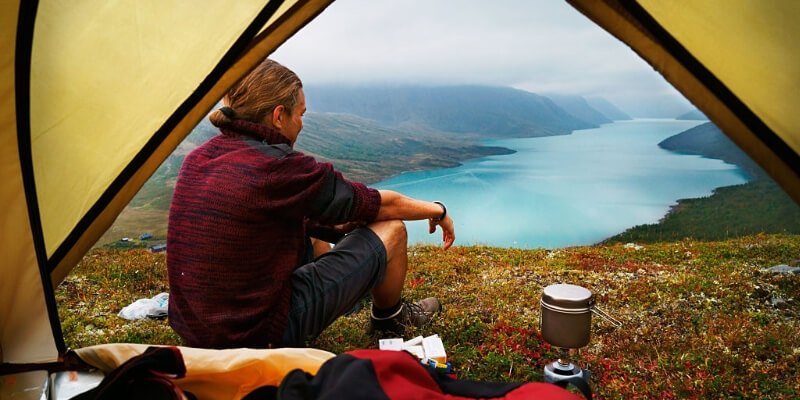
“If your adventures involve alpine expeditions or technical climbs, you may also want to explore our guide to the best tents for mountaineering, which features shelters specifically designed for extreme conditions and high-altitude environments.”
The material
The material gives the tent very decisive properties. That’s why you should always pay attention to the material, both for the outer tent and the inner tent. The outer tent is often made of nylon or polyester. A nylon outer tent is lighter than one made of polyester. Nylon is more resistant to UV radiation and moisture. However, both materials can be coated to make the tent waterproof. A coating of silicone makes the material more tear-proof and more resistant to UV radiation.
You shouldn’t overlook the materials used for tent poles or bars. Since the poles contribute significantly to the tent’s overall weight, they should be made from durable materials. Common options include carbon, aluminum, and fiberglass.
The interior
Interior space must be taken into account. If you don’t set too high demands here and want to use your tent only for sleeping, then a backpacking tent can be sufficient. With such a tent, you don’t have to carry unnecessary weight, which can be very useful for long hikes.
If comfort and space are your priorities, avoid ultralight or dome tents. Instead, consider a tunnel or geodesic tent, as these designs optimize interior space more effectively. For added convenience, we recommend choosing a two-man tent rather than a single-person model. This way, you’ll have extra room when camping solo and the flexibility to host a companion if needed.
Campers who want extra living space for relaxing, cooking, or bug-free lounging may prefer a tent with an integrated porch area. Check out our recommendations for the best tents with screen rooms and screened porches for additional comfort at the campsite.
Freestanding – yes or no
If you want to be independent of the ground conditions, then look for a freestanding tent. You don’t have to use pegs. Here, you could use a dome tent, which is only held in the interior by enough weight.
Seasonality
Tents are designed for 2, 3, or 4 seasons of use. You can choose a three-season tent for most cases. However, if you have a plan to go camping or hiking in winter, then extend the season of your tent. This means you should choose a 4-season tent.
For campers who frequently face prolonged storms and wet conditions, our roundup of the top 8 waterproof tents for heavy rain highlights models that offer superior weather protection and higher waterproof ratings.
Condensation Control & Ventilation Performance
Condensation control plays a major role in comfort, especially in single-person backpacking tents where airflow is limited. Moisture buildup inside a tent can affect sleep quality, reduce insulation performance, and create damp conditions for gear. This is particularly important in humid climates, cold nights, or multi-day trips.
To reduce condensation, prioritize well-ventilated 1-person tents with mesh inner walls, roof vents, and dual-panel airflow designs. Double-wall tents perform better at managing internal moisture than single-wall models. Proper ventilation is just as important as waterproof ratings when choosing a reliable solo tent for hiking or camping.
Livability
You should also pay attention to the number and position of the doors, protect the use of mosquito nets and the ventilation so that inside the tent you will feel more comfortable.
Modern shelter designs continue to evolve, and many campers now prefer quick-pitch options. If fast setup is a priority, take a look at our guide to the best inflatable tents, which eliminate traditional poles and can be pitched in minutes.
The price
When buying a 1-man tent, the price plays an important role. Whether you’re going to buy an inexpensive or a higher-priced tent, it largely depends on how you want to use the tent, and above all how often. For example, if you buy a tent only for an excursion, such as a festival, and if the weather does not pose harsh conditions for the tent, then you can go for a cheap model.
However, if you plan to camp and use your tent more often, we advise you to buy a higher-quality tent. Because higher-priced tents are made of more robust materials, you can use your tent sustainably.
Frequently Asked Questions About 1-Person Tents
Is a 1-person tent actually big enough for one person?
A 1-person tent is designed primarily for sleeping instead of spending extended time inside. It can be a good fit if you want to minimize packed weight and only need enough room for yourself and essential gear.
However, interior dimensions vary considerably, so check the floor length, width, peak height, and vestibule space before buying.
How much should a 1-person backpacking tent weigh?
There is no single weight that defines a good 1-person backpacking tent. Ultralight models can weigh around 2–3 pounds, while more traditional freestanding tents may weigh 3–5 pounds or more. If you’re carrying the tent for long distances, compare the packed weight with the features and weather protection you actually need.
Is a 1-person tent better than a 2-person tent for solo backpacking?
A 1-person tent generally saves weight and takes up less space in your backpack, making it useful for minimalist solo trips. A 2-person tent provides more room for sleeping, changing clothes, storing gear, or dealing with poor weather. If comfort is more important than minimizing pack weight, a 2-person tent can be a more practical choice even when camping alone.
Are 1-person tents suitable for tall people?
They can be, but the tent’s actual interior dimensions matter more than its stated capacity. Taller campers should check the floor length and interior height before purchasing.
Pay particular attention to the usable sleeping length because sloping walls can reduce the amount of space available at the head and foot.
Is a freestanding 1-person tent worth choosing?
A freestanding design can make setup easier because the tent can hold its basic shape without relying entirely on stakes. This can be useful when camping on rocky or difficult ground. However, freestanding does not mean the tent should always be used without stakes and guy lines; proper anchoring is still important in windy or severe weather.
Are ultralight 1-person tents good for beginners?
They can be, but beginners should look beyond weight alone. Ultralight tents may use lighter fabrics, specialized pole systems, or trekking-pole designs that require more care or practice during setup. If simplicity is a priority, a slightly heavier freestanding tent may be easier to manage.
Should I choose a single-wall or double-wall 1-person tent?
A single-wall tent can reduce weight and simplify the shelter design, but condensation can be more noticeable because the inner sleeping area is closer to the outer fabric.
Double-wall tents separate the inner sleeping area from the rainfly and generally provide more flexibility for ventilation and weather protection. Your climate, trip length, and preference for low weight should guide the choice.
Can I use a 1-person tent for car camping?
Yes. A 1-person tent works for car camping if you mainly need a compact place to sleep. Since you do not have to carry the shelter far, however, the weight savings of a backpacking tent may matter less.
A larger tent can provide considerably more room for changing clothes, organizing equipment, or spending time inside during bad weather.
What should I look for in a 1-person tent for rain?
Look at the complete shelter design rather than relying only on a waterproof-rating number. Check the rainfly coverage, bathtub-style floor, seam construction, ventilation, vestibule, and how well the tent can be pitched with the fly properly tensioned.
A well-designed rainfly and good ventilation are particularly important for maintaining a dry and comfortable interior.
Can a 1-person tent be used in winter?
Some can be used in colder conditions, but a standard 3-season tent should not automatically be treated as a winter or mountaineering shelter.
Winter camping can involve snow loading, stronger winds, and colder temperatures that require a tent specifically designed for those conditions. Always check the manufacturer’s intended season and weather conditions before using a tent in winter.
What is the best way to protect a 1-person tent on rocky ground?
Remove sharp rocks and debris from the pitching area before setting up the tent. A suitable groundsheet or footprint can also help protect the floor from abrasion.
On rocky terrain, a freestanding design can make positioning easier, but the tent should still be properly secured with stakes or guy lines when conditions require it.
How do I choose between the 1-person tents in this guide?
Start with the type of trip you plan to take. Backpackers who prioritize low weight should compare packed weight and overall packed size first. Campers who want easier setup should consider freestanding designs, while those expecting wet conditions should pay closer attention to rainfly coverage, floor construction, ventilation, and weather protection.
Finally, compare the tent’s interior dimensions with your height and sleeping setup rather than choosing based only on the manufacturer’s “1-person” label.
Conclusion
After evaluating diverse options, it’s clear that the TETON Sports Instant Tent stands out as the top choice for solo adventurers. Its lightweight design makes it ideal for backpacking trips, ensuring you can easily carry it over long distances without feeling weighed down. Despite its minimal weight, the tent doesn’t compromise on durability.
However, all these models we have selected carefully, so you can rest assured that your shelter will provide reliable protection against water intrusion and abrasion.
Perhaps you are also interested in the best backpacking tents under $100. You can find out more about this here.