How to Keep Hands Warm Skiing Without Heated Gloves

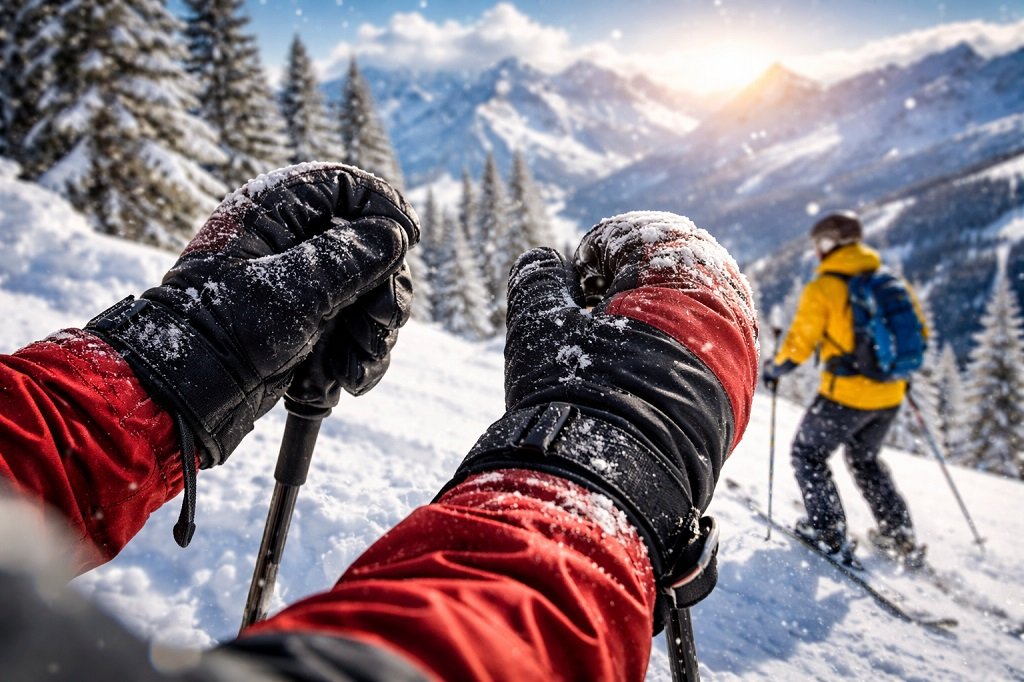
There’s nothing more frustrating than standing on a snowy slope, ready for your next run, only to realize your fingers have gone numb. Cold hands don’t just make skiing uncomfortable — they can reduce dexterity, affect your grip, and increase the risk of cold-related injuries, including frostbite. While heated gloves can help, they can be expensive, and their batteries require charging.
The good news is that you can keep your hands warm while skiing without heated gloves by using the right layering techniques, choosing insulated mittens or gloves, managing moisture, and protecting your hands from wind. In this guide, you’ll learn practical ways to retain warmth, improve comfort, and enjoy more time on the slopes, even in freezing conditions.
Understanding Why Hands Get Cold
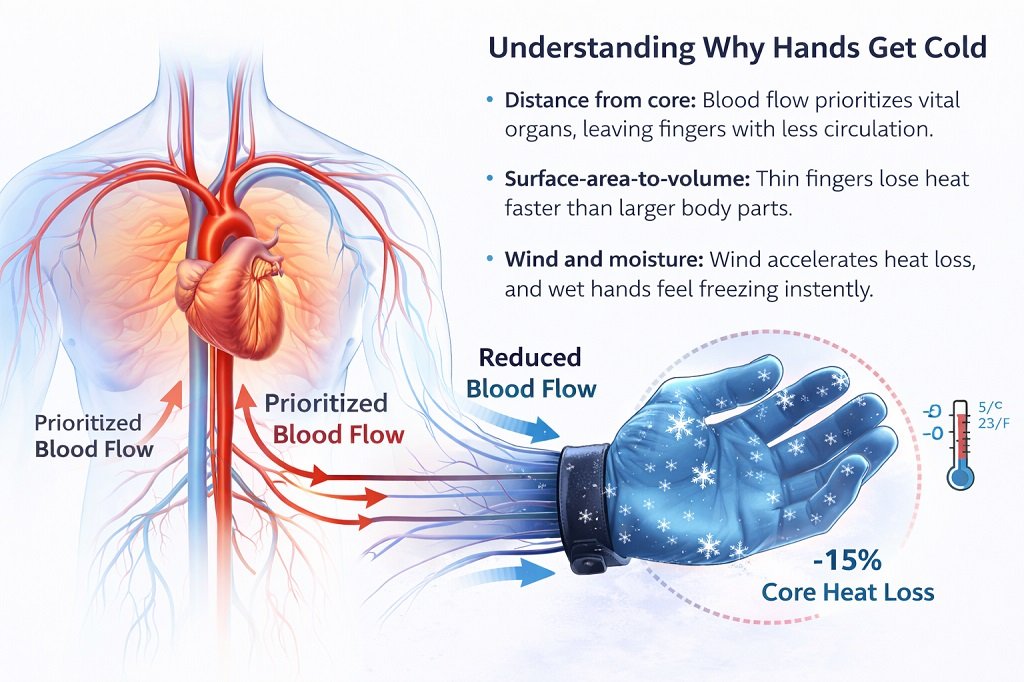
Hands are among the most vulnerable parts of the body in cold weather. Their anatomy and exposure make them prone to heat loss:
- Distance from core: Blood flow prioritizes vital organs, leaving fingers with less circulation.
- High surface-area-to-volume ratio: Thin fingers lose heat faster than larger body parts.
- Wind and moisture: Wind accelerates heat loss, and wet hands can feel freezing almost instantly.
Real-world data: Research from the Journal of Applied Physiology shows that skiers exposed to -5°C (23°F) with standard gloves can lose up to 15% of core body heat through their hands in just one hour.
“Cold hands can become a serious safety concern in extreme conditions. The CDC’s frostbite prevention guidelines explain the warning signs and why protecting your fingers with warm, dry clothing is essential.”
1. Layer Your Gloves Strategically
Just like layering clothing, layering gloves traps warm air and keeps moisture away from skin.
- Base layer: Thin, moisture-wicking liners made of merino wool or synthetic fibers.
- Insulating layer: Fleece or synthetic insulation to trap heat.
- Outer shell: Windproof and waterproof material to block the elements.
Example: Nordic skiers often use silk or merino liners under insulated mittens, allowing them to ski comfortably at -10°C (14°F) for hours.
2. Mittens vs Gloves: The Science
Mittens outperform gloves because fingers share warmth.
Data from cold exposure studies:
- Gloves: Finger temperature drops to 10–15°C (50–59°F) in 30 minutes at -5°C (23°F)
- Mittens: Finger temperature drops to 18–20°C (64–68°F) in the same conditions
Practical tip: Use mittens for extremely cold days and gloves only when finger mobility is required.
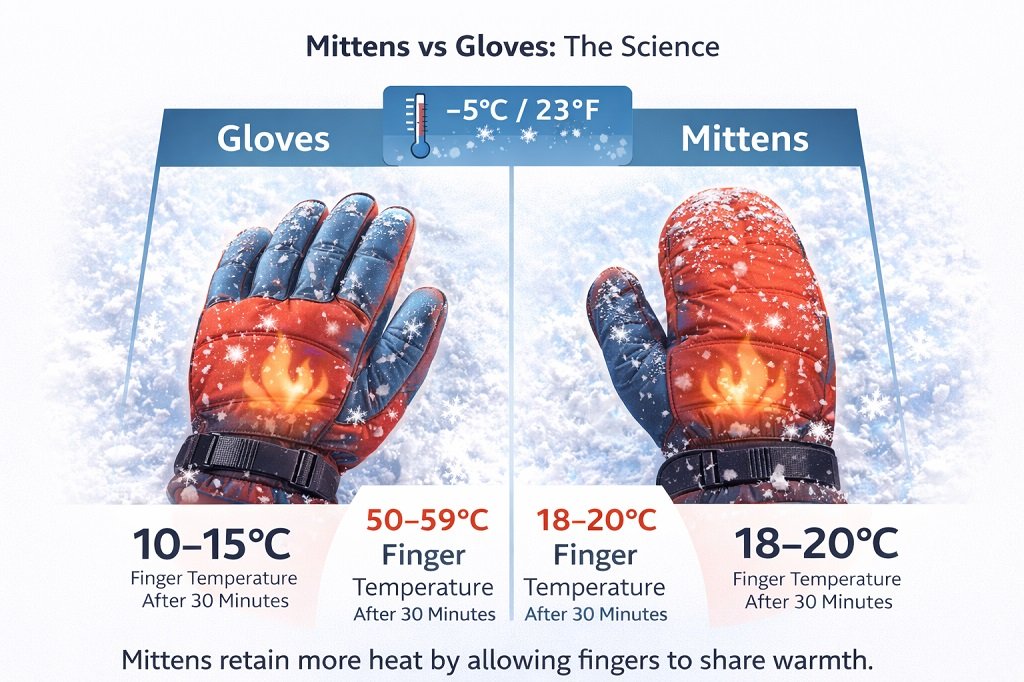
- Side-by-side infographic comparing gloves vs mittens
- Caption: “Mittens retain more heat by allowing fingers to share warmth.”
If you prefer gloves for better finger mobility, especially when handling poles or adjusting equipment, consider our guide to the best snowboard and ski gloves with wrist guards for options that combine hand protection with added wrist support.
3. Keep Your Core Warm
A warm torso improves peripheral circulation, keeping hands warmer.
- Base layers: Moisture-wicking thermal tops
- Mid-layers: Fleece or wool sweaters
- Outer layers: Windproof jackets and shells
Example: Skiers in the Swiss Alps reported that wearing insulated jackets increased hand warmth by up to 10°F even in sub-zero temperatures.
Keeping your entire body comfortable also means choosing footwear that fits properly and works with your winter layering system. If you’re preparing for a snowboarding trip, check out our guide to the best snowboard boots for options suited to different riding styles and fit preferences. Don’t overlook your feet when planning your ski clothing.
The right socks can improve comfort inside your boots, so check out our guide to the best ski socks for wide calves if standard ski socks feel too restrictive.
“Proper winter clothing also helps reduce the risk of cold-weather injuries during outdoor activities. The American Academy of Orthopaedic Surgeons’ cold-weather safety advice offers additional guidance on layering and protecting your body in cold conditions.”
4. Movement and Circulation
Even the best gloves cannot compensate for poor circulation.
Tips to increase blood flow:
- Wiggle fingers every 15–20 minutes
- Make fists and release repeatedly
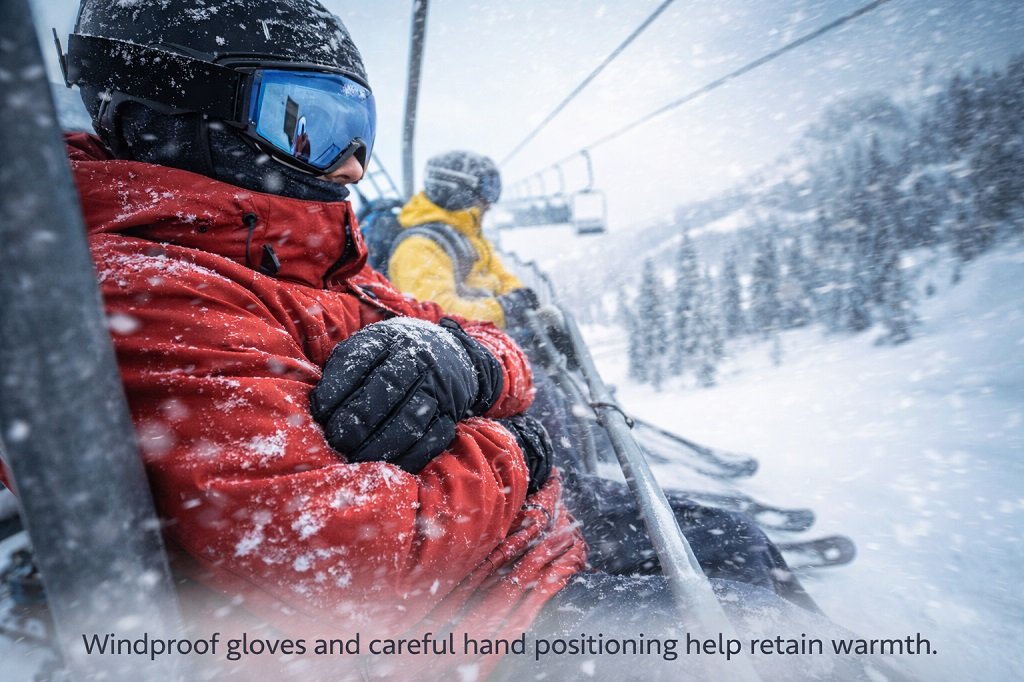
- Interlace fingers under your armpits during lift rides
Data: Small movements can increase blood flow to hands by up to 25%, reducing numbness.
Hand warmth is only one part of preparing for a comfortable day on the mountain. For another aspect of your protective setup, explore our guide to the best ski back protectors to learn about options designed to help protect your back during skiing.
5. Moisture Management
Moisture is your biggest enemy. Wet gloves lose insulating ability quickly.
Strategies:
- Avoid sweating by adjusting clothing layers
- Use moisture-wicking liners
- Dry gloves completely between sessions
Science note: Water conducts heat 25 times faster than air, meaning even small amounts of sweat drastically increase heat loss.
A well-planned clothing system helps regulate body temperature and prevent excessive sweating, which can leave you feeling cold later. For a more complete breakdown of base layers, mid-layers, and outerwear, read our guide on how to layer for skiing like a pro.
6. Pre-Warming Techniques
Pre-warming gloves or mittens gives your hands a head start against cold.
Methods:
- Keep gloves close to your body before skiing
- Use hot water bottles or heated packs for 5–10 minutes
Observation: Pre-warmed gloves maintain comfort for the first 15–20 minutes on the slopes. If layering, pre-warming, and moisture management aren’t enough on especially cold days, explore the best heated ski gloves covers battery-powered options that provide additional warmth when you need it.
7. Wind and Exposure Management
Wind increases convective heat loss, especially at high speeds.
Tips:
- Wear windproof outer gloves/mittens
- Minimize exposure during lift rides
- Keep hands tucked or in pockets when possible
Example: Ski instructors in Whistler observed that windproof mittens prevented immediate cooling even at -8°C (18°F) during windy chairlift rides.
Wind can accelerate heat loss from exposed skin, making hand protection especially important on cold chairlift rides. The National Weather Service’s extreme cold safety guidance explains how wind exposure increases cold-weather risks and why proper clothing matters.
8. Nutrition and Hydration
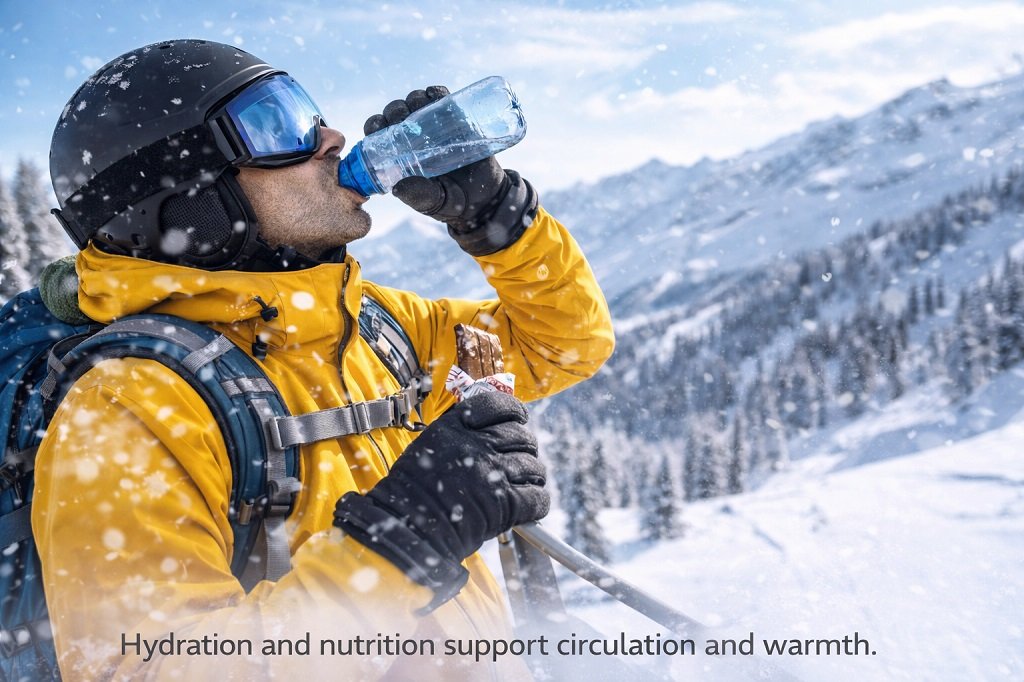
Blood flow and energy levels affect hand warmth.
- Eat high-carb snacks for energy
- Stay hydrated with small, frequent sips
- Avoid excessive caffeine, which can constrict blood vessels
Data: Proper hydration improves peripheral circulation by 8–10%, keeping hands warmer.
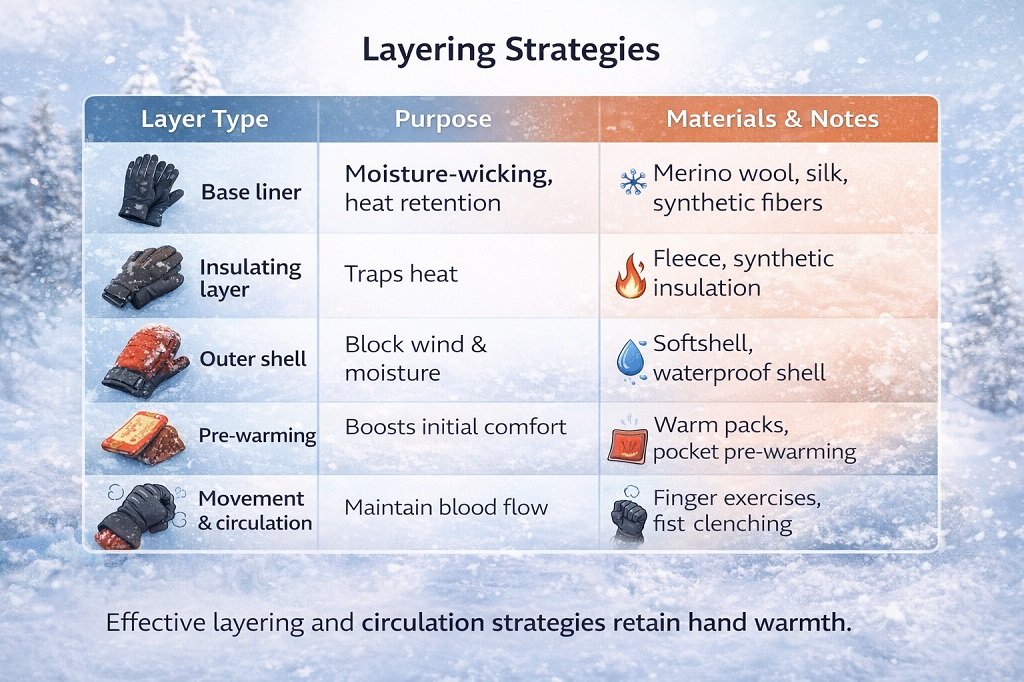
Suggested Comparison Table: Layering Strategies
| Layer Type | Purpose | Materials & Notes |
| Base liner | Moisture-wicking, heat retention | Merino wool, silk, synthetic fibers |
| Insulating layer | Traps heat | Fleece, synthetic insulation |
| Outer shell | Blocks wind & moisture | Softshell, waterproof shell |
| Pre-warming | Boosts initial comfort | Warm packs, pocket pre-warming |
| Movement & circulation | Maintain blood flow | Finger exercises, fist clenching |
FAQs: Keep Hands Warm Without Heated Gloves While Skiing
How can I keep my hands warm while skiing without heated gloves?
You can stay warm by layering moisture-wicking liners under insulated gloves or mittens, keeping your core warm, moving your fingers periodically, protecting your hands from wind and moisture, and pre-warming gloves before hitting the slopes. Combining these strategies maintains comfort even in sub-zero temperatures.
Are mittens warmer than gloves for skiing?
Yes, mittens retain more heat because fingers share warmth, reducing heat loss by 20–30% compared to gloves, though gloves offer better dexterity for handling poles or adjusting gear.
What materials are best for non-heated ski gloves or mittens?
Effective materials include merino wool or silk for liners, fleece or synthetic insulation for warmth, and waterproof, windproof outer shells to block the elements, while avoiding cotton which traps moisture.
Does pre-warming gloves really help?
Yes, pre-warming gloves by keeping them close to your body or using warm packs for a few minutes raises initial finger temperature, improving comfort during the first 15–20 minutes on the slopes.
Can hydration and nutrition affect hand warmth?
Proper hydration and energy intake improve circulation, helping maintain finger warmth, while dehydration or low blood sugar can reduce blood flow and make hands colder.
What simple exercises can keep hands warm while skiing?
Periodic finger wiggling, making fists, or interlacing fingers under armpits promotes blood flow and helps prevent numbness without removing gloves.
How important is wind protection for hand warmth?
Very important — wind accelerates heat loss, so using windproof gloves or mittens and minimizing exposure keeps hands warmer even in moderate temperatures.
Conclusion
Cold hands don’t have to ruin your skiing experience. By combining proper layering, mittens or gloves, core warmth, finger movement, moisture management, pre-warming, wind protection, and nutrition, you can maintain comfort without heated gloves. These strategies are simple, effective, and backed by both research and real-world examples.
Applying them consistently allows skiers to enjoy longer, safer, and more comfortable days on the slopes — even in sub-zero temperatures.